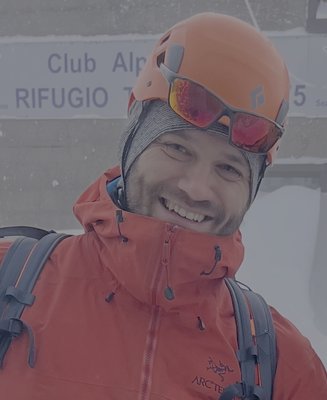
AI training apps and human mountain coaches are strong at different things. An app excels at adaptive, data-driven plan-building; a human coach brings judgement, accountability, and technical mentorship. Rather than one replacing the other, most serious mountain athletes use a hybrid of both.
The wrong question
Most articles framing AI coach vs personal trainer treat it as a winner-take-all fight: which one will replace the other. That framing produces bad answers. AI training programs and human mountain coaches do not actually compete on the same things. The interesting question is which work each is genuinely good at - and how you combine them for a serious mountain objective.
What each is good at, side by side
Human mountain coach
- Real-time judgment in mountain conditions
- Technical skills (rope, glacier, rock, ice)
- Reading your body language and psychology
- Years of accumulated guiding intuition
- Accountability through personal relationship
- The trip itself - safety calls, route choices, turn-around decisions
- Mentorship for the long-arc athlete
AI mountain training program
- Weekly plan adaptation from your actual data
- 24/7 availability, no scheduling
- Cost-accessible (sub-€50/month vs €100-200/hour)
- Consistent quality, no off days
- Pattern recognition across thousands of athlete-weeks
- Objective load tracking (no athlete self-deception)
- Removes the daily "what should I do?" ambiguity
A human guide gets you up the mountain. An AI training program gets you ready to go.
Where each one genuinely falls short
Honesty matters more than positioning. Both have real limits.
Human coaches struggle with frequency. Even a great mountain coach typically sees you weekly or fortnightly. The 6 to 13 days between sessions are unmonitored. If a hard day went sideways, the plan does not adjust until you next meet. Human coaches also cost money - €80 to €200 per hour for elite mountain coaches is standard - which prices out most ambitious amateurs from getting weekly contact.
AI training programs struggle with judgment. An algorithm reads your heart rate beautifully but cannot tell whether the niggle in your knee is recoverable or serious. It cannot decide whether your turn-around point on Mont Blanc was sensible or premature. It does not know that you cried on the descent and need a different conversation tomorrow. Pure-AI coaches that pretend to handle this well are the ones that erode trust over time.
The hybrid model serious athletes actually use
The pattern that works for ambitious amateurs with real mountain objectives is layered, not either-or:
- An adaptive AI training program for the 12 to 24-week build. The plan reads your data daily, reshapes weekly, holds you accountable to consistency, and removes the cognitive load of "what should I do today?". This is where most of the work lives.
- A human guide for technical skill clinics and the trip itself. Crevasse rescue, rope work, glacier travel, summit-day decision-making. You do not need them weekly. You need them where their judgment is irreplaceable.
- Optional: a human coach for periodic check-ins. Some athletes pay for monthly or quarterly check-ins with a mountain coach to sanity-check the plan, talk through the season's arc, and add the human layer the algorithm cannot.
This stack is more accessible and more effective than either pure approach. The AI handles the daily grind that a human coach is too expensive to handle. The human handles the judgment moments where the algorithm does not have authority.
How to know what you actually need
Three honest segments:
- New to mountaineering. Hire a guide for skills (rope, crampon, glacier basics) before you commit to an objective. Use AI for fitness during the build. Do not skip the guide for technical work - YouTube does not teach crevasse rescue safely.
- Experienced amateur with a specific objective. AI for the 12 to 24-week build is the highest-leverage tool. Add a guided trip or skills clinic where the route demands it. Optional: monthly human check-in if you value the conversation.
- Aspiring elite athlete. AI as the daily engine, plus a dedicated human coach who knows your full arc. The AI handles daily load tracking and weekly plan adaptation. The human handles strategy, psychology, and the things that do not fit in a dashboard.
Where TTM sits in this picture
The honest position
- TTM is the AI half of the hybrid. An adaptive training plan for the 12 to 24-week build, tuned to your specific peak, that reshapes weekly from your wearable data.
- Ridge is our AI coach - a conversational layer that handles post-session check-ins, captures perceived effort the data cannot show, and keeps the plan honest about how you actually feel. Not a replacement for a human guide.
- We do not pretend to handle technical skills. Glacier travel, rope work, rock climbing - these need real instruction. Hire a guide.
- We do not pretend to handle the trip. Summit-day judgment, weather calls, turn-around decisions - these belong to you and the human you climb with.
- We do handle the part where you sit at home in a working life, with a real mountain on the calendar, and need a plan that adapts to your actual week.
The takeaway
AI coaching is not a replacement for a human guide. A human guide is not a daily training plan. The athletes who summit reliably use both, and they choose each one for what it is genuinely good at. The wrong question is which one to pick. The right question is how to combine them for the mountain you are training for.
Common questions
Can an AI coach replace a human mountaineering coach?
Not entirely, and TTM does not claim it does. AI handles the work humans repeat poorly: nightly load analysis from your wearable, weekly periodisation maths, instant adjustment when life intervenes. A good human coach still wins on technical judgement, gear-specific instruction, in-person feedback on movement, and the relational accountability some athletes need. The serious-athlete answer is usually a hybrid, with AI as the daily layer.
What is an AI mountaineering coach actually doing?
It reads your synced wearable data each night, calculates your fitness and fatigue trends against your summit objective, and reshapes the next week's sessions accordingly. Inside TTM, the AI also runs a brief end-of-session debrief - surfacing what your numbers mean for summit readiness and flagging early signs of overtraining or undertraining.
How is an AI coach different from a generic fitness chatbot?
A fitness chatbot responds to questions you type. A real AI coach acts proactively on your actual training data without being asked - it knows what you did yesterday, what is on the calendar, and what your summit date is. It builds your plan and adjusts it on its own, with you in the loop.
What can a human coach do that the AI cannot?
In-person movement feedback (technical climbing, glacier travel, ice technique), trip-specific tactical decisions on the mountain, gear judgement for unfamiliar routes, and the relational pressure that gets some athletes out the door. AI can complement these but does not replace them.
Is an AI coach safe for beginners?
For the training side, yes. TTM has hard safety caps on weekly load growth, builds the aerobic base before adding intensity, and flags overtraining and injury risk early. For the mountain-skill side (rope team movement, self-arrest, crevasse rescue) beginners should still take a guided course or hire a guide. The AI trains the engine; the skill layer comes from elsewhere.
How does AI coaching cost compare to a human coach?
A serious human coach for mountain athletes typically runs several hundred dollars per month with limited check-in time. AI coaching subscriptions are usually a fraction of that cost while running daily rather than weekly. The point of AI is scale: it handles the daily layer cheaply so any human coach you do hire can focus on the high-leverage technical work.