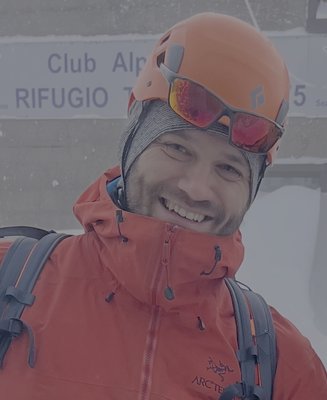
Alpine training prepares you for mountain days that are fast, light, and self-supported - a different discipline from heavier expedition mountaineering. What you train, and how, shifts to match the demands of a committing single alpine day rather than a staged expedition.
What "alpine" actually means in training terms
Alpine style is a way of climbing: light pack, no fixed ropes, no Sherpa support, ground-up in one or two pushes. It evolved as a counterpoint to expedition style, which fixes ropes and stocks camps over weeks. For training, the relevant distinction is not the rope, it is the demand profile. Alpine athletes complete the same vertical in a fraction of the time, with a fraction of the gear, and often after an alpine start that means waking at 2am.
That shifts what fitness has to look like. Expedition mountaineering rewards slow patience and altitude tolerance over many days. Alpine training rewards the ability to deliver a hard sustained effort in one window, then recover fast enough to be ready when the weather opens again.
Alpine training is endurance under time pressure. The mountain hasn't changed. The clock has.
Alpine vs. expedition training, side by side
The two disciplines share a foundation, but the priorities diverge.
Fast, light, single-push
- One-day or two-day push, 12-24 hours of effort
- Light pack, often under 10kg
- High sustained aerobic effort
- Limited time at altitude, so acclimatisation pre-trip matters more
- Recovery between attempts has to be fast
Slow, heavy, multi-day
- Days to weeks of effort, broken into camps
- Heavy pack, 15-25kg with load carries
- Sustained moderate effort, paced for the long haul
- Acclimatisation built into the climb itself
- Recovery has more room across the multi-week timeline
The demand profile of an alpine day
Strip an alpine push down to its measurable components and four show up, weighted differently than in expedition mountaineering.
How to train each piece
The five principles of mountain training (covered in the how to train for mountaineering guide) still apply: polarised distribution, fitness-fatigue management, specificity, eccentric strength, altitude planning. What changes for alpine is the emphasis.
Higher-end aerobic work
Polarised training still works. But within the 20 percent hard fraction, alpine athletes benefit from longer threshold blocks (15-30 minute Zone 3-4 intervals) rather than only short Zone 5 hits. The goal is to push the upper sustainable aerobic ceiling closer to summit-day pace.
Continuous vertical, lighter pack
A weekly session of 1000-1500m of continuous gain, at a steady upper-Zone-2 effort, with the actual pack you intend to climb with, is the truest specificity work. On real terrain when possible, on a Stairmaster or incline treadmill when not.
Alpine-start simulation
A few times in the peak phase, schedule a long session that starts at 3-4am after a short sleep. Not every week. Just often enough that your first alpine start is not the first time your body has tried to perform in that state.
Back-to-back long days
In the build phase, schedule a hard long day followed the next morning by a moderate long day. Not in every weekly cycle. Periodically, to train the recovery capacity an alpine weather window will demand.
Acclimatisation gets harder, not easier
Because alpine pushes are short, the climb itself does not provide the multi-day acclimatisation window an expedition gives. The implication is that pre-trip acclimatisation matters more, not less. That means either spending acclimatisation days in the range before the push, using simulated altitude tents in the months prior, or staging in nearby peaks at altitude before the objective. Full breakdown in the altitude acclimatisation guide.
Alpine vs. expedition - same engine, different tuning
TTM uses the same five-principle framework whether you are training for an alpine push or a multi-week expedition. The difference shows up in how the algorithm weights the work: more threshold and continuous vertical for alpine, more sustained load-carry and patience pacing for expedition. You tell us the peak and the style. The plan tunes itself.
Common mistakes
- Training like an expedition athlete for an alpine objective. Slow long days alone do not build the higher-end aerobic ceiling an alpine push demands.
- Skipping the sleep-restriction reality. If every long training session starts rested at 8am, the alpine start at 2am will hit harder than it needs to.
- Underestimating descent. Alpine routes still come down, and often on tired legs after a long ascent. Eccentric work is not optional.
- No back-to-back capacity. Training a single peak day per week leaves you unprepared for a 36-hour window that opens on a Friday.
- Treating acclimatisation as a trip-week detail. Pre-trip altitude exposure matters more for short alpine pushes, not less.
The takeaway
Alpine training is not a watered-down expedition program. It is the same physiology, periodised differently, weighted toward sustained higher-end aerobic capacity, fast recovery, and the reality of an alpine start. The athletes who succeed at alpine style train for the specific shape of an alpine day. If you want an adaptive plan built around an alpine objective, that is what a TTM alpine plan does.
Common questions
What is alpine training?
Alpine training prepares an athlete for fast, light, multi-pitch mountain objectives - typically 4 to 16 hours of moving with mixed terrain, snow, ice, and elevation. It emphasises sustained aerobic effort, vertical efficiency, technical-terrain endurance, and descent eccentric capacity, rather than gym strength alone.
How is alpine training different from general mountaineering training?
Alpine training is sharper on aerobic ceiling and movement economy because alpine days are time-constrained - you cover ground quickly while conditions allow. Expedition mountaineering tilts more toward deep aerobic durability and altitude tolerance. Alpine builds frequently include speed work; expedition builds emphasise long carry days.
How fit do I need to be for alpine climbing?
A working benchmark is the ability to hold Z2 effort for 6+ hours with a 10 to 12 kg pack and 1,200m (4,000 ft) of cumulative vertical without bonking. Add technical-climbing proficiency on top. If you cannot hold that aerobically, the climb tends to compound your fatigue and the descent breaks down first.
Do I need access to the Alps to train for alpine routes?
No. The aerobic engine, vertical accumulation, and descent eccentric load can be built anywhere - Stairmaster, treadmill incline, local hills with a weighted pack. What sea-level training cannot replicate is altitude and exposed-terrain decision-making; those come from trip time on real alpine routes.
How long does it take to build alpine fitness?
12 to 16 weeks of focused preparation for a target route in the 3,000 to 5,000m (9,800 to 16,400 ft) band, assuming an existing aerobic base. Athletes coming from sedentary need a longer base-building phase first (sometimes 6 to 8 additional weeks before the focused block begins).
What is the single biggest mistake amateur alpine climbers make in training?
Spending too much weekly volume in the moderate-tempo zone 3 - hard enough to feel productive, not hard enough to build VO2max, and too tiring to support a deep aerobic base. The polarised 80/20 distribution (most easy, a small portion hard) consistently outperforms moderate-tempo grinding for endurance athletes (Seiler and Kjerland, 2006).