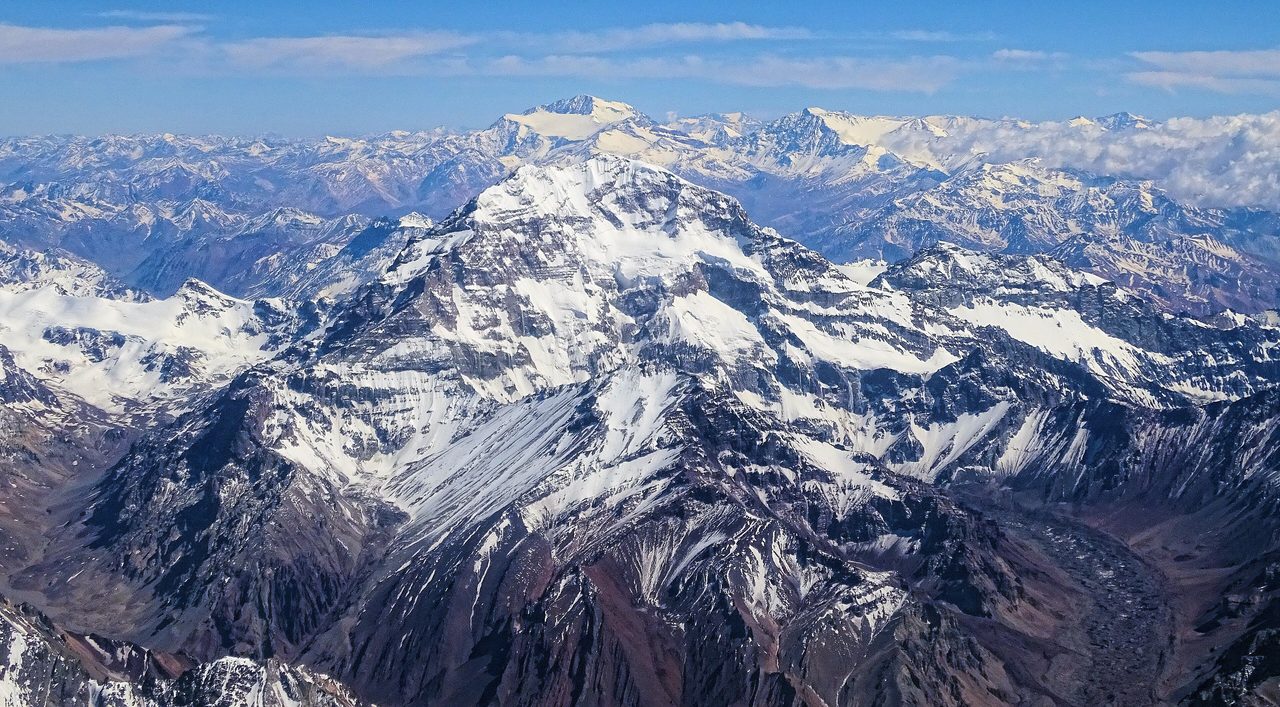
Why Aconcagua humbles strong climbers
Roughly 3,000 to 3,500 climbers attempt Aconcagua each summer (Mendoza province permit data, aggregated by Grajales and Inka operator reports). Around 30 to 40 percent reach the summit. The other 60 to 70 percent turn around for one of three reasons that show up in nearly every season report.
The first is altitude. Aconcagua is 2151 metres higher than Mont Blanc. At 6961m you have around 45 percent of sea-level oxygen, and the standard 17-21 day expedition format is barely long enough for honest acclimatisation. Climbers who skipped pre-trip altitude exposure or who push through symptoms get caught.
The second is summit-day duration. From Cólera high camp at 5970m, the round trip takes 12 to 16 hours of slow, cold, brutal walking. Climbers who never trained an 8+ hour single day arrive at Canaleta scree exhausted, with hours of work still to do.
The third is the cumulative load. Aconcagua is not one big day - it is two weeks of carrying 15 to 22 kilo packs between camps, sleeping at progressively higher altitudes, and slowly draining your reserves. Climbers who trained for a single big day are surprised by the steady-state grind. None of these failure modes are bad luck. All three are trainable.
The training demand profile
Aconcagua loads five physiological systems differently than a single-day Alpine peak. A real Aconcagua plan trains all five.
Altitude reality check
Training builds the engine. Altitude is its own thing - and on Aconcagua, altitude is decisive. At 6961m you have around 45 percent of sea-level oxygen. The only way to genuinely adapt is to spend time up there. Practically, three approaches stack: spend time on 4000-5000m peaks in the months before (Andes options like Cotopaxi or a Bolivia chain double as training), use a hypoxic tent at home for the haematological half of acclimatisation, and respect the 17-21 day expedition format on the mountain itself. The most common mistake is compressing the schedule to save days. The mountain does not care about your flight. The deeper guide on this is in altitude acclimatisation guide.
A weekly distribution that works
The polarised principle applies, scaled up for Aconcagua's expedition format: most of the week at low intensity, one hard session, one long mountain day, one back-to-back load. A representative week, 14 weeks out from an Aconcagua trip:
- Mon · easy 60 min Z2
- Tue · threshold or VO2max intervals, 4 x 4 min Z4-Z5
- Wed · rest or 30 min mobility
- Thu · Z2 hike with weighted pack, 2-4 hours, 700-1000m vertical, 12-15 kg pack
- Fri · easy 45 min Z2 + eccentric strength (step-downs, weighted lunges)
- Sat · long mountain day, 5-7 hours mixed Z2 with vertical and pack
- Sun · 2.5-4 h Z2 on tired legs with pack (back-to-back loading)
Weekly volume runs higher than a Mont Blanc plan: 10-14 hours typical in Build phase. The single ≥10-hour rehearsal day with a real pack lands 4-6 weeks before the trip, not in the final taper. The deeper rationale is in our heart rate zones for mountaineering guide.
How TTM tunes the plan to Aconcagua
What the algorithm calibrates to your peak
- Fitness target · Aconcagua's fitness target reflects the 14-hour summit day at extreme altitude. Higher than a 4000m Alpine peak; the plan is engineered to hit it by your trip start date.
- Vertical accumulation target · The vertical accumulation target across the build is calibrated to the route's profile. Volume distributes progressively, with recovery weeks every 4th.
- Summit-day rehearsal · The Long Day Score is calibrated to Aconcagua's 14-hour summit day. The plan schedules a real ≥10-hour single training day in the 6-week window before your trip, not earlier.
- Descent eccentric load · The Descent Readiness Score accounts for the summit-day descent plus the multi-day trek-out from base camp. Eccentric strength and downhill repeats are programmed in, not bolted on.
- Expedition loading pattern · Back-to-back heavy days build progressively across the plan, mirroring the daily cumulative pattern of an Aconcagua expedition rotation. By trip day, daily weighted hiking is the easy part.
When you tell TTM your objective is Aconcagua and your trip date, the plan is built backwards from there with all five demands engineered in. The expedition handles altitude. The training makes sure your engine arrives ready and your legs survive the descent.
Common questions about training for Aconcagua
How do I build endurance for Aconcagua's 14-hour summit day?
Mostly time at low intensity, scaled up. Aconcagua's summit day is 12-16 hours and the expedition is 17-21 days of cumulative load, so the engine has to be deeper than a Mont Blanc engine.
What altitude work matters for Aconcagua (6961m / 22,838 ft)?
At 6961m (22,838 ft) you have around 45% of sea-level oxygen, and on Aconcagua altitude is decisive. Three strategies stack: time on 4000-5000m (13,100-16,400 ft) peaks in the months before (Andean options like Cotopaxi or a Bolivia chain double as training); a hypoxic tent at home for the haematological half of adaptation; and respect the 17-21 day expedition format on the mountain itself.
Does an Aconcagua plan need to be personalised to me?
Yes, in five specific ways: your starting fitness, your trip start date (the taper lands when you fly), the vertical accumulation distributed across the build, one 10+ hour rehearsal day placed 4-6 weeks out, and the expedition loading pattern that progressively builds back-to-back heavy days with weighted carries.
Can I train for Aconcagua with a full-time job?
Yes, but it requires more weekly volume than a Mont Blanc plan and protection of weekend volume. Weekly volume in Build phase runs 10-14 hours, most of it low-intensity work that fits early mornings or evenings.
What does comprehensive Aconcagua prep actually cover?
Five trainable demands. (1) An aerobic engine for 12-16 hour summit days at extreme altitude.
What strength and weighted-carry work does Aconcagua training need?
Two priorities: eccentric leg strength and weighted-carry endurance. Eccentric work (weighted step-downs, slow-tempo split squats, controlled downhill repeats) builds descent resilience for summit day plus the multi-day trek-out.
Can I prepare for Aconcagua from sea level without high-altitude terrain?
Yes, with one honest constraint: altitude adaptation has to come from pre-trip exposure plus the expedition itself, not from sea-level training alone. The aerobic engine, weighted carry endurance, descent eccentric load, and back-to-back fatigue tolerance can all be trained anywhere with hills, stairs, or a treadmill on incline.
How is Aconcagua training different from a 4000m Alpine peak?
Three differences. First, expedition format: a 4000m Alpine peak is a single hard day; Aconcagua is 17-21 days of cumulative loading where back-to-back days are the norm.
Tools and deeper reading
Take this further
- Summit Readiness Simulator · Test if you are ready for Aconcagua today. Free, science-backed, 90 seconds. Enter your peak, your trip date, and your current fitness; get a readiness score.
- Altitude Acclimatisation Guide · The climb-high-sleep-low rule, the 300-500m (1,000-1,650 ft) per-night ceiling, AMS warning signs, and the three real acclimatisation strategies - critical for the 6961m (22,838 ft) summit.
- Eccentric Descent Training · Why the summit-day descent plus the multi-day trek-out grinds quads, and the specific eccentric work that protects them.
- Heart Rate Zones for Mountaineering · The polarised 85/15 distribution, why Z2 dominates, and how to pace 12-16 hour summit days at extreme altitude.
- The Science Behind TTM · Banister's model, polarised distribution, altitude physiology, eccentric load - the peer-reviewed research the adaptive algorithm is built on.
- Muscular Endurance for Mountaineering · The pillar guide on the quality that turns gym strength into legs that last a summit day. Pair with the free Muscular Endurance Calculator to score where you stand.
The takeaway
Aconcagua is rarely a willpower problem. It is a specificity problem. The climbers who summit reliably are the ones whose training matched the mountain's actual demand profile across all five dimensions - aerobic depth, weighted carry endurance, summit-day duration, descent resilience, and multi-week fatigue tolerance. The climbers who turn around almost always trained two or three of those well and ignored the rest. Aconcagua finds the gap.