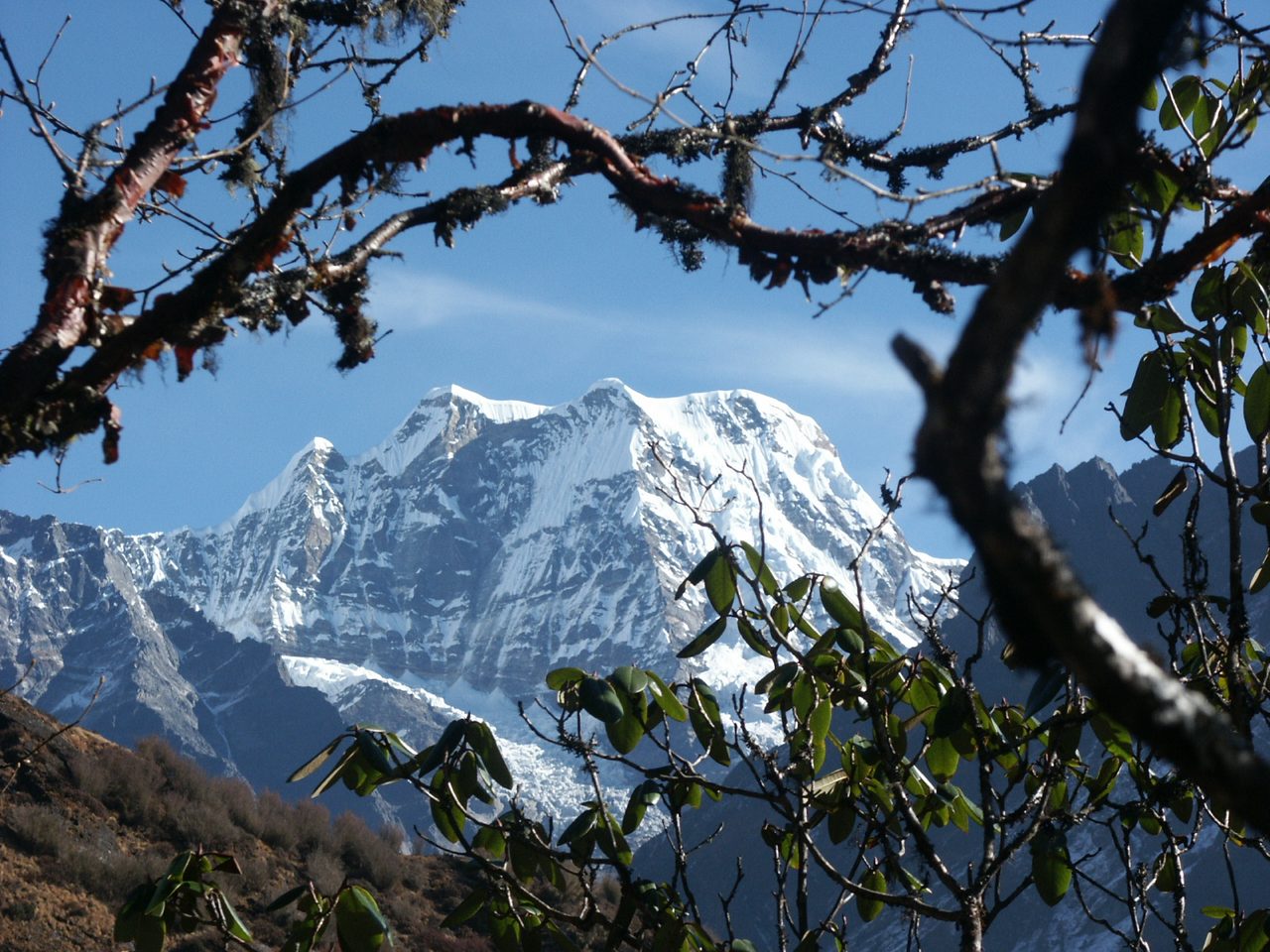
Why "trekking peak" is misleading
The Nepal Mountaineering Association classifies Mera as a "trekking peak," which sounds gentle. The bureaucratic label refers to the permit category, not the difficulty. Mera Peak is technically modest - a long glacier walk with a fixed line on the summit cone - but it sits at 6476m, which puts it higher than every Alpine peak and the entire continental United States bar Denali.
The Nepal Mountaineering Association issued roughly 1,700 Mera Peak permits in 2019. Only around 428 summit certificates were issued the same year (about a 25 percent certificated success rate; real summit rates are usually quoted higher in the 50-60 percent range, since not every successful climber bothers with the certificate). The gap between attempts and summits is rarely about technique. It is about altitude, summit-day fatigue, and an underestimation of what 14 days of progressive trekking does to the body before you even start the climb.
The training demand profile
Mera loads five physiological systems in different ways than a single-day Alpine peak. A real Mera plan trains all five.
Altitude reality check
Training builds the engine. Altitude is its own thing. At 6476m you have around 45 percent of sea-level oxygen, and the only way to genuinely adapt is to spend time up there. No algorithm replaces that. The good news for Mera: the standard 8-10 day trek-in is itself the acclimatisation chain. Lukla (2860m) to Khare (5045m) to High Camp (5800m) is exactly the climb-high-sleep-low ramp the physiology requires. It works if you respect it. It fails if you push through symptoms or skip rest days. The deeper guide on this is in altitude acclimatisation guide.
A weekly distribution that works
The polarised principle applies: most of the week at low intensity, one hard session, one long mountain day. A representative week, 12 weeks out from a Mera trip:
- Mon · easy 60 min Z2
- Tue · threshold or VO2max intervals, 4 x 4 min Z4-Z5
- Wed · rest or 30 min mobility
- Thu · Z2 hike with weighted pack, 2-3 hours, 600-900m vertical
- Fri · easy 45 min Z2 + eccentric strength (step-downs, weighted lunges)
- Sat · long mountain day, 5-7 hours mixed Z2 with vertical
- Sun · 2-3h Z2 on tired legs (back-to-back loading)
Roughly 85 percent of weekly volume sits at Z1-Z2, with one hard intensity session and one back-to-back load. Vertical accumulates progressively across the block. The single ≥8-hour rehearsal day lands 4-6 weeks before the trip, not in the final taper. The deeper rationale is in our heart rate zones for mountaineering guide.
How TTM tunes the plan to Mera Peak
What the algorithm calibrates to your peak
- Fitness target · Mera's fitness target reflects its long summit-day duration and sustained 6000m+ altitude exposure. Higher than a 4000m Alpine peak; the plan is engineered to hit it by your trek start date.
- Summit-day rehearsal · The Long Day Score is calibrated to Mera's 8-14 hour summit day. The plan schedules a real ≥8-hour single training day in the 6-week window before your trip.
- Descent eccentric load · The Descent Readiness Score accounts for the summit-day descent plus the typical continuation to Khare. Eccentric strength and downhill repeats are programmed in, not bolted on.
- Trek-in loading pattern · Back-to-back heavy days build progressively to mirror the daily cumulative pattern of an 8-10 day Hinku Valley trek. By trip day, daily walking with a pack is the easy part.
- Phase length from your trip date · The plan runs backwards from your departure date. Taper lands when you fly, not three weeks before.
When you tell TTM your objective is Mera Peak and your trip date, the plan is built backwards from there with all five demands engineered in. The trek itself handles altitude. The training makes sure your engine arrives ready.
Common questions about training for Mera Peak
How do I build endurance for Mera Peak's 8-14 hour summit day at 6000m+?
Mostly time at low intensity, with a deeper engine than a 4000m peak needs. Mera summit day runs 8 to 14 hours from High Camp at 5800m (19,029 ft), and Z2 at 6000m+ feels like Z3 at sea level.
What altitude work matters for Mera Peak (6476m / 21,247 ft)?
At 6476m (21,247 ft) you have around 45% of sea-level oxygen. The good news for Mera: the standard 8-10 day Hinku Valley trek-in is itself the acclimatisation chain.
Does a Mera Peak plan need to be personalised to me?
Yes, in five specific ways: your starting fitness, your trip start date (the taper lands when you fly), the trek-in loading pattern progressively built across the plan to mirror an 8-10 day Hinku Valley walk-in, one 8+ hour rehearsal day placed 4-6 weeks out, and the descent eccentric load calibrated to the summit-day double descent (660m / 2,165 ft back to High Camp plus often 700m / 2,300 ft more to Khare).
Can I train for Mera Peak with a full-time job?
Yes. The polarised distribution fits busy schedules because most training is low-intensity work that fits early mornings, lunches, or evenings.
What does comprehensive Mera Peak prep actually cover?
Five trainable demands. (1) An aerobic engine for 8-14 hour summit days at 6000m+ (19,700+ ft).
What strength work does Mera Peak training need?
Targeted, eccentric-heavy, minimal volume. The biggest priority is descent resilience: the summit-day double descent on tired legs breaks more climbers than altitude does.
Can I prepare for Mera Peak from sea level without high-altitude terrain?
Yes, with one honest constraint: altitude adaptation comes from the trek-in itself, not sea-level training. The aerobic engine, trekking volume, descent eccentric load, and back-to-back fatigue tolerance can all be trained anywhere with hills, stairs, or a treadmill on incline.
How is Mera Peak training different from a 4000m Alpine peak?
Three differences. First, summit day at 6000m+: a 4000m Alpine peak summit day is 8-12 hours at moderate altitude; Mera is 8-14 hours at 6000m+ (19,700+ ft), where Z2 feels like Z3 at sea level.
Tools and deeper reading
Take this further
- Summit Readiness Simulator · Test if you are ready for Mera Peak today. Free, science-backed, 90 seconds. Enter your peak, your trip date, and your current fitness; get a readiness score.
- Altitude Acclimatisation Guide · The climb-high-sleep-low rule, the 300-500m (1,000-1,650 ft) per-night ceiling, AMS warning signs - the trek-in itself is your acclimatisation chain.
- Eccentric Descent Training · Why the summit-day double descent on tired legs breaks more climbers than altitude does, and the specific eccentric work that prevents it.
- Heart Rate Zones for Mountaineering · The polarised 85/15 distribution, why Z2 dominates, and why Z2 at 6000m+ feels like Z3 at sea level.
- The Science Behind TTM · Banister's model, polarised distribution, altitude physiology, eccentric load - the peer-reviewed research the adaptive algorithm is built on.
- Muscular Endurance for Mountaineering · The pillar guide on the quality that turns gym strength into legs that last a summit day. Pair with the free Muscular Endurance Calculator to score where you stand.
The takeaway
Mera Peak is not technically hard, but it is genuinely committing. The climbers who summit reliably are the ones whose training matched the trip's actual demand profile - long aerobic days, back-to-back loading, descent eccentric resilience, and a healthy respect for what 6476m does to the body. The climbers who turn around usually trained for a 4000m peak and were caught by the altitude, the duration, or the descent.