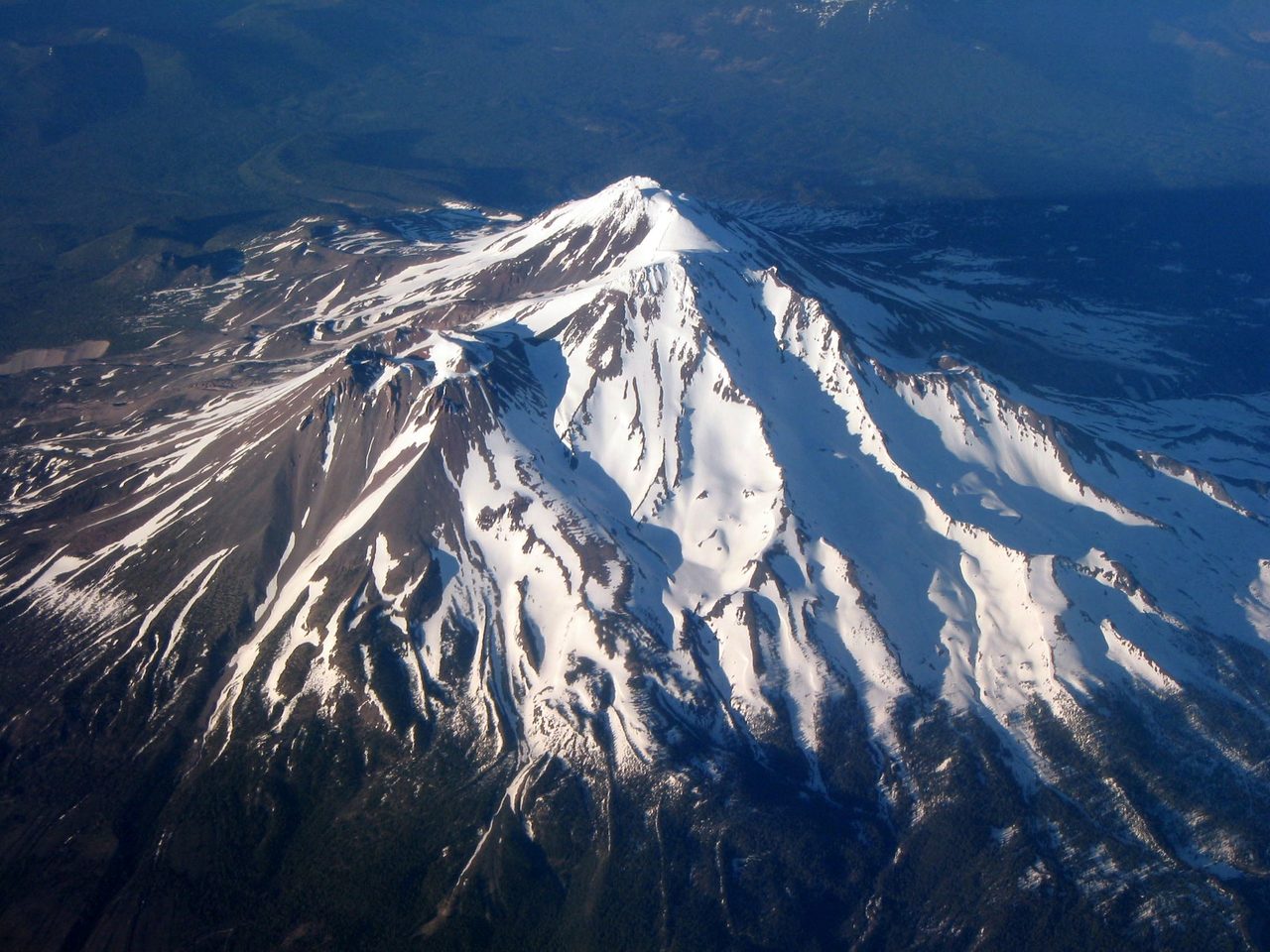
Why Mt Shasta punishes underprepared climbers
Mt Shasta's Avalanche Gulch route is non-technical by alpine standards, but every year many climbers turn around, get lost, or end up in accidents. Most failures, repeatedly cited by the Mount Shasta Avalanche Center and the major California guide services, cluster around three causes.
The first is fitness. Shasta asks for 2,225 metres (7,300 ft) of vertical gain across two days with a real pack. Climbers who arrive in shape for a single-day hike at the upper end of their fitness, but who have not done the back-to-back weighted load, run out of gas on summit day. The second is avalanche timing. The gulch is named for what it does in warm spring conditions: wet loose avalanches release from the upper slopes once the sun warms them. Parties caught on the gulch after late morning are exposed. The third is steep-snow technique. The route is not technical, but the angle is real and the consequences of a slip in firm conditions are serious. Self-arrest competence is non-optional.
None of this is bad luck. All three failure modes are trainable, and Shasta forgives most climbers who arrive prepared.
The training demand profile
Shasta loads five systems, four of which are pure fitness and one of which is snow skill plus avalanche awareness.
Altitude reality check
Training builds the engine. Altitude on Shasta is a factor for sea-level climbers but rarely the decisive one. At 4322m (14,180 ft) you have around 60 percent of sea-level oxygen at the summit, and the two-day itinerary with a night at Helen Lake (3,183m / 10,443 ft) provides a useful intermediate exposure. If you live at sea level and have never been above 3500m (11,500 ft), a day-hike on a 3000m+ peak in the weeks before reduces the surprise factor. Beyond that, save altitude work for Rainier or higher objectives. The deeper guide on this is in our altitude acclimatisation guide.
A weekly distribution that works
The polarised principle applies. A representative week, 10 weeks out from a Shasta attempt:
- Mon · easy 60 min Z2
- Tue · threshold intervals, 4 x 4 min Z4-Z5
- Wed · rest or 30 min mobility
- Thu · Z2 hike with weighted pack, 2-3 hours, 600-1000m (2,000-3,300 ft) of vertical, 25-30 lb (11-14 kg) pack
- Fri · easy 45 min Z2 + eccentric strength
- Sat · long mountain day, 4-6 hours, progressively heavier pack (28-35 lb / 13-16 kg)
- Sun · 2-3 h Z2 on tired legs (back-to-back loading, lighter pack)
Roughly 85 percent of weekly volume sits at Z1-Z2. The back-to-back rehearsal weekend with trip-weight pack lands 4-6 weeks before the trip, not in the final taper. See heart rate zones for mountaineering for the rationale.
How TTM tunes the plan to Mt Shasta
Four things the algorithm calibrates to your peak
- Fitness target · Reflects two big days with 7,300 ft of vertical and a 30-35 lb pack. Reachable from a typical hiker's starting point in 10-12 weeks. The plan is engineered to hit that number by your trip date.
- Pack weight progression · Build from light early sessions to trip-weight (30-35 lb / 14-16 kg) by 4 weeks out.
- Summit-day rehearsal · The Long Day Score is calibrated to Shasta's 2-day load. Schedules a back-to-back rehearsal weekend 4-6 weeks out.
- Descent eccentric load · Calibrated to 2,225m (7,300 ft) of descent on snow. Eccentric strength is programmed in.
The snow-technique and avalanche-awareness layer you bring from a 1-2 day course or a guided trip. TTM does not teach self-arrest.
Common questions about training for Mt Shasta
How do I build endurance for Mt Shasta's 7,300 ft of vertical?
Shasta covers 2,225m (7,300 ft) of gain across the round trip, with most parties splitting it into two days: a 4-5 hour weighted approach from Bunny Flat (2,115m / 6,940 ft) to Helen Lake camp (3,183m / 10,443 ft), then a 6-9 hour summit day.
What altitude work matters for Mt Shasta (4322m / 14,180 ft)?
Modest but worth considering. At 4322m (14,180 ft) altitude is a factor for sea-level climbers but rarely the decisive one.
Does a Mt Shasta plan need to be personalised to me?
Yes, in four specific ways: your starting fitness, your trip start date (where the taper lands), the progressive pack weight build (30-35 lb / 14-16 kg by trip week), and one back-to-back rehearsal weekend placed 4-6 weeks out.
Can I train for Mt Shasta with a full-time job?
Yes. Mt Shasta is one of the most working-week-friendly serious Cascades peaks because it is typically a 2-day trip and the spring snow season runs April through June, when long weekend trips fit naturally.
What does comprehensive Mt Shasta prep actually cover?
Three layers. (1) Fitness: an aerobic engine deep enough for two days back to back with 7,300 ft (2,225m) of total vertical, weighted-carry endurance up to 30-35 lb (14-16 kg), eccentric descent strength, and one back-to-back rehearsal weekend.
What strength work does Mt Shasta training need?
Two priorities: eccentric leg strength and progressive weighted-carry endurance. Eccentric work (weighted step-downs, slow-tempo split squats, controlled downhill repeats) builds resilience for 2,225m (7,300 ft) of descent, much of it on snow with crampons on tired legs.
Can I prepare for Mt Shasta from sea level without high-altitude terrain?
Yes. Mt Shasta is sea-level-friendly because the altitude is moderate (4322m / 14,180 ft) and the only non-fitness skill required is basic snow climbing.
How is Mt Shasta different from Mt Rainier or Mt Hood?
Shasta sits between Hood and Rainier in difficulty. Versus Hood: Shasta is meaningfully bigger - 893m (2,930 ft) more vertical and a 2-day trip instead of a single day.
Tools and deeper reading
Take this further
- Summit Readiness Simulator · Test if you are ready for Mt Shasta today. Free, science-backed, 90 seconds.
- Training for Mt Rainier · The natural step up. More altitude, real glacier crevasses, heavier pack.
- Training for Mt Baker · The PNW glacier intro. Similar effort to Shasta but adds real crevasse work.
- Eccentric Descent Training · Why 7,300 ft of descent on snow wrecks quads, and the eccentric work that prevents it.
- Heart Rate Zones for Mountaineering · The polarised 85/15 distribution and how to pace a two-day load.
- The Science Behind TTM · Banister's model, polarised distribution, altitude physiology, eccentric load.
- Muscular Endurance for Mountaineering · The pillar guide on the quality that turns gym strength into legs that last a summit day. Pair with the free Muscular Endurance Calculator to score where you stand.
The takeaway
Mt Shasta is rarely a technical problem and rarely a willpower problem. It is a fitness problem and a snow-timing problem, in that order. The climbers who summit reliably are the ones whose training built the aerobic depth and the descent strength, who arrived practised on self-arrest, and who started early to be off the gulch before the sun warmed the upper slopes. The mountain finds the gap.