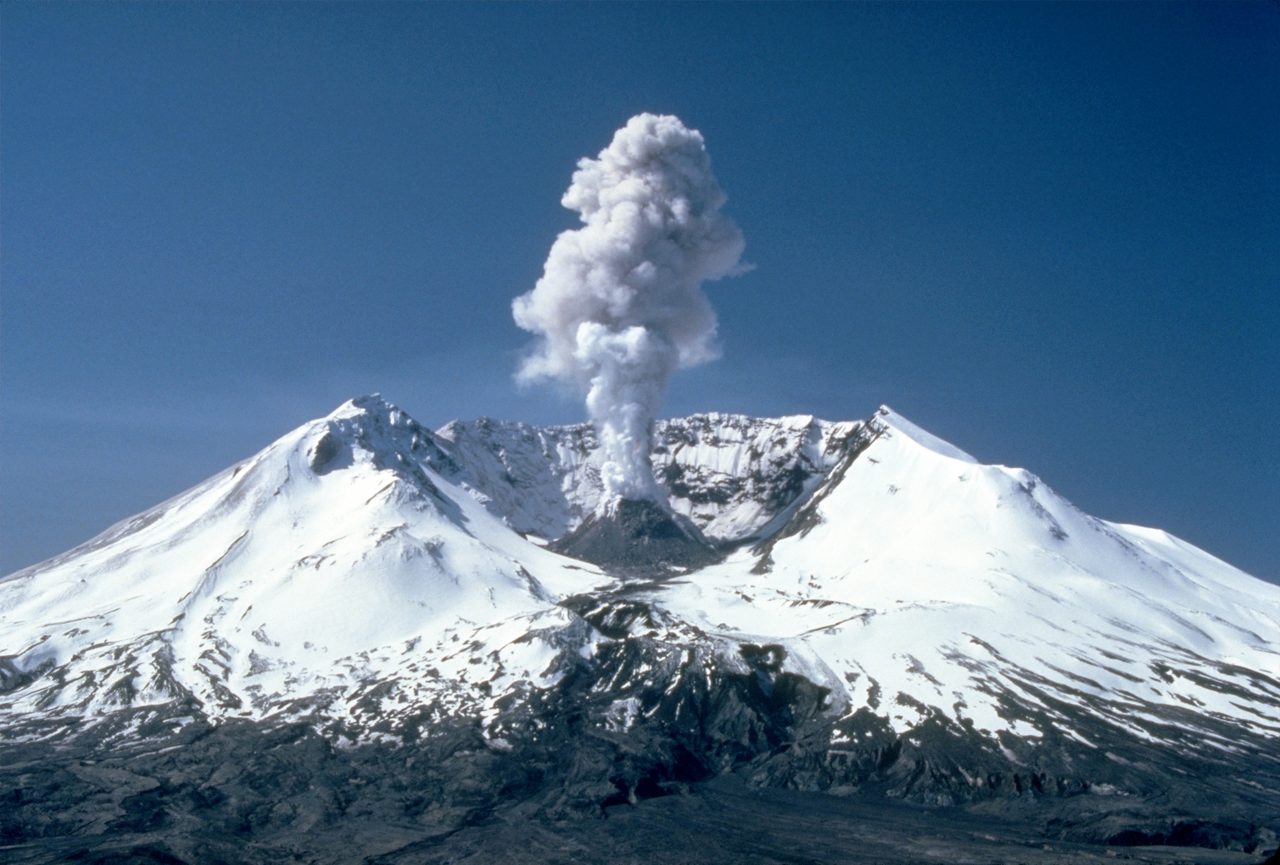
Why Mt St Helens is the canonical first volcano
Mt St Helens is the rung on the Cascades ladder that most aspiring volcano climbers should be standing on first. At 2,549m (8,363 ft), the altitude is mild. The standard summer route up Monitor Ridge is a non-technical scramble: no glacier travel, no crevasse hazard, no rope skills required. The Mount St. Helens Institute and the US Forest Service both list it as a popular first ascent for climbers building toward bigger objectives.
That does not make it easy. The Monitor Ridge route gains roughly 1,370m (4,500 ft) in about 7.2km (4.5 miles) of climbing, and you cover that same vertical loss back down on volcanic boulders, pumice, and loose scree. Most parties take 7 to 12 hours round trip. The mountain rewards specific preparation and punishes the assumption that a fit weekend hiker can just show up and crush it.
If you are looking at Mt Hood or Mt Baker as your first big climb, Mt St Helens is the lower-commitment confidence-builder that lets you find out whether a long, loaded mountain day actually agrees with you. It is the canonical "pre-mountaineering" volcano. Underestimating it is the most common mistake. Treating it as a stepping stone, not a tourist hike, is the right framing.
No glacier. No rope. Real mountain day. That is the value of Mt St Helens as a first volcano.
Physical benchmarks to hit before Mt St Helens
Mt St Helens loads four physiological systems differently. A real preparation plan trains all four, not just the legs that got you to the trailhead.
Altitude and terrain reality check
Mt St Helens reaches 2,549 m (8,363 ft). That is high enough to feel, but altitude is rarely the deciding factor here; terrain, weather and the long day matter more. The honest levers are steady acclimatisation where the height warrants it and the mountain sense the terrain demands. Train the body, and respect the weather window and the descent.
The 12-16 week Mt St Helens preparation timeline
The block runs backwards from your climb date. Five phases, each with a distinct target.
- Weeks 1-4 · Aerobic base. Build the deep engine that keeps a long day efficient.
- Weeks 5-8 · Base plus strength. Add eccentric leg strength and progressive weighted carries.
- Weeks 9-11 · Muscular endurance. Long days with vertical and a building pack.
- Weeks 12-13 · Peak simulation. A long mountain day near your summit-day length, 4-6 weeks out.
- Week 14 · Altitude and skills. Time high where you can, plus the mountain craft Mt St Helens needs.
- Weeks 15-16 · Taper. Volume drops; skills stay sharp; arrive fresh.
A weekly distribution that works
The polarised principle applies: most of the week at low intensity, one hard session, one long mountain day. A representative week, 6 weeks out from a Mt St Helens summit:
- Mon · easy 45 to 60 min Z2
- Tue · threshold intervals or VO2max, 4 x 4 min Z4-Z5
- Wed · rest or 30 min mobility
- Thu · long Z2 hike, 2 to 3 hours with 500 to 700m (1,650 to 2,300 ft) vertical, weighted pack
- Fri · easy 45 min Z2 + eccentric strength (step-downs, weighted lunges)
- Sat · long mountain day, 3 to 5 hours mixed Z2 with vertical
- Sun · 60 to 90 min Z2 on tired legs (back-to-back loading)
Roughly 80 percent of weekly volume sits at Z1 to Z2, with one hard intensity session and one back-to-back load. Vertical accumulates progressively across the block. The single 6+ hour rehearsal day lands 3 to 5 weeks before the trip, not in the final taper. The deeper rationale is in our heart rate zones for mountaineering guide.
Technical skills you must bring to Mt St Helens
TTM trains the body. Mt St Helens's exposed, often loose ground demands mountain craft - bring these or go with a guide.
- Confident exposed scrambling, up and down.
- Route-finding to hold the easiest line under fatigue.
- Steady movement on loose or broken rock.
- Descent control on tired legs.
How TTM tunes the plan to Mt St Helens
Five things the algorithm calibrates to your peak
- Fitness target · Mt St Helens is calibrated to a Mountain Fitness threshold our model associates with finishing the summer scramble or spring snow climb safely with margin. Your plan is engineered to hit that number by your summit date.
- Vertical accumulation target · approximately 14,000m (46,000 ft) of climbing across the build. The plan distributes that volume progressively, with recovery weeks every 4th.
- Summit-day rehearsal · the Long Day Score is calibrated to the 7 to 12 hour summit day. The plan schedules a real 6+ hour single training day in the 5-week window before your trip, not earlier.
- Descent readiness · the Descent Readiness Score is calibrated to the roughly 1,370m (4,500 ft) descent on volcanic boulders and pumice. Eccentric strength and downhill repeats are programmed in, not bolted on.
- Weekly adaptation · the plan recalibrates every Sunday based on the previous week of training. Not real-time, not daily. One careful update per week, the way adaptation actually works (Banister et al., 1975).
When you tell TTM your objective is Mt St Helens and your summit date, the plan is built backwards from that date with all the demands engineered in. If your trip is in the Worm Flows season, the plan flags the snow-travel skills you need to add. You can also compare the plan against a step-up objective like Mt Adams or a step into glaciated terrain at Mt Hood.
Season, permits, and the post-eruption terrain
Mt St Helens has two practical seasons, and they are different climbs.
Summer scramble, roughly mid-May to October. Monitor Ridge from Climbers Bivouac is the standard summer route: 14.5km (9 miles) round trip with about 1,370m (4,500 ft) of gain. The lower section is forest trail to timberline at about 1,463m (4,800 ft). Above that, the route follows wooden pole cairns up blocky basalt and pumice to the crater rim. No glacier. No rope. A sturdy boot, trekking poles, and gloves for the boulders are the kit. Most parties finish in 7 to 12 hours.
Winter and spring snow climb, roughly November to early June. The Worm Flows route from Marble Mountain Sno-Park is the standard cold-season line: about 17km (10.8 miles) and 1,740m (5,700 ft) of gain. Worm Flows is a real snow climb. Ice axe, crampons, and self-arrest competence are required, and avalanche awareness is non-negotiable. The Washington Trails Association lists this as a non-technical climb for experienced winter hikers, which is to say experienced winter hikers, not first-timers.
Permits. A climbing permit is required year-round for anyone travelling above 4,800 ft (1,463m). From April 1 to October 31 the mountain is on a daily quota administered by the Mount St. Helens Institute through recreation.gov. The cap is roughly 350 climbers per day from April 1 to May 14, and 110 climbers per day from May 15 to October 31. Permits release at 7:00 AM Pacific Time on the first day of the preceding month and sell first-come, first-served. Quota-season permits cost around $20 per climber plus a $6 reservation fee. Summer weekends typically sell out within minutes of release. From November 1 to March 31 permits are self-issued at the Marble Mountain Sno-Park trailhead at no cost. Verify the current quota, fee, and release rules on recreation.gov before booking, because the program changes year to year.
Common questions about training for Mt St Helens
How long is summit day on Mt St Helens?
Plan for approximately 7 to 12 hours round trip, depending on route, conditions, and party speed.
Is Mt St Helens a good first volcano?
Yes. Mt St Helens is widely cited as the canonical first Cascade volcano.
Do I need a permit to climb Mt St Helens?
Yes. A climbing permit is required year-round for anyone travelling above 4,800 ft (1,463m) on Mt St Helens.
How does Mt St Helens compare to Mt Adams or Mt Hood for training?
Mt St Helens is the lower-commitment cousin. At 2,549m (8,363 ft) the altitude is mild, summer Monitor Ridge is a non-glaciated scramble, and the day is shorter than Adams or Hood.
Does altitude matter at 2,549m (8,363 ft)?
Mildly. At 2,549m (8,363 ft) the summit is below the threshold where most unacclimatised climbers feel significant performance loss.
What weekly distribution works for a Mt St Helens build?
Polarised. Around 80 percent of weekly volume at Z1 to Z2, one hard intensity session, and one long mountain day.
Tools and deeper reading
Take this further
- Peak Progression Planner · See where Mt St Helens sits in a full progression and the graded paths around it, from a fast line to a cautious foundation.
- Summit Readiness Simulator · Test whether you are ready for Mt St Helens today. Free, science-backed, about 90 seconds.
- Training for Mountaineering · How TTM builds personalised mountaineering training plans backwards from your summit date, recalibrated each Sunday.
- Train for South Sister · Oregon classic non-technical first volcano, real vertical for the legs.
- Train for Mt Adams · A big Cascades volcano and a first taste of glacier travel.
- Altitude Acclimatisation Guide · The four acclimatisation training protocols and how to fit them into your build.
- Muscular Endurance for Mountaineering · The pillar guide on the quality that turns gym strength into legs that last a summit day. Pair with the free Muscular Endurance Calculator to score where you stand.
The takeaway
Mt St Helens is rarely a fitness problem in the abstract. It is a specificity problem with a permit problem stacked on top. The climbers who summit happy are the ones whose training matched the mountain's actual demand profile: aerobic engine for a long day, eccentric strength for the descent, vertical accumulation week by week, and a real 6+ hour rehearsal day before the trip. If you are climbing in the snow season, add winter skills. If you are climbing in summer, set a calendar reminder for the 7:00 AM permit drop. Then build the plan from your summit date back, not forward from your couch. Start with our guide on how to train for mountaineering, run the numbers on the summit simulator, and the path to the crater rim gets a lot clearer.