Pick the tests you want and get one report with your biggest gap before day one. Free, a few minutes, no signup.
Why the Condor Trek wears fit people down
The Condor Trek is sold as a supported four-day, three-night trek: transport from Quito, a crew that cooks, donkeys and horses for the gear, entry to the Antisana Reserve and Cotopaxi National Park included. Nothing is technical and no day is huge: a typical day is about 7 hours, 12.2 km and 352 m of ascent. People read that, train for a hike, and arrive at four consecutive days on open paramo that starts at 3,615 m, with three nights in a tent at 3,642 to 4,206 m before the pass.
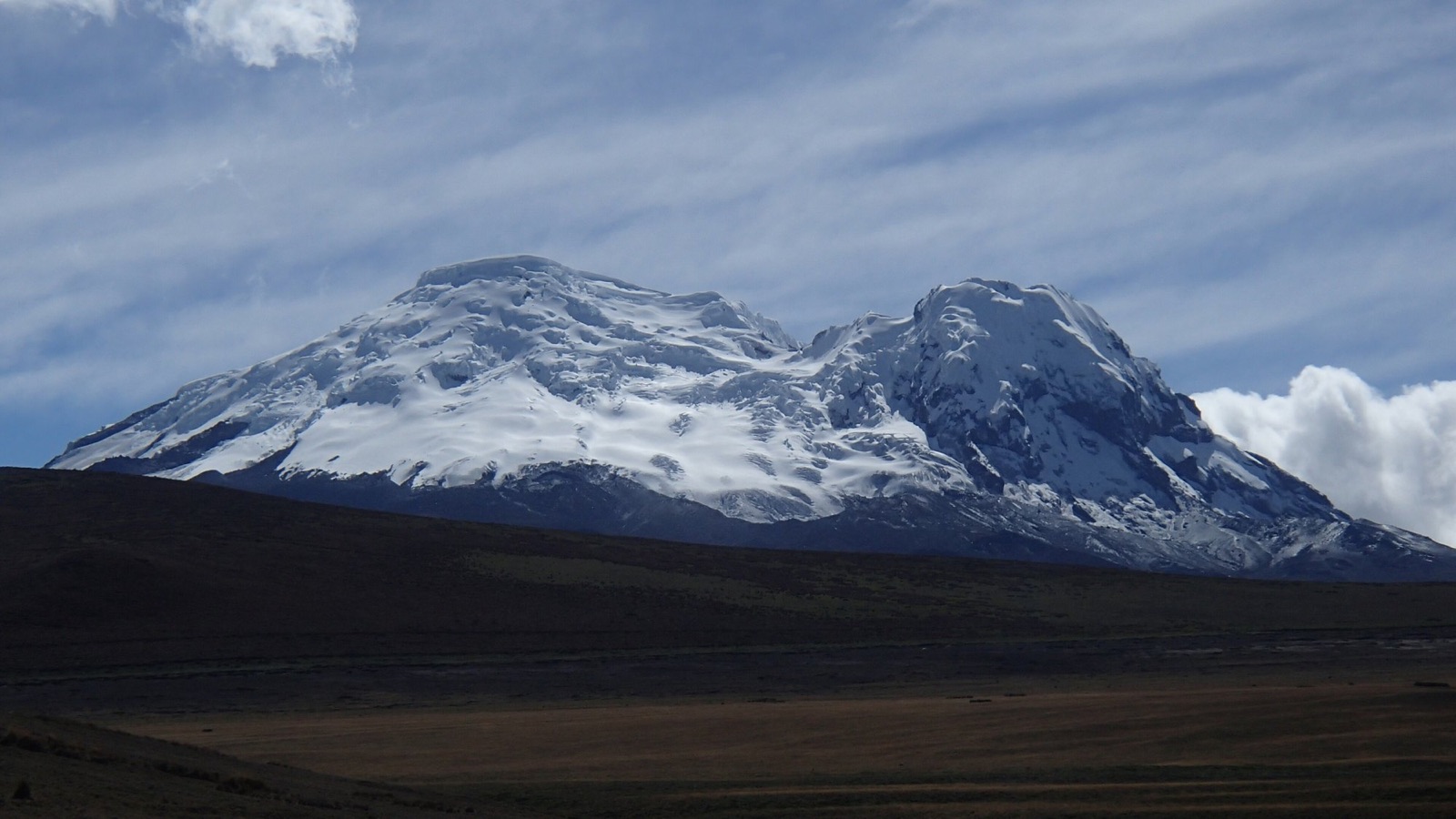
Three things do the damage. The first is the altitude you live at: the trek starts at 3,615 m, every camp is higher, two of the three are above 4,000 m, and day 4 goes over the Sincholagua pass at 4,407 m on legs that have slept high for three nights. The second is the ground: open paramo on paths and tracks that are partly unmarked and often absent, so navigation is the main difficulty and the walking is slower per kilometre than the distances suggest; day 3, the longest, is 15.9 km and 7 to 9 hours for 403 m of ascent. The third is the weather on that ground: cold, wind and fog, and bog and mud in the wet season. Day 2 carries the biggest ascent, 741 m up to the Antisana base camp at 4,090 m, and day 4 the biggest descent, 741 m from the pass into the Rio Pita valley.
The stage profile: the 4-day, three-camp traverse from Papallacta to Cotopaxi, day by day
Training for a trek starts with its shape. The table is the 4-day, three-camp split that operators share, with camps at Laguna del Volcan, the Antisana base camp and Laguna Taracocha at the foot of Sincholagua: what the plan is built from, and what you can check your own operator's version against (some run the same walking route but add a lodge night and a Cotopaxi day; some sleep at a lodge in the Pita valley after the last day instead of driving back to Quito).
| Day | Stage | km | Gain m | Loss m | Hours | Sleep at |
|---|---|---|---|---|---|---|
| 1 | El Tambo (3,615 m) to Laguna del Volcan (Laguna Tumiguina) | 6.4 | +300 | -293 | 4 to 5 | 3,642 m |
| 2 | Laguna del Volcan to Antisana base camp (Antisanilla area), high point 4,380 m | 13.8 | +741 | -272 | 6 to 8 | 4,090 m |
| 3 | Antisana base camp to Laguna Taracocha, foot of Sincholagua | 15.9 | +403 | -282 | 7 to 9 | 4,206 m |
| 4 | Laguna Taracocha to Rio Pita valley (3,695 m) via the Sincholagua pass (4,407 m) | 10.5 | +225 | -741 | 5 to 8 | trek ends |
About 47 km, 1,669 m of ascent and 1,588 m of descent over four days. Three nights in tents, the highest at Laguna Taracocha, 4,206 m. Donkeys and horses carry the camp; you carry a daypack. Crews draw lake and stream water at the camps; treat it. Daily figures differ by operator and by camp choice; the table follows the canonical trek database (two independent itineraries plus a terrain measurement of the route, checked 2026-10-18).
Read the table as a training brief. Day 1 is short, 6.4 km with 300 m of ascent, and ends at the first camp at 3,642 m. Day 2 is the ascent: 741 m over 13.8 km, past Laguna Santa Lucia and the streams below the Antisana glacier, to a camp at 4,090 m. Day 3 is the long one: 15.9 km and 7 to 9 hours across the paramo to Laguna Taracocha at 4,206 m, the highest night. Day 4 goes over the Sincholagua pass at 4,407 m and drops 741 m into the Rio Pita valley. Three consecutive high nights, slow ground and a descent on the last day are what the plan is built around; the daily ascent, 352 m on a typical day, is not.
What a trek asks that a summit does not
A one-day objective has one hard day and a walk out. The Condor Trek has four medium days in a row, all of them high, on ground that is slower than its numbers, with the only real descent at the end. That is a different physiology, and a plan built for a single hard day misses it.
- Consecutive days, not one day. Four days, no rest day, three in a row over five hours, every night in a tent at 3,642 m or higher. Fatigue accumulates faster than fitness recovers, so the plan trains back-to-back long days, not a single rehearsal.
- Slow ground, not steep ground. A typical day is only 352 m of ascent, but it is 12.2 km and about 7 hours on open paramo that is often pathless and boggy in the wet season. Hours on your feet on uneven ground, not metres of gain, are what the weekend long days are sized to.
- Altitude from the first step. The trek starts at 3,615 m, sleeps at 3,642, 4,090 and 4,206 m, and crosses 4,407 m on day 4. Acclimatisation has to happen before you start; training lowers the cost of every hour up there.
- The descent comes last. 741 m down from the Sincholagua pass into the Rio Pita valley on day 4, after three high nights. Eccentric leg strength is what makes that a walk out rather than a limp out.
- A daypack, and the weather as the mountain risk. Donkeys and horses carry the camp; you carry water, layers and rain gear, and you need all of them: cold, wind and fog on open paramo where navigation is the main difficulty. Fitness buys the margin to keep moving and keep warm.
Physical benchmarks to hit before the Condor Trek
The Condor Trek loads five physiological systems. A real preparation plan trains all five, with consecutive high days on slow ground at the centre.
Altitude: what the itinerary handles and what training cannot
Training builds the engine. Altitude is its own thing. The Condor Trek starts at 3,615 m and never sleeps lower: 3,642, 4,090 and 4,206 m on the three nights, then the Sincholagua pass at 4,407 m (14,459 ft), with roughly 60 percent of sea-level oxygen, on day 4. Four days is too short for the trek itself to acclimatise you, and the first camp is already at 3,642 m. What does the work is time at altitude before you start, for most people in and around Quito, where the trek begins and ends. Keep those days. The itinerary helps in one way: the camps rise in steps, night by night, and the pass comes last, on the fourth morning, not the second.
What training does for altitude is indirect and real: the fitter you are, the lower the effort of each hour on the paramo, and the more reserve you keep for the thin air, the cold and the wind. Walk slowly even when you feel strong, drink (the crews draw lake and stream water at the camps; treat it), and follow your operator's advice on symptoms. Our altitude acclimatisation guide covers the per-night ascent ceiling and AMS warning signs.
The 12 to 16 week Condor Trek preparation timeline
The block runs backwards from your departure date. Six phases, each with a distinct target. The hardest training weeks land three to six weeks before you fly, not in the final taper.
- Weeks 1 to 4 · Aerobic base. Three to four Z2 sessions a week, 45 to 90 minutes. Walk, hike, run, cycle; weight on feet preferred.
- Weeks 5 to 8 · Base plus strength plus the weekend pair. Add one eccentric leg session a week and make the weekend two consecutive Z2 hikes on rough ground, daypack on from here on.
- Weeks 9 to 11 · Muscular endurance. Weekend days grow to 4 to 5 hours with 600 to 800 m of gain (a typical day is 352 m, the biggest 741 m) on the roughest ground you have, the Sunday walk stays long. Stairs and incline for the vertical if you have no hills.
- Weeks 12 to 13 · Big-day rehearsal. One 7 to 9 hour day of about 15.9 km on uneven, wet ground, the daypack and the real food: the shape of day 3.
- Week 14 · Last big weekend. One more back-to-back pair at full length, then the taper begins.
- Weeks 15 to 16 · Taper. Volume drops 30 to 50 percent, one short sharp session stays, legs arrive fresh in Quito for the days at altitude before the trek.
A weekly distribution that works
The polarised principle applies: most of the week at low intensity, one hard session, and the weekend pair that makes a trek plan different from a summit plan, two long days back to back (Seiler & Kjerland, 2006). A representative week, 10 weeks out from Condor Trek:
- Mon · easy 60 min Z2 walk or run
- Tue · threshold intervals, 4 x 4 min Z4, or hill repeats
- Wed · rest or 30 min mobility
- Thu · 60 to 90 min stairs or treadmill incline, Z2, daypack on, 400 to 600 m of gain
- Fri · eccentric strength: weighted step-downs, split squats, calf and hip work, 40 min
- Sat · long Z2 hike, 4 to 5 hours, 600 to 800 m of gain, rough or boggy ground, daypack on
- Sun · second long Z2 walk on tired legs, 2.5 to 3.5 hours, pack on (the back-to-back day)
Roughly 80% of weekly volume sits at Z1 to Z2, with one hard intensity session and the back-to-back weekend. Vertical and hours accumulate progressively across the block. The deeper rationale is in our heart rate zones guide; the descent work is explained in eccentric descent training.
How TTM trains the plan to the Condor Trek
Five things the plan is built around
- Fitness target · The Condor Trek is set to a fitness target the model associates with walking the four days with margin. Your plan is engineered to reach that level by your departure date, and the readiness number tells you how far off you are, with the basis stated.
- Stage-shaped long days · The weekend long days are sized from the itinerary above, not from a generic hiking template: hours grow toward the 7 hour typical day on rough ground, then toward the 7 to 9 hours of day 3.
- Back-to-back loading · The plan schedules consecutive long days in the build and specific phases because that is the demand. Multi-day durability is scored as its own component of your readiness.
- Descent eccentric load · Eccentric strength and downhill repeats are programmed from the middle of the plan to prepare for the 741 m descent from the pass on day 4, not bolted on at the end.
- Weekly recalibration · Every Sunday the plan re-reads your watch data (Garmin, Suunto, Coros, Polar, Apple Health) and adjusts the next week: missed sessions, a cold, a bigger-than-planned weekend, all accounted for.
When you tell TTM your trek is the Condor Trek and your departure date, the plan is built backwards from that date with the stage profile above engineered in, and it recalculates every week, every Sunday, against your actual training data from your watch. You do not need to assemble the pieces yourself.
Condor Trek: quick answers
How fit do I need to be for the Condor Trek?
Fit enough to walk about 7 hours a day, and 7 to 9 on the longest, for four days in a row on open paramo at 3,615 m and above with a daypack, sleeping in a tent at 3,642 m or higher every night. No technical skill is needed; navigation is the main difficulty, which is why the route is sold with a crew. The benchmark that matters most is consecutive days on rough ground: if two long hill walks on a weekend leave you fine on Monday, you are close. If one long hike wrecks you for three days, you have a durability gap, and that is what 12 to 16 weeks of training fixes.
How many weeks does it take to train for the Condor Trek?
Twelve to sixteen weeks from a base of two or three sessions a week. Less if you already hike long days on rough ground regularly; more if you are starting from little. The hardest training weeks should land three to six weeks before you fly, with a two week taper after them.
What is the hardest day of the Condor Trek?
Day 3, Antisana base camp to Laguna Taracocha, is the longest: 15.9 km and 7 to 9 hours across the paramo for 403 m of ascent, ending at the highest camp, 4,206 m. Day 2 carries the biggest ascent, 741 m up to the Antisana base camp, and day 4 the biggest descent, 741 m from the Sincholagua pass at 4,407 m into the Rio Pita valley.
Can I train for the Condor Trek altitude at sea level?
You cannot acclimatise at sea level, and four days with a first camp at 3,642 m is too short for the trek to do it. The days you spend at altitude before you start, for most people in and around Quito, do the work. What training does is lower the cost of each hour on the paramo so you keep reserve for the thin air, the cold and the wind.
Do I need to train with a weighted pack for the Condor Trek?
Yes, with the daypack you will actually carry: water, layers and rain gear, loaded as you will carry it. Donkeys and horses carry the tents, sleeping bags, mats and food, which the operator includes along with rubber boots and all meals. Carry your real daypack on every long training day, on the roughest ground you can find.
When should I walk the Condor Trek?
The trek runs all year, and the trail is muddy in the rainy season. June to September is the usual dry season on the Cotopaxi side, while the Antisana side, facing the Amazon, is often clearest from December to February, so there is no single best window for the whole traverse. Entry to the Antisana Reserve and Cotopaxi National Park is included in the operator's price. Plan the 12 to 16 week block backwards from your start date.
Is the Condor Trek the same as the Ruta del Condor?
Yes. Condor Trek, Ruta del Condor, Camino del Condor and the Papallacta to Cotopaxi trek all name the same paramo traverse from the Cayambe-Coca reserve through the Antisana reserve to Cotopaxi National Park, 47 km over four days with three camps. Some operators add a lodge night and a Cotopaxi day, which changes the trip, not the walking.
Common questions about training for the Condor Trek
How fit do I need to be for the Condor Trek?
Fit enough to walk about 7 hours a day for four consecutive days on open paramo at 3,615 m and above with a daypack, sleeping in a tent at 3,642 m or higher every night, with a 7 to 9 hour day across the paramo on day 3. The benchmark that matters most is two long walks on rough ground on a weekend that leave you fine on Monday.
How many weeks does it take to train for the Condor Trek?
Twelve to sixteen weeks from a base of two or three sessions a week. The hardest training weeks land three to six weeks before you fly, followed by a two week taper.
What is the hardest day of the Condor Trek?
Day 3, Antisana base camp to Laguna Taracocha, is the longest (15.9 km, 7 to 9 hours, ending at the highest camp, 4,206 m). Day 2 has the biggest ascent (741 m to the Antisana base camp) and day 4 the biggest descent (741 m from the Sincholagua pass at 4,407 m).
Is the Condor Trek the same as the Ruta del Condor?
Yes. Condor Trek, Ruta del Condor, Camino del Condor and the Papallacta to Cotopaxi trek all name the same 4-day paramo traverse from Papallacta through the Antisana reserve to Cotopaxi National Park, with three camps and a 4,407 m pass under Sincholagua on the last day.
Do I need to train with a weighted pack?
Yes, with the daypack you will actually carry, loaded as you will carry it, on every long training day. Donkeys and horses carry the camp.
Can I train for the altitude at sea level?
No. The first camp is at 3,642 m and the pass is 4,407 m, so acclimatisation happens in the days at altitude before the trek, not on it. Keep those days. Training lowers the cost of each hour so you keep reserve for the thin air.
Do I need a guide or a permit for the Condor Trek?
Entry to the Antisana Reserve and Cotopaxi National Park is included in the operator's price, with transport from and to Quito, tents, sleeping bags, mats, rubber boots and all meals. The route is sold as a supported trek with a crew and pack animals, and the paramo is open and partly unmarked, so navigation is the main difficulty for anyone walking it without one.
When is the best time to walk the Condor Trek?
It runs all year. June to September is the usual dry season on the Cotopaxi side and the Antisana side is often clearest from December to February; the trail is muddy in the rainy season, and no single window suits the whole traverse.
How hard is the Condor Trek?
The Condor Trek is 4 days: 47 km, 1,669 m of ascent and 1,588 m of descent. A typical day is about 6.8 hours with 352 m of ascent; the longest, day 3, is 7 to 9 hours with 403 m up and 282 m down. The high point is 4,407 m. All three nights are above 3,000 m, so altitude is part of the difficulty and the itinerary's acclimatisation, not your fitness, is what handles it. The camp or your luggage is carried for you, so you walk with a daypack. Open, often pathless paramo where navigation is the main difficulty, three consecutive nights between 3,640 and 4,210 m and a 4,400 m pass, with cold, wind, fog and bog in the wet season. There is no rope work on the standard route. In training terms the difficulty is consecutive days, the daily vertical, the descents and the pack, and 12 to 16 weeks from a base of two or three sessions a week covers it; the 16-week Condor Trek training plan is the fixed version.
How long is the Condor Trek?
The Condor Trek is 47 km in 4 days, about 22 to 30 hours of walking in all, with 1,669 m of ascent and 1,588 m of descent, from El Tambo, near Papallacta (3,615 m) to Rio Pita valley below Sincholagua (3,695 m). That is the standard itinerary; operators move camps and merge days, which changes individual days, not the total.
Can I do the Condor Trek without training?
Not well, and for most people not safely. The Condor Trek asks for 4 consecutive days, about 6.8 hours and 352 m of ascent on a typical day and 7 to 9 hours on the longest, and three nights at or above 3,000 m where fitness does not replace acclimatisation but is what keeps reserve for it. Untrained walkers are the ones the later days hurt: fatigue accumulates faster than fitness recovers, the 1,588 m of descent lands on quads that have never braked for hours, and the gap shows on the longest day, not the first. Twelve to sixteen weeks from a base of two or three sessions a week is enough for most people; the 16-week Condor Trek training plan is the fixed version and the app builds the personalised one backwards from your departure date.
Tools and deeper reading
Take this further
- Trek Check · Test if you are ready for the Condor Trek today. Free, a few minutes. Readiness, muscular endurance, Zone 2 and a fuel plan, one report with your biggest gap.
- The Condor Trek training plan · The week-by-week version of this page: a 16-week plan you can follow, and how the personalised version differs.
- Eccentric Descent Training · Why a long descent destroys quads, and the specific eccentric work that prevents the late-day breakdown.
- Strength Training for Hikers · The leg and hip strength that keeps four days of walking injury-free.
- Altitude Acclimatisation Guide · The go-high-sleep-low rule, the per-night ascent ceiling, AMS warning signs.
- Heart Rate Zones · The polarised 80/20 distribution, why Z2 dominates, how to find your zones.
- The Science Behind TTM · Banister's model, polarised distribution, altitude physiology, eccentric load: the research the plan is built on.
Related treks
Training for something similar?
- Quilotoa Loop · Ecuador, 3 days, 35 km, high point 3,880 m. 16-week plan.
- Inca Trail to Ingapirca · Ecuador, 3 days, 36 km, high point 4,414 m. 16-week plan.
- Torres del Paine O Circuit · Chile, 8 days, 128 km, high point 1,200 m. 16-week plan.
The takeaway
The Condor Trek is rarely a fitness problem in the abstract. It is a shape problem: the people who walk down into the Rio Pita valley with legs to spare trained for four consecutive days on slow, open ground at altitude, three high nights and a 741 m descent on the last day, not for one long hike. Train the week, not the day, and let the days before the trek do the altitude.