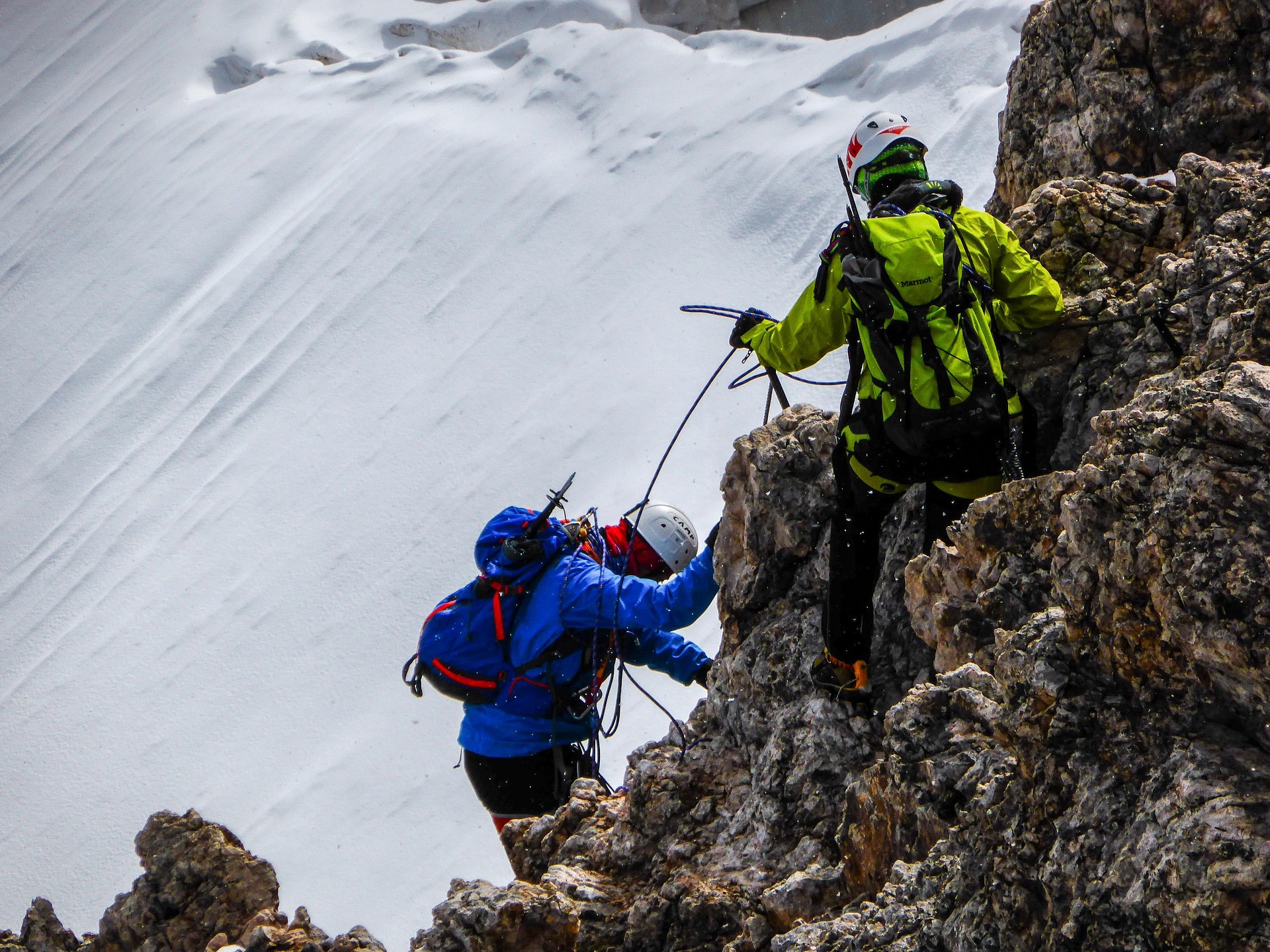
For Trekking Operators & Guides

Your reputation rides on who shows up ready.

Train to Mountain gives your clients a science-backed readiness check before they book. You see the gap weeks before departure. No more day-one surprises. No more reviews you did not deserve.

Free readiness check for your clients · No contracts · Founder-led
What you already know

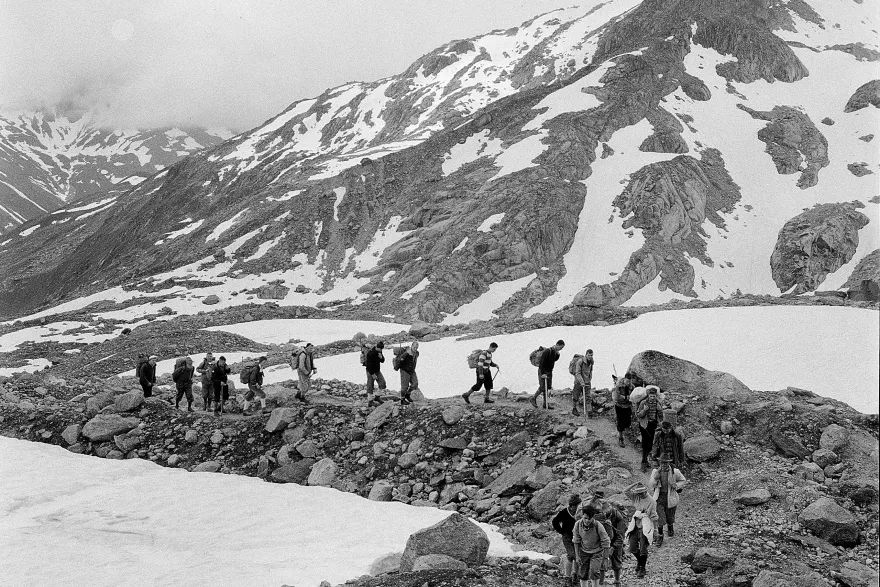
The client who shows up unfit costs you the trip.

One underprepared trekker slows the group, breaks the itinerary, and writes the review. You cannot outguide unfitness. And you should not have to.

1
Abandoned treks become your reviews Reputation
The client who did not train turns back on day four of seven. They rate the trip on the goal they missed. You get one star for a trail that did not fail them.
2
Refund conversations you shouldn't be having Cost
Three weeks out, the client admits they cannot do the training. Now you are moving dates, rebooking lodges and permits, and hoping the deposit rules save you. Your evenings, not the trail's.
3
"Am I fit enough?" a hundred times a season Inbox
Every enquiry starts here. You answer with vague honesty because you have no objective baseline. It burns your inbox and it still does not give the client a plan.
The partnership ecosystem

Four actors. One aligned commercial model.

A branded discount code, revenue share back to your company, free platform access for your guides, mutual public recognition, and client vetting before departure. Hover or tap any node to see how the ecosystem pays each side back.

Hover or tap a node to see the model
Hiking associations

Association

Hiking associations

see the model
Trekking operators

Guide Co

Trekking operators

see the model
Train to Mountain
Climber preparing for a summit

Athlete

Trekker / member / client

The person actually training, preparing for a real multi-day trek on the calendar, from the Tour du Mont Blanc to Everest Base Camp.

see the model
Hover any node above to see the pain we solve for them and how the partnership pays them back.

Association

Hiking and trekking associations, national clubs, university hiking clubs

The partnership: a new revenue line for your association, a real perk your members feel every checkout, and a training platform your guides actually use, so your endorsement is defensible.

  1. 1
    Your branded discount code

    Membership benefits pile up but rarely feel like real perks. Members forget you even have any.

    A code that carries your association's name. When members apply it at checkout, they know the perk came from you. Reinforces membership value in the moment.

    Member value
  2. 2
    Revenue share back to your association

    Member dues plateau. New funding lines are rare and usually admin-heavy.

    Every member who subscribes through your code sends a quarterly share back to your organisation. Zero admin on your side. Recurring revenue, indexed to member engagement, designed together (flat percent or tiered).

    Funding
  3. 3
    Free platform access for every active guide

    You can't credibly endorse a platform your own guides have never used. Members spot a rubber-stamped partnership fast.

    Every active guide in your association gets full access, no limit. Their recommendation is defensible because they have actually used it.

    Authority
  4. 4
    Public recognition + mutual backlinks

    Your association's website deserves more traffic. Google keeps ranking generic international brands ahead of you for your own country's trails.

    We list you as an official partner and link back to your guide directory. Our audience grew +700% active users, +537% engagement in the last 90 days, and your endorsement rides on that reach.

    Reach
  5. 5
    Co-authored content, if it fits

    Producing member content is exhausting. Your guides have knowledge but no time; your comms team has time but not the knowledge.

    Your guides bring the voice; we write and host. One piece on training for the treks your members actually go for, published on both sides.

    Voice

Guide Company

Trekking operators, guiding services, walking holiday companies

The partnership: a new revenue line from your existing clients, a way to see if they trained before they arrive, and a modern answer to the "how should I train?" question your guides keep getting.

  1. 1
    Your branded discount code

    Clients book with you and then vanish for six months. You have no way to add value between deposit and arrival.

    Your code goes in the "thanks for booking" email. Real value in a real moment. Bonds them to you sooner and gives them a training path built for the trek they booked.

    Client value
  2. 2
    Revenue share back to your company

    Client acquisition is expensive. Post-booking, there's no additional monetisation until the next trip.

    Every client who subscribes through your code sends a quarterly share back to the company. New recurring revenue from the same customer, without you selling anything extra.

    New revenue
  3. 3
    Free platform access for every guide

    When a client asks "how should I train?" your guides give the same generic answer they've given for a decade. You know it's not enough anymore.

    Your guides use the platform themselves. They prescribe it for a client's specific booked trek, based on the same tool the client is using. A modern answer to an old question.

    Authority
  4. 4
    Public recognition + mutual backlinks

    You compete with global operators for organic search. Small ops can't outspend big brands on ads.

    We list you as an official partner and link to your booking pages. When trekkers Googling their trek land on Train to Mountain, we route them back to you. Reach without paying per click.

    Reach
  5. 5
    Client vetting before departure

    You've had a client arrive who cannot do what they booked. It's dangerous, it's a refund headache, it damages your reputation. Every guide has this story.

    The free Trek Check gives your guides a way to see, three months out, whether a client is on track. Awkward conversations happen in email, not on the mountain.

    Safety

Athlete

Trekker, member, client: the person actually training

The promise: arrive at your trek knowing you are ready. Not "did I do the training." Actually ready. Everything else follows from that.

  1. 1
    A plan built around your specific trek

    You bought a PDF plan that assumed you're training for the same generic mountain as everyone else. Your Kilimanjaro is not their Inca Trail.

    One plan, built for one trek. Every session references the objective you booked. Volume, vertical, days in a row and descent, all tuned to your trek.

    Personalised
  2. 2
    Weekly recalibration on what actually happened

    Life gets in the way. You miss a week. Your PDF plan doesn't know or care.

    Every Sunday the plan reads what you actually did that week (what you missed, what you smashed, how you slept, how you recovered) and rewrites the coming week to keep you on track for departure.

    Honest
  3. 3
    Wearable-connected

    Your Garmin has all the data. Your training plan has none of it. You spend Sunday manually copying numbers.

    Garmin, Suunto, Coros, Polar, Apple Health all wired in. Your body's real state flows into your plan automatically. No spreadsheet in between.

    Integrated
  4. 4
    One honest readiness screen

    The night before your trip, you don't actually know if you're ready. You just hope.

    One screen, one number. Ready for this specific trek on this specific date. Not "did I do the training." Actually ready.

    Certainty
  5. 5
    A partner code that pays your discount forward

    Real training platforms feel expensive. Real coaches cost thousands.

    Your association or guide company gives you a code. You pay less. They earn a share back. Everyone in the chain wins from you finishing the trek.

    Value

Platform

Train to Mountain: the personalised trekking training platform

What we do: we replace the PDF training plan and the generic coaching app with a personalised, wearable-connected, weekly-recalibrated plan for one specific trek. And we share revenue with the associations and guides who send us the people we serve.

  1. 1
    Trek-specific, not generic

    Every existing platform trains "the athlete." None train "the trekker walking to Everest Base Camp in October."

    One plan, built around one specific trek. Volume, vertical, consecutive days and descent tuned to the itinerary the trekker booked.

    Differentiator
  2. 2
    Weekly recalibration on real signals

    PDF plans assume perfect execution. Real life is never perfect.

    Every Sunday the plan reads what actually happened and rewrites the coming week. Plans learn; they don't sit static.

    Adaptive engine
  3. 3
    Wearable-open

    Most training platforms lock you to one wearable ecosystem.

    Garmin, Suunto, Coros, Polar, Apple Health, all wired in. Use whatever you already wear.

    Open
  4. 4
    The free Trek Check

    Every trekker arrives at day one with the same silent fear: am I actually ready?

    One honest projection, free to anyone, no account needed. It's the tool that generates value across the whole ecosystem: trekkers get certainty, operators get client vetting, associations get a member benefit.

    Free tool
  5. 5
    Revenue-share partnership model

    Most SaaS charges its partners for the privilege of promoting it.

    Every subscription that comes through a partner code sends a quarterly share back to that partner. Aligned incentives. Partners earn when we grow; we grow when partners endorse.

    Aligned
How the readiness test works

A real projection, not a personality quiz.

Your client picks their target trek and the tests they want: the readiness runway in weeks and the weekly load it asks for, a muscular endurance score, their Zone 2 heart rate range and a fuel plan for the hardest day. Out comes one summary with their biggest gap, and the full report by email.

One summary that answers the question.

Does their date work, or do they need more weeks? Can they back one long day up with another? Which leg benchmark lags? Not "your fitness is trending up." The biggest gap, first.

Plain English, one page. You open the link, you know.

See a real report →
We work with operators directly. The readiness check is live and free for your clients today. A self-serve operator dashboard and deeper white-label are on the near-term roadmap. Talk to us now and you get a founder-led conversation and first-mover terms as we build them.
Get in touch

Tell us about your operation.

Founder-led, personal reply. Usually within a few days. No mailing lists, no drip sequences.

Free readiness check for your clients. We reply personally.

Something went wrong. Please try again or email us at partners@traintomountain.com.

Message received.

We'll be in touch within a few days.

Questions operators ask

FAQ.

Is this free?

Yes. The readiness test is free for your clients to take, and free for you to offer. Early operator partners help shape the deeper white-label and dashboard, and keep first-mover terms. No contract, no lock-in.

Do my clients see the TTM brand or mine?

Today the test is TTM-branded. Your unique referral link tracks that they came from you. Deeper white-label (your logo, your domain) is on the near-term roadmap, and early operator partners help set its direction.

What happens after a client takes the test?

They get one summary with their biggest gap, and the full report by email with what to do about each one. They can share the full report with you in one click. If they want a personalised training plan, they can start it right after. No dark patterns.

Do you compete with what I offer as a guide?

No. We do not guide trips, and we do not sell coaching. We build training plans for the weeks between the enquiry and the trip. Where your job starts, ours ends.

What if my client's result is bad?

You know before you commit. That is the whole value. The test does not tell them not to book. It shows the gap and how much time it would take to close. You get a calmer conversation about dates.

What data do you keep about my clients?

The summary does not require an email. Answers are aggregated, not attributed. If a client chooses to share their result with you, they do that themselves via a link. Full policy at privacy_policy.html.

How is this different from a fitness questionnaire on my booking form?

A checkbox that says "I run 3 times a week" is not a projection. Our test sizes the runway and weekly load for the client's trek, checks the days in a row and scores leg endurance. It shows what training load a real preparation actually looks like and where the client's gap is.

The trip that finishes is the trip they tell friends about.

Talk to us. Free readiness check for your clients. No contract. Founder-led conversations.

Get in touch