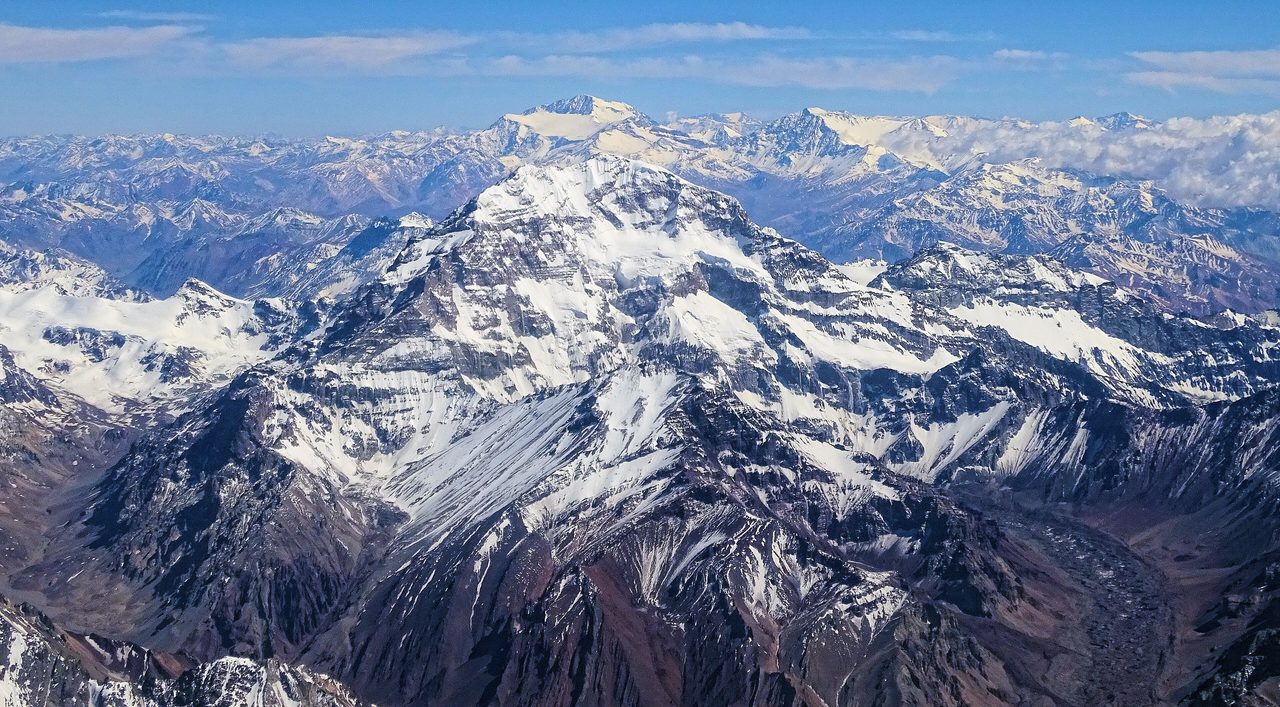
At 6,962 m (22,841 ft) it is a non-technical but brutal 2 to 3 week expedition with a summit day of about 12 hours at extreme altitude, so it demands aerobic durability, load-carrying, and acclimatisation, not technical skill.
Pick the tests you want and get one report with your biggest gap before summit day. Free, a few minutes, no signup.
Why Aconcagua humbles strong climbers
Ian Taylor of Ian Taylor Trekking, who has climbed Aconcagua more than ten times, puts the summit success rate at about 30 percent, and names wind as the main reason, with lack of physical preparation and acclimatisation also playing their part. Three things matter most.
The first is altitude. At 6,962 m (22,841 ft) the air pressure is about 41 percent of sea level. Skipping pre-trip altitude exposure or pushing through symptoms raises the risk of altitude illness.
The second is summit-day duration. From Camp Colera the round trip takes about 12 hours (roughly 8 hours up and 3.5 to 4 hours down) of slow, cold walking, with the Canaleta, a steep couloir below the summit ridge, near the end of the climb. A climber who has never trained an 8 hour or longer single day risks arriving at the Canaleta exhausted, with hours of work still to do.
The third is the cumulative load. Aconcagua is not one big day: it is weeks of carrying heavy packs between camps (Climbing the Seven Summits tells climbers to be prepared to carry a 50 lb / 23 kg pack each day above base camp), sleeping at progressively higher altitudes, and slowly draining your reserves. Training only for a single big day leaves you short for that steady-state grind. All three can be prepared for.
Physical benchmarks to hit before Aconcagua
Our read: on the numbers below, Aconcagua asks for endurance for a long day on your feet, time at altitude (the summit is at 6,962 m / 22,841 ft), and the skills listed further down this page, which fitness cannot replace.
What published sources on Aconcagua ask of climbers (guide services, clubs, parks and a few others, each named), and what the route itself demands. Quotes are word for word from each source, and every line links to it.
To see where you stand against these, take Summit Check for Aconcagua.
Altitude and terrain reality check
Training builds the engine. Altitude is its own thing, and on Aconcagua altitude is decisive. At 6,962 m (22,841 ft) the air pressure is about 41 percent of sea level. The only way to genuinely adapt is to spend time up there. Practically, two approaches stack: spend time on lower high peaks in the months before, and respect the full expedition schedule on the mountain itself. Do not compress the schedule to save days. The mountain does not care about your flight. The deeper guide on this is in our altitude acclimatisation guide.
How long does it take to train for Aconcagua?
It depends mostly on where you start. Our Summit Check model puts Aconcagua at about 24 weeks if you already train 3 to 4 times a week with regular hill days, and about 34 weeks if you are starting from a low base.
How we get there: the model starts from the peak’s altitude (6,962 m / 22,841 ft) and grade (Non-technical, extreme altitude), then lengthens or shortens the block for how you train now: weekly rhythm, your longest recent day, hill terrain, descent strength, back-to-back days, recovery, available time, altitude history and injuries. That is the same model behind the free Summit Check.
What published sources say about lead time for Aconcagua:
- Alpine Ascents International: “Most people will need to train for an Aconcagua climb for at least 4-6 months.” (source)
- Climbing the Seven Summits: “Start specific mountaineering training at least 6 months in advance” (source)
- Alpine Ascents International: “This expedition-style climb requires the carrying of a heavy pack for multiple days, making prior physical training of three months or more critical to your success and enjoyment.” (source)
For your own number, answer ten questions in Summit Check: it sizes your runway in weeks and the weekly load Aconcagua asks for.
Whatever the length, a Train to Mountain plan runs backwards from your climb date in five phases:
- Aerobic base. Build the engine that keeps a long day efficient.
- Base plus strength. Add eccentric leg strength and progressive weighted carries.
- Muscular endurance. Long days with sustained climbing and a building pack.
- Peak simulation. One long day close to your summit-day length, 4 to 6 weeks before the trip.
- Taper. Volume drops in the final 1 to 2 weeks so you arrive fresh.
A weekly training schedule for Aconcagua
An example week from the Train to Mountain method, about halfway through the block. Most of the week is easy aerobic work, with one hard session and one long day (polarised training; Seiler and Kjerland, 2006).
Our targets for Aconcagua: by the biggest weeks of the block, a Train to Mountain plan for Aconcagua works up to a long day of about 8 hours and about 1,400 m (4,593 ft) of climbing a week. These are the numbers our planning engine sets for this peak. The week below sits about two thirds of the way there, so the climbing in it adds up to about 900 m (2,953 ft).
- Mon · easy 45 to 60 min Zone 2
- Tue · intervals, 4 x 4 min hard (Zone 4 to 5)
- Wed · rest or 30 min mobility
- Thu · Zone 2 hike, 2 to 3 hours with about 300 m (984 ft) of climbing, building towards the pack you will carry on the climb
- Fri · easy 45 min Zone 2 plus eccentric strength (step-downs, slow lunges)
- Sat · long mountain day, 5 hours and about 400 m (1,312 ft) of climbing, mostly Zone 2
- Sun · 2 to 3 hours easy Zone 2 on tired legs, with about 200 m (656 ft) of climbing
Zone 2 here means 85 to 89 percent of your lactate threshold heart rate (Friel); see heart rate zones for mountaineering. One rehearsal day of about 8 hours goes in 4 to 6 weeks before the trip. A Train to Mountain plan sets these numbers from your own training and recalculates them every week.
Technical skills you must bring to Aconcagua
TTM trains the body. Aconcagua's Normal Route is non-technical but at extreme altitude: technically a hike, but with cold, wind and 2 to 3 weeks of expedition logistics. These are the competencies you need before Mendoza. Build them separately at home or book a guided expedition.
Not needed on this route: Scrambling, Rock climbing, Via ferrata / fixed chains, Roped glacier travel, Crevasse rescue, Steep snow / ice, Fixed-line ascending, Abseil / rappel.
Route covered: Normal Route (Plaza de Mulas). Typical skills in normal season; conditions change, so confirm with a certified guide.
- Altitude judgement: knowing the signs of altitude illness and turning around calmly.
- Expedition skills: camp craft and cold-weather living on a multi-day climb.
- Crampons (depending on conditions): walking, front-pointing and traversing on snow and ice, up and down.
- Ice axe use and self-arrest (depending on conditions): stopping a slide on steep snow, on both sides.
- Avalanche awareness (depending on conditions): reading slope, snowpack and weather.
If any of these are new, the honest answer is an expedition-mode guided ascent for the first attempt, with a company that runs a proper acclimatisation schedule and guides who make the weather calls. TTM's plan gets you physically ready. The expedition rewards operational and judgement readiness on top of that.
How TTM tunes the plan to Aconcagua
How the plan is set for Aconcagua
- Fitness target · Our engine sets a Mountain Fitness target of 65 for Aconcagua, and the plan builds towards it by your summit date.
- Weekly climbing · About 1,400 m (4,593 ft) a week in the biggest weeks, reached step by step with planned recovery weeks.
- Long day · A long day of about 8 hours, rehearsed once 4 to 6 weeks before your trip.
- Weekly recalculation · The plan recalculates every week from the training you actually logged.
- Daily intensity · How hard each day goes follows your HRV readiness, so a poor night or a hard week is absorbed rather than ignored.
- Summit Readiness Score · Tracks five components (fitness, climbing volume, long day, descent readiness and consistency) as an outcome. It does not set your daily intensity.
Tell TTM your objective and your summit date, and the plan is built backwards from that date. The skills in the technical skills section above come from a guide or a course; the plan trains the body.
Climbing Aconcagua: quick answers
How hard is it to climb Aconcagua? Can a beginner do it?
Aconcagua needs no roped climbing on this route in normal conditions. Grade: Non-technical, extreme altitude. You need altitude acclimatisation and expedition camp craft. Depending on conditions you may also need crampons, ice axe self-arrest and avalanche awareness. Summit day: about 12 hours from Camp Colera (roughly 8 hours up, 3.5 to 4 down). The summit is at 6,962 m (22,841 ft). If these skills are new to you, practise them first or go with a guide. The physical benchmarks above show what fitness to build. Source.
How long does it take to climb Aconcagua?
Summit day: about 12 hours from Camp Colera (roughly 8 hours up, 3.5 to 4 down). Add the approach, hut or camp nights and any acclimatisation days, which depend on your itinerary. Source.
Do I need a guide to climb Aconcagua?
A guide is recommended unless you already have the skills listed above and experience on similar terrain. Independent parties must be able to handle every required skill themselves.
When is the best time to climb Aconcagua?
Plan your training backwards from your summit date: Summit Check sizes how many weeks you need. The main climbing season is November to April. Source. For what to wear on the day, see the mountaineering layering guide.
How dangerous is Aconcagua?
On this route: Technically a hike, but extreme altitude, cold, wind and 2 to 3 weeks of expedition logistics. Crampons are often needed high, depending on conditions. The risks you control are fitness, pace and acclimatisation: tired, slow parties spend longer exposed and make worse decisions. Turn around on time and climb in good weather, and go with a guide if the skills are new.
Common questions about training for Aconcagua
How do I build endurance for Aconcagua's 12-hour summit day?
Mostly time at low intensity, scaled up. Aconcagua's summit day is about 12 hours from Camp Colera, on top of weeks of cumulative load on the expedition, so the engine has to be deep. Keep most of your training at low intensity (polarised, Seiler and Kjerland, 2006), add one long mountain day and one back-to-back loaded day, and by 4 to 6 weeks out do at least one 8 hour or longer training day with a real weighted pack.
Does an Aconcagua plan need to be personalised to me?
Yes, in five specific ways: your starting fitness, your trip start date (the taper lands when you fly), the weekly vertical built across the block, one 8 hour or longer rehearsal day placed 4 to 6 weeks out, and back-to-back loaded days with weighted carries. A generic plan that stops at a long Saturday and a rest Sunday does not prepare a body for weeks of cumulative drain.
Can I train for Aconcagua with a full-time job?
Yes, but it needs consistent weekly volume and protection of weekend time. Most of the work is low-intensity and fits early mornings or evenings. The non-negotiables are a paired weekend block (a long mountain day and a back-to-back day on tired legs, both with a pack) and an 8 hour or longer rehearsal day on a long weekend 4 to 6 weeks before the trip.
What does comprehensive Aconcagua prep actually cover?
Five trainable demands. (1) An aerobic engine for a summit day of about 12 hours at extreme altitude. (2) Load-carry tolerance: Climbing the Seven Summits tells climbers to be prepared to carry a 50 lb (23 kg) pack each day above base camp. (3) A summit-day rehearsal: an 8 hour or longer training day 4 to 6 weeks before the trip. (4) Eccentric descent strength for the loose descent and the walk out. (5) Expedition fatigue tolerance across 2 to 3 weeks on the mountain.
What strength and weighted-carry work does Aconcagua training need?
Two priorities: eccentric leg strength and weighted-carry endurance. Eccentric work (weighted step-downs, slow-tempo split squats, controlled downhill repeats) builds descent resilience for summit day and the walk out. Weighted-carry work means real packs on long weighted hikes, building towards the 50 lb (23 kg) pack Climbing the Seven Summits tells climbers to be prepared to carry above base camp. You do not need heavy barbell work or hypertrophy splits. The aim is muscle resilience under load, not bigger muscles.
Can I prepare for Aconcagua from sea level without high-altitude terrain?
Yes, with one honest constraint: altitude adaptation has to come from pre-trip exposure plus the expedition itself, not from sea-level training alone. The aerobic engine, weighted carry endurance, descent eccentric load, and back-to-back fatigue tolerance can all be trained anywhere with hills, stairs, or a treadmill on incline. Close the altitude gap with time on lower high peaks in the months before, plus the full expedition acclimatisation schedule.
How is Aconcagua training different from a 4,000 m (13,123 ft) Alpine peak?
Three differences. First, expedition format: a 4,000 m (13,123 ft) Alpine peak is usually a hut day and a summit day; Aconcagua is 2 to 3 weeks of cumulative loading where back-to-back days are the norm. Second, weighted carry: moving loads between camps with a heavy pack. Third, altitude: at 6,962 m (22,841 ft) the air pressure is about 41 percent of sea level, far less than on any Alpine summit.
Similar peaks to Aconcagua
Peaks close to Aconcagua in region, grade or height: to compare, or to build up to it.
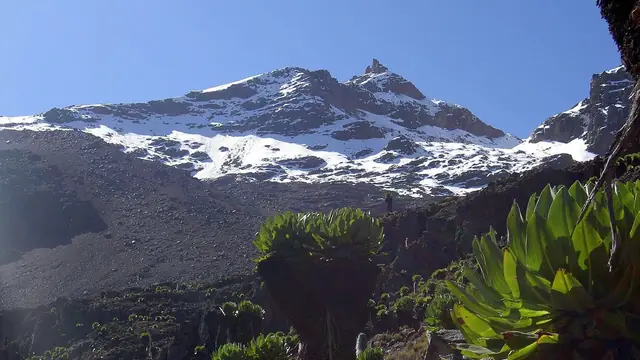 Mount Kenya (Point Lenana)Non-technical trekking summit
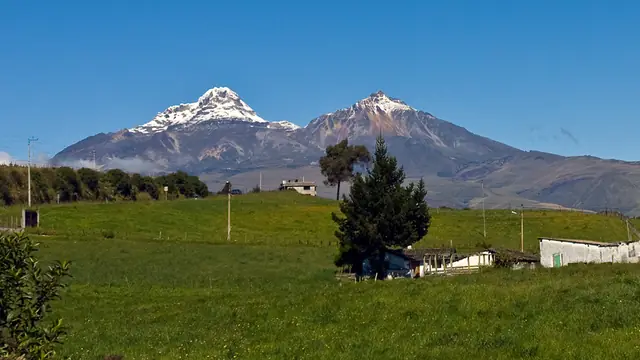 Iliniza NorteF+ to PD Class 3 scramble, mostly non-glaciated
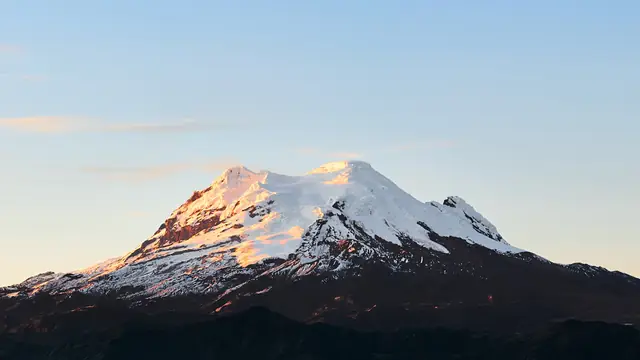 AntisanaPD+ to AD, heavily crevassed glacier
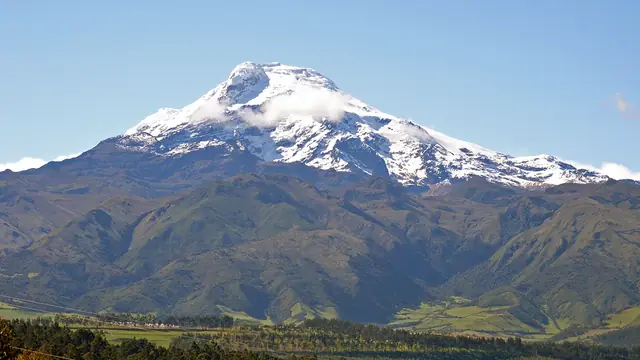 CayambePD Glacier, crevasse routes
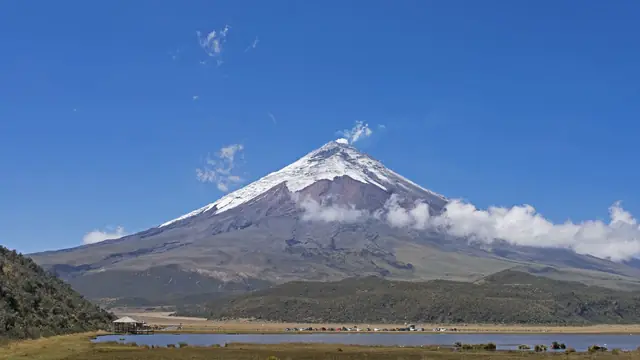 CotopaxiPD Glacier route
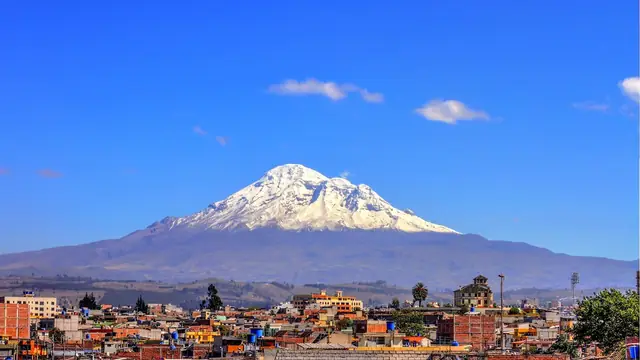 ChimborazoPD+ Glacier, altitude
Photos: Mount Kenya (Point Lenana): Chris 73 (CC BY-SA 3.0), via Wikimedia Commons; Iliniza Norte: Gerard Prins (CC BY-SA 3.0), via Wikimedia Commons; Antisana: camilogaleano.com (CC BY-SA 4.0), via Wikimedia Commons; Cayambe: Kryptonit (public domain), via Wikimedia Commons; Cotopaxi: Ymblanter (CC BY-SA 4.0), via Wikimedia Commons; Chimborazo: Eduardo Navas (CC BY-SA 2.0), via Wikimedia Commons.
Tools and deeper reading
Take this further
- Summit Check · Test if you are ready for Aconcagua today. Free, science-backed, a few minutes. Pick your tests, from readiness runway and weekly load to a summit-day fuel plan, and get one summary with your biggest gap.
- Altitude Acclimatisation Guide · The climb-high-sleep-low rule, AMS warning signs, and the three real acclimatisation strategies, critical for the 6,962 m (22,841 ft) summit.
- Eccentric Descent Training · Why the summit-day descent plus the multi-day trek-out grinds quads, and the specific eccentric work that protects them.
- Heart Rate Zones for Mountaineering · The polarised approach (most training at low intensity), why Zone 2 dominates, and how to find your zones.
- The Science Behind TTM · The peer-reviewed research the adaptive algorithm is built on.
- Muscular Endurance for Mountaineering · The pillar guide on the quality that turns gym strength into legs that last a summit day. Pair with the free Muscular Endurance Calculator to score where you stand.
The takeaway
Aconcagua is not mainly a willpower problem. It is a specificity problem. Train for the mountain's actual demand profile across all five dimensions: aerobic depth, weighted carry endurance, summit-day duration, descent resilience, and multi-week fatigue tolerance. Aconcagua finds the gap.