
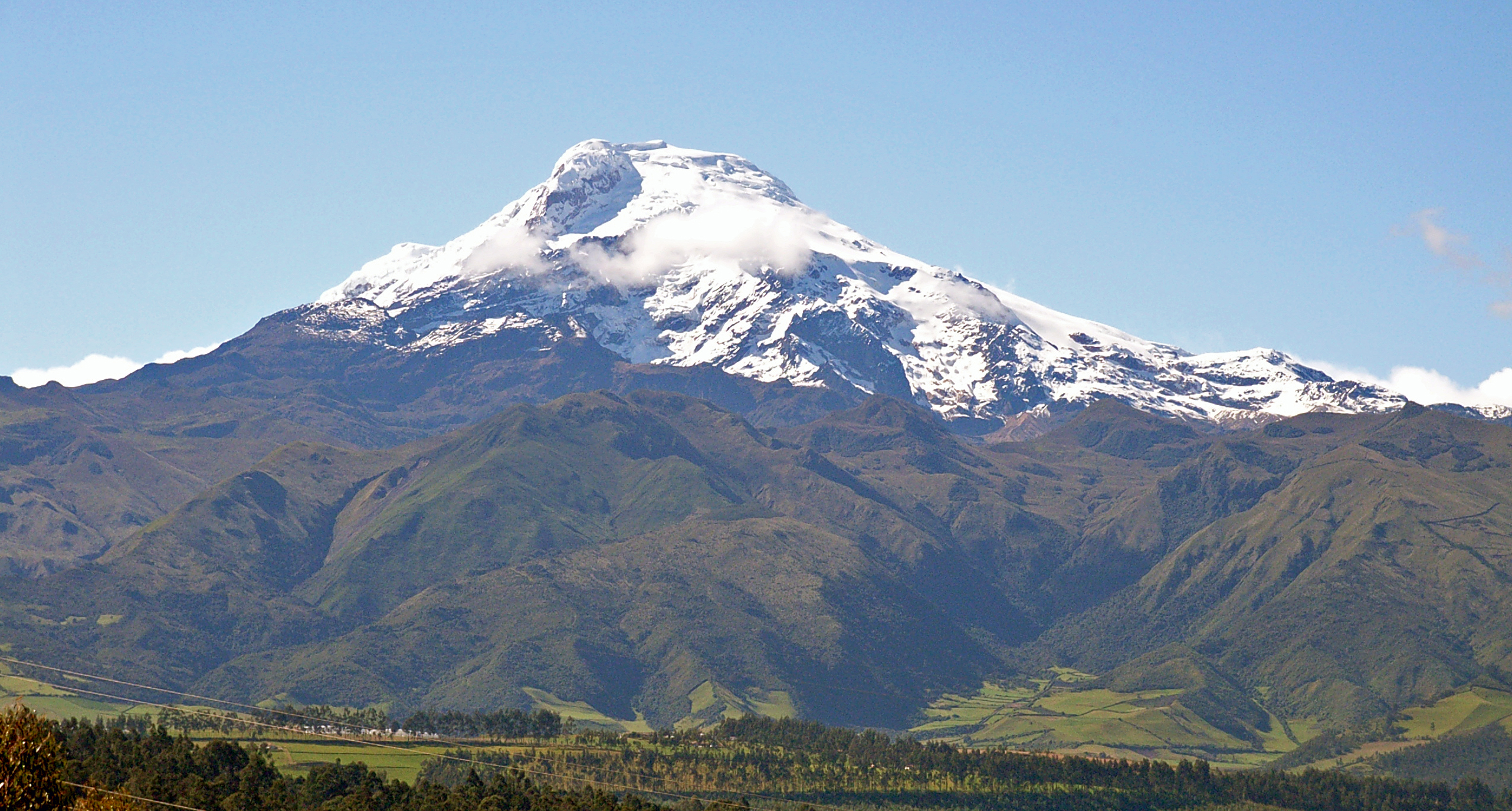
Training for Cayambe takes about 12 to 16 weeks. At 5790m (18,996 ft) summit day is a snow and glacier climb with crevasse routing and a steeper final slope, so it demands a solid aerobic base, altitude readiness, and basic steep-snow and glacier skills.
Why Cayambe punishes underprepared climbers
Cayambe is PD, glaciated non-technical with crevasses. The approach gets you to the Ruales-Oleas-Berge refuge, and from there summit day is a snow and glacier climb with crevasse routing and a steeper final slope. The summit at 5790m (18,996 ft) sits in a zone where altitude becomes a dominant training variable in a way that 4000m peaks like Mont Blanc and Rainier do not approach. Above 5500m (18,000 ft) climbers operate at around 50 percent of sea-level oxygen.
Three things turn climbers around on Cayambe: inadequate acclimatisation, insufficient aerobic depth for a long day on the glacier, and the equator's short, unpredictable weather windows. Cayambe sits directly on the equator, so storms build fast and summit windows close without warning. Climbers who arrive strong but skip the 5 to 8 day volcano warm-up almost always feel the altitude on the final slope. Climbers who acclimatise well but trained for a 4000m peak hit the wall on the steeper headwall near the summit. Those who manage both still need the patience to wait a weather day out at the Ruales-Oleas-Berge refuge rather than push a marginal forecast.
A third factor: by Ecuadorian regulation, a certified Mountain Guide is required to summit Cayambe. That means a guide handles the technical and rope-skill layer for you. Your job is to arrive fit and acclimatised.
Physical benchmarks to hit before Cayambe
Cayambe loads five systems in different ways than a single-day Alpine peak. A real preparation plan trains the four fitness-side demands. The fifth - acclimatisation - is what the trip itself provides when you book it right.
Altitude and terrain reality check
Training builds the engine. Altitude is its own thing - and on Cayambe, altitude is the dominant story. At 5790m (18,996 ft) you have around 50 percent of sea-level oxygen. The only honest way to summit reliably is to spend time at altitude beforehand. The standard Ecuador itinerary stacks three things. First, a 5 to 8 day acclimatisation chain on lower volcanoes that progressively expose the body to thinner air and let the haematological adaptations begin. Second, a night at the Ruales-Oleas-Berge refuge (4,600m / 15,092 ft) before the midnight summit start. Third, the climb-high-sleep-low principle baked into the warm-up itinerary - sleeping at altitude after climbing higher during the day. Sea-level climbers who skip the acclimatisation chain summit at much lower rates, even when their fitness is excellent. Hypoxic tents at home help haematological adaptation in the months before but do not replace real exposure. The deeper guide on this is in our altitude acclimatisation guide.
How long does it take to train for Cayambe?
The block runs backwards from your climb date. Five phases, each with a distinct target.
- Weeks 1-4 · Aerobic base. Build the deep engine that keeps a long day efficient.
- Weeks 5-8 · Base plus strength. Add eccentric leg strength and progressive weighted carries.
- Weeks 9-11 · Muscular endurance. Long days with vertical and a building pack.
- Weeks 12-13 · Peak simulation. A long mountain day near your summit-day length, 4-6 weeks out.
- Week 14 · Altitude and skills. Time high where you can, plus the specific mountain craft Cayambe needs.
- Weeks 15-16 · Taper. Volume drops; skills stay sharp; arrive fresh.
A weekly distribution that works
The polarised principle applies, with deeper aerobic volume than a 4000m peak plan. A representative week, 12 weeks out from a Cayambe attempt:
- Mon · easy 60 min Z2
- Tue · threshold or VO2max intervals, 4 x 4 min Z4-Z5
- Wed · rest or 30 min mobility
- Thu · Z2 hike with weighted pack, 2-3 hours, 700-1000m (2,300-3,300 ft) of vertical, 25-35 lb (11-16 kg) pack
- Fri · easy 45 min Z2 + eccentric strength (step-downs, weighted lunges)
- Sat · long mountain day, 5-7 hours mixed Z2 with vertical and progressive pack weight
- Sun · 2-3 h Z2 on tired legs (back-to-back loading, lighter pack)
Roughly 85 percent of weekly volume sits at Z1-Z2, with one hard intensity session and one back-to-back load. Pack weight builds progressively across the block. The single 8-hour rehearsal day lands 4-6 weeks before the trip, not in the final taper. The deeper rationale is in our heart rate zones for mountaineering guide.
Technical skills you must bring to Cayambe
TTM trains the body. Cayambe's glaciated route demands mountain craft - bring these or climb with a certified guide.
- Cramponing and ice-axe technique on moderate snow, up and down.
- Roped glacier travel and crevasse awareness.
- Self-arrest and secure movement on firm pre-dawn snow.
- Altitude judgement - turning around calmly when the body says so.
How TTM tunes the plan to Cayambe
Five things the algorithm calibrates to your peak
- Fitness target · The Cayambe fitness target reflects 8-11 hours of effort at 5500m+ (18,000 ft+). Higher than a 4000m Alpine peak; the plan is engineered to hit that number by your trip start date.
- Vertical accumulation target · Calibrated to Cayambe's summit day plus the acclimatisation peaks. The plan distributes vertical progressively, with recovery weeks every 4th.
- Summit-day rehearsal · The Long Day Score is calibrated to Cayambe's 8-11 hour summit day at altitude. The plan schedules a real 8-hour single training day in the 6-week window before your trip.
- Descent eccentric load · The Descent Readiness Score accounts for 1190m (3,904 ft) of glacier descent on crampons. Eccentric strength and downhill repeats are programmed in, not bolted on.
- Pack weight progression · The plan builds pack weight progressively across the block, scaling to the moderate trip-week pack Cayambe requires.
When you tell TTM your objective is Cayambe and your trip date, the plan is built backwards from that date with all four fitness-side demands engineered in. The acclimatisation chain is what the trip itinerary provides, and the rope-and-glacier skills are what the guide handles. TTM trains the layer it can train, and is honest about where it stops.
Common questions about training for Cayambe
How do I build endurance for Cayambe's 8-11 hour summit day at 5800m+?
Cayambe summit day is 8-11 hours of nearly continuous effort from the Ruales-Oleas-Berge refuge (4,600m / 15,092 ft) to the summit (5,790m / 18,996 ft) and back.
What altitude work matters for Cayambe (5,790m / 18,996 ft)?
This is the question. Cayambe is where altitude becomes decisive for most climbers.
Does a Cayambe plan need to be personalised to me?
Yes, in five specific ways: your starting fitness, your trip start date (where the taper lands), the progressive pack weight build, one 8+ hour rehearsal day placed 4-6 weeks out, and the descent eccentric load calibrated to 1190m (3,904 ft) of glacier descent on tired legs.
Can I train for Cayambe with a full-time job?
Yes. The bigger constraint than weekday training is the 5-8 day Ecuador acclimatisation program at the start of the trip; budget the time for it.
What does comprehensive Cayambe prep actually cover?
Three layers, with altitude as the dominant story. (1) Fitness: an aerobic engine for 8-11 hours of moving at 5500m+ (18,000 ft+), weighted-carry endurance, eccentric descent strength, and one 8+ hour rehearsal day.
What strength and weighted-carry work does Cayambe training need?
Two priorities: eccentric leg strength and progressive weighted-carry endurance. Eccentric work (weighted step-downs, slow-tempo split squats, controlled downhill repeats) builds resilience for the 1190m (3,904 ft) of glacier descent on tired legs with crampons.
Can I prepare for Cayambe from sea level without high-altitude terrain?
Partly. The aerobic engine, weighted-carry endurance, descent eccentric load, and back-to-back fatigue tolerance can all be trained anywhere with hills, stairs, or a treadmill on incline.
How is Cayambe different from Mont Blanc or Mt Rainier?
One word: altitude. Mont Blanc summit day at 4810m (15,781 ft) and Mt Rainier at 4392m (14,411 ft) both push climbers into moderate altitude, but Cayambe's 5790m (18,996 ft) summit is where altitude becomes the dominant variable.
Tools and deeper reading
Take this further
- Summit Readiness Simulator · Test if you are ready for Cayambe today. Free, science-backed, 90 seconds. Enter your peak, your trip date, and your current fitness; get a readiness score.
- Altitude Acclimatisation Guide · The climb-high-sleep-low rule, the 300-500m (1,000-1,650 ft) per-night ceiling, AMS warning signs - critical reading for any 5000m+ objective.
- Eccentric Descent Training · Why glacier descent on tired legs wrecks quads, and the specific eccentric work that prevents the late-day breakdown.
- Heart Rate Zones for Mountaineering · The polarised 85/15 distribution, why Z2 dominates, and how Z2 at altitude feels like Z3 or Z4 at sea level.
- The Science Behind TTM · Banister's model, polarised distribution, altitude physiology, eccentric load - the peer-reviewed research the adaptive algorithm is built on.
- Muscular Endurance for Mountaineering · The pillar guide on the quality that turns gym strength into legs that last a summit day. Pair with the free Muscular Endurance Calculator to score where you stand.
The takeaway
Cayambe punishes compressed timelines. The climbers who summit reliably are the ones whose training built the aerobic depth for 8 to 11 hours on glacier, the eccentric strength for the descent off the headwall, and the willingness to wait a weather day at the refuge. Those who turn around almost always tried to compress the warm-up program, pushed a bad forecast, or arrived aerobically underprepared for a day that long at that altitude. The equator does not give second chances inside a tight trip window.