Why Glacier Peak punishes underprepared climbers
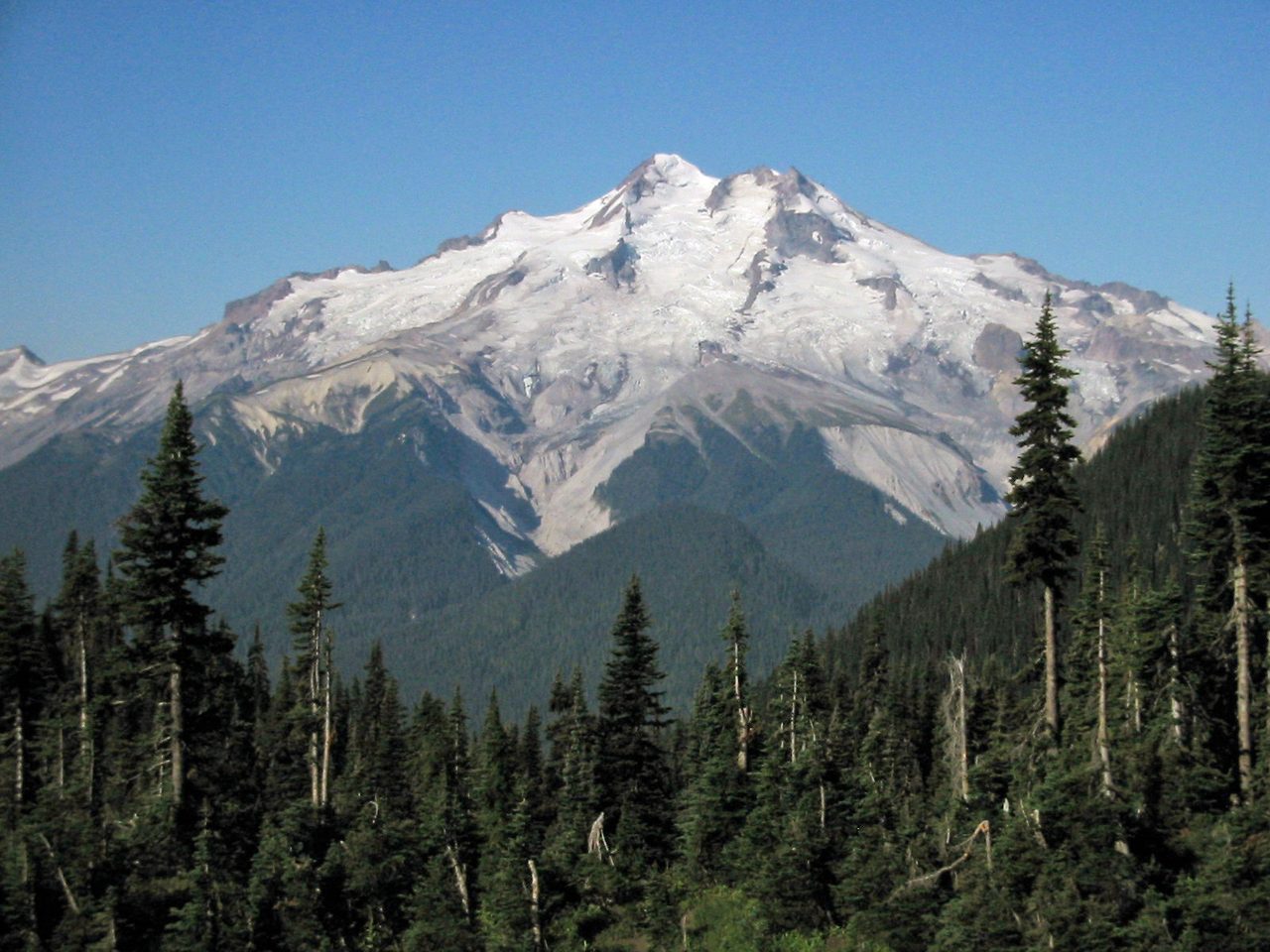
Glacier Peak is the most remote of the major Cascade volcanoes. There is no road that drops you near the base. From either the White Chuck or the North Fork Sauk trailheads it is roughly 32 km (20 mi) of trail, one way, before you reach a useful high camp. That is two days of loaded walking, on rolling terrain, with everything you need for the summit attempt on your back.
By the time most parties reach base camp, they have already absorbed more cumulative fatigue than a single-day Cascade objective would ever produce. Then summit day starts. From high camp, the Sitkum Glacier route is a 10 to 14 hour round trip across heavily crevassed terrain, with route-finding, rope-team management, and a long glaciated descent. After all of that, the walk-out is still ahead of you.
The altitude itself is mild. At 3,213m (10,541 ft) the oxygen is not what limits you. What limits parties is the multi-day load carry, the committing glaciated summit day, and a descent that lands on legs already used hard for several days. None of those failure modes are bad luck. All of them are trainable.
Physical benchmarks to hit before Glacier Peak
Glacier Peak loads five physiological systems in different ways. A real preparation plan trains all five, not just the obvious one.
Altitude and terrain reality check
At 3,213m (10,541 ft) the altitude is modest. Most fit climbers handle the partial-pressure drop without dedicated acclimatisation, and Glacier Peak does not require the elaborate altitude-chain planning a 4000m or 5000m objective would (Bartsch and Saltin, 2008). What the mountain does demand is fatigue tolerance under multi-day load. The exhaustion most parties feel near the summit is cumulative, not hypoxic: the approach already cost them several thousand metres of vertical and dozens of hours under a pack. Train the multi-day load and the long summit day, and altitude becomes a side note. The broader principles still apply, and they are covered in our altitude acclimatisation guide.
The 12-16 week Glacier Peak preparation timeline
The block runs backwards from your climb date. Five phases, each with a distinct target.
- Weeks 1-4 · Aerobic base. Build the deep engine that keeps a long day efficient.
- Weeks 5-8 · Base plus strength. Add eccentric leg strength and progressive weighted carries.
- Weeks 9-11 · Muscular endurance. Long days with vertical and a building pack.
- Weeks 12-13 · Peak simulation. A long mountain day near your summit-day length, 4-6 weeks out.
- Week 14 · Altitude and skills. Time high where you can, plus the specific mountain craft Glacier Peak needs.
- Weeks 15-16 · Taper. Volume drops; skills stay sharp; arrive fresh.
A weekly distribution that works
The polarised principle applies: most of the week at low intensity, one hard session, one long mountain day, and from week 8 onwards, back-to-back loaded weekends once a month. A representative week, 10 weeks out from a Glacier Peak attempt:
- Mon · easy 60 min Z2
- Tue · threshold intervals or VO2max, 4 x 4 min Z4 to Z5
- Wed · rest or 30 min mobility
- Thu · loaded hike, 2 to 3 hours with 600 to 800m (2,000 to 2,600 ft) vertical, weighted pack
- Fri · easy 45 min Z2 plus eccentric strength (step-downs, weighted lunges)
- Sat · long mountain day, 4 to 6 hours Z2 with vertical and pack
- Sun · 2 to 3 hours Z2 on tired legs with pack (back-to-back loading)
Roughly 80 to 85 percent of weekly volume sits at Z1 to Z2, with one hard intensity session and progressive back-to-back loading. Vertical and pack weight accumulate week by week. The single 10+ hour rehearsal day lands 4 to 6 weeks out, not during the taper. The rationale is in our heart rate zones for mountaineering guide.
Technical skills you must bring to Glacier Peak
TTM trains the body. Glacier Peak's glaciated route demands mountain craft - bring these or climb with a certified guide.
- Cramponing and ice-axe technique on moderate snow, up and down.
- Roped glacier travel and crevasse awareness.
- Self-arrest and secure movement on firm snow.
- Altitude judgement - turning around calmly when the body says so.
How TTM tunes the plan to Glacier Peak
Five things the algorithm calibrates to your peak
- Fitness target · Glacier Peak is set at a Mountain Fitness threshold our model associates with completing the route safely with margin. The plan is engineered to reach that number by your summit date.
- Load-carry progression · Pack weight ramps from light to 14 to 22 kg across the build, distributed week by week with recovery weeks every fourth, so the connective tissue has time to adapt.
- Summit-day rehearsal · The Long Day Score is calibrated to Glacier Peak's 10 to 14 hour summit day. The plan schedules a real 10+ hour single training day in the 6-week window before your trip.
- Descent eccentric load · The Descent Readiness Score reflects the loaded, multi-stage descent profile. Eccentric strength and downhill repeats are programmed in, not bolted on.
- Weekly recalibration · Every Sunday the algorithm reviews the actual data from the week behind you and reshapes the week ahead. Adaptation is weekly, not real-time. That cadence respects how training adaptation actually works (Banister et al., 1975).
When you tell TTM your objective is Glacier Peak and your summit date, the plan is built backwards from that date with all five demands engineered in. You do not need to assemble the pieces yourself.
Common questions about training for Glacier Peak
How long is the Glacier Peak approach and how does that change training?
The standard approach from either the White Chuck or North Fork Sauk trailheads is roughly 32 km (20 mi) one way to a high camp before any climbing.
Does altitude matter for Glacier Peak at 3,213m (10,541 ft)?
The altitude itself is mild. At 3,213m (10,541 ft) most fit climbers handle the oxygen pressure without significant adaptation.
What makes Glacier Peak harder than other Cascade volcanoes?
Remoteness and commitment. Glacier Peak is the most remote of the major Cascade volcanoes, with roughly 32 km (20 mi) of trail just to reach base camp.
Can I train for Glacier Peak with a full-time job?
Yes. The polarised distribution fits a busy schedule because most training is low-intensity work that fits early mornings or evenings.
What strength work does Glacier Peak training need?
Targeted, eccentric-heavy, minimal volume. The biggest strength priority is descent resilience: the walk-out is long, loaded, and lands on already fatigued quads.
Tools and deeper reading
Take this further
- Peak Progression Planner · See where Glacier Peak sits in a full progression and the graded paths around it, from a fast line to a cautious foundation.
- Summit Readiness Simulator · Test whether you are ready for Glacier Peak today. Free, science-backed, about 90 seconds.
- Training for Mountaineering · How TTM builds personalised mountaineering training plans backwards from your summit date, recalibrated each Sunday.
- Train for Mt Baker · A heavily glaciated volcano, the classic crevasse-rescue proving ground.
- Train for Mt Rainier · The most glaciated peak in the lower 48, a multi-day glacier objective.
- Altitude Acclimatisation Guide · The four acclimatisation training protocols and how to fit them into your build.
- Muscular Endurance for Mountaineering · The pillar guide on the quality that turns gym strength into legs that last a summit day. Pair with the free Muscular Endurance Calculator to score where you stand.
The takeaway
Glacier Peak rewards specificity. Climbers who summit reliably are the ones whose training matched the mountain's actual demand profile: the multi-day load carry, the long glaciated summit day, the loaded descent, the cumulative fatigue. Train for that, and the mountain becomes a hard, fair objective rather than a turn-around story.