The peak in one paragraph
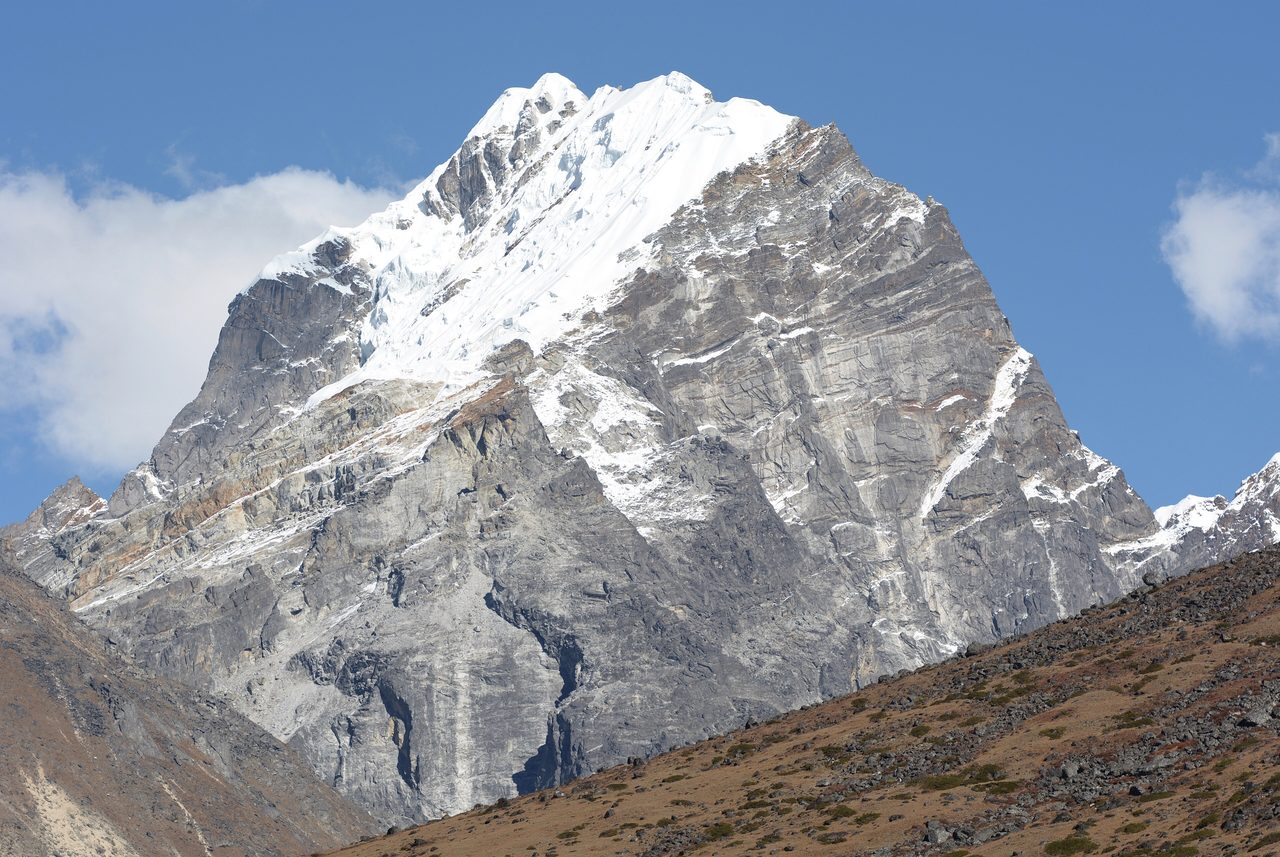
Lobuche East is a 6,119m (20,075 ft) peak in the Khumbu region of Nepal, sitting just south of Lobuche village on the classic Everest Base Camp trail and looking directly across at the southwest face of Everest and the Khumbu Icefall. It is one of three peaks that established Nepali guiding sources, like Guided Peaks and Altura Expeditions, name as the canonical "first 6,000er trio" - Mera Peak, Island Peak, and Lobuche East. It is listed by the Nepal Mountaineering Association as a Group A "trekking peak," which is a permit category, not a difficulty rating. The standard route ascends the southeast ridge from a high camp at roughly 5,400m (17,700 ft) and the alpine grade is widely cited as PD+ (peu difficile plus). Most parties combine the climb with the Everest Base Camp trek as their acclimatisation arc on a 17 to 19 day itinerary.
Why Lobuche East punishes underprepared climbers
Lobuche East is marketed as a "first 6,000er" and that is fair, but "first 6,000er" still means real preparation. Climbers who turn around tend to do so for three repeated reasons: altitude under-preparation (compressed Khumbu schedule, skipped rest days at Namche Bazaar (3,440m / 11,286 ft) or Dingboche (4,410m / 14,470 ft)), the summit-ridge crux (a 45 to 50 degree snow and ice wall, then a narrow exposed ridge on fixed lines), and summit-day duration (10 to 12 hours above 5,400m / 17,700 ft from a 1 to 2 AM alpine start).
Physical benchmarks to hit before Lobuche East
Lobuche East loads six systems. TTM trains five through personalised mountaineering training. The sixth is fixed-rope and basic alpine skill, which comes from a guide service or a short course.
Altitude and terrain reality check
Training builds the engine. Altitude is its own thing - and on Lobuche East, altitude is decisive. At 6,119m (20,075 ft) you have roughly 48 percent of sea-level oxygen. The standard Khumbu itinerary is the answer. Most parties take 17 to 19 days from arrival in Kathmandu to summit day. The clever feature of a Lobuche East trip is that the EBC trek itself becomes the acclimatisation arc: Lukla, Namche Bazaar (3,440m / 11,286 ft) with at least one rest day, Tengboche, Dingboche (4,410m / 14,470 ft) with another rest day, Lobuche village, Gorak Shep (5,164m / 16,942 ft), and Everest Base Camp itself. Only then does the party traverse to Lobuche base camp and push to high camp at roughly 5,400m (17,700 ft) for the summit attempt. Skipping rest days or compressing the schedule drops summit rates sharply. The deeper guide on this is in our altitude acclimatisation guide.
Permits, season, and the EBC combination
Lobuche East is on the Nepal Mountaineering Association Group A trekking peak list. As of 2026, NMA Group A permit fees are currently around USD 350 per climber in spring (March-May), with lower rates in autumn and the off-seasons. Permit rates are set by NMA and change periodically, so confirm the current rate with your guide service when booking. Climbers also need a Sagarmatha National Park entry permit and the Khumbu Pasang Lhamu Rural Municipality fee.
Standard seasons are pre-monsoon (April to May) and post-monsoon (October to November). October and early November are the most popular, with stable weather and clear ridge views. April and early May are colder but bring longer days. The classic itinerary is 17 to 19 days, with the EBC trek doubling as acclimatisation. Some parties combine Lobuche East with Island Peak as a two-peak trip, which adds roughly a week and pushes the trip toward 25 days. The two-peak combination is a substantial step up and not a beginner objective.
The 12-16 week Lobuche East preparation timeline
The block runs backwards from your climb date. Five phases, each with a distinct target.
- Weeks 1-4 · Aerobic base. Build the deep engine that keeps a long day efficient.
- Weeks 5-8 · Base plus strength. Add eccentric leg strength and progressive weighted carries.
- Weeks 9-11 · Muscular endurance. Long days with vertical and a building pack.
- Weeks 12-13 · Peak simulation. A long mountain day near your summit-day length, 4-6 weeks out.
- Week 14 · Altitude and skills. Time high where you can, plus the specific mountain craft Lobuche East needs.
- Weeks 15-16 · Taper. Volume drops; skills stay sharp; arrive fresh.
A weekly distribution that works
The polarised principle applies. A representative week, 12 weeks out from a Lobuche East attempt:
- Mon · easy 60 min Z2
- Tue · threshold or VO2max intervals, 4 x 4 min Z4-Z5
- Wed · rest or 30 min mobility plus hangboard or dead-hang work
- Thu · Z2 hike with daypack, 2 to 3 hours, 600 to 900m (2,000 to 3,000 ft) of vertical
- Fri · easy 45 min Z2 plus eccentric strength
- Sat · long mountain day, 5 to 7 hours mixed Z2 with vertical
- Sun · 2 to 3 h Z2 on tired legs
Roughly 85 percent of weekly volume at Z1-Z2. The 8 to 10 hour rehearsal day lands 4 to 6 weeks before the trip. The TTM algorithm recalibrates every Sunday based on the week you actually trained, not the week you planned to.
Technical skills you must bring to Lobuche East
TTM trains the body. Lobuche East is a technical objective - bring these skills or climb with a certified guide.
- Confident movement on steeper snow, ice or rock at the route's grade, up and down.
- Rope work: pitching, belaying and secure anchors where the ground demands it.
- Composure on exposed, committing terrain.
- The judgement to retreat or abseil cleanly if conditions turn.
How TTM tunes the plan to Lobuche East
Five things the algorithm calibrates to your peak
- Fitness target · Reflects 10 to 12 hours above 5,400m (17,700 ft) with a fixed-rope summit crux.
- Vertical accumulation target · Around 20,000 to 24,000m (66,000 to 79,000 ft) across the build.
- Summit-day rehearsal · 8 to 10 hour single training day 4 to 6 weeks out, ideally with a pre-dawn start.
- Descent eccentric load · Calibrated to a full descent from 6,119m (20,075 ft) back to base camp on tired legs.
- Weekly recalibration · Sunday review of TSS, fitness, fatigue, and readiness, then a re-shaped next week.
The fixed-rope and snow-skill layer and the Khumbu acclimatisation itinerary come from elsewhere. TTM does not teach jumar technique or design trek schedules. Read more in training for mountaineering.
Choosing between Mera, Island Peak, and Lobuche East
A reasonable progression for an aspiring 6,000m climber is Mera Peak first for the altitude experience (highest of the three at 6,476m / 21,247 ft but technically simplest), Island Peak second for sustained fixed-rope work, then Lobuche East for the most technically demanding of the trio. Climbers with prior alpine experience often start with Island Peak or Lobuche East directly. The FAQ below covers the trade-offs in more detail.
Common questions about training for Lobuche East
How do I build endurance for Lobuche East's 10 to 12 hour summit day at 6,119m?
Lobuche East summit day from high camp (roughly 5,400m / 17,700 ft) is typically 10 to 12 hours roundtrip with around 700m (2,300 ft) of vertical gain to the summit, plus the return.
What altitude work matters for Lobuche East (6,119m / 20,075 ft)?
Decisive. At 6,119m (20,075 ft) you have roughly 48 percent of sea-level oxygen.
Is Lobuche East harder than Island Peak or Mera Peak?
Technically, yes - by a small but real margin. Mera Peak.
Does a Lobuche East plan need to be personalised to me?
Yes, in five specific ways: your starting fitness, your trip start date (where the taper lands), the progressive pack weight build, one 8 to 10 hour rehearsal day placed 4 to 6 weeks out, and the descent eccentric load calibrated to the full descent from the summit back to base camp on tired legs after the fixed-line summit ridge.
Can I train for Lobuche East with a full-time job?
Yes. The bigger constraint than weekday training is the 17 to 19 day Khumbu itinerary itself; you need real time off for the trip.
What does comprehensive Lobuche East prep actually cover?
Three layers. (1) Fitness: an aerobic engine for 10 to 12 hours above 6,000m, leg endurance, eccentric descent strength, and one 8 to 10 hour rehearsal day.
What is the NMA permit situation for Lobuche East in 2026?
Lobuche East is on the Nepal Mountaineering Association Group A trekking peak list. As of 2026, NMA permit fees for Group A peaks are currently around USD 350 per climber in spring (March-May) and lower in autumn and winter, though rates change and are set by NMA, not by guide services.
Tools and deeper reading
Take this further
- Summit Readiness Simulator · Test if you are ready for Lobuche East today.
- Training for Island Peak · The closest comparison. Often considered alongside Lobuche East.
- Training for Mera Peak · The third member of the trio. Less technical, higher altitude.
- Altitude Acclimatisation Guide · Critical reading for any 6,000m+ objective.
- How to Train for Mountaineering · The foundation, before any peak-specific plan.
- Personalised Mountaineering Training · How the algorithm builds a plan around your trip date.
- Muscular Endurance for Mountaineering · The pillar guide on the quality that turns gym strength into legs that last a summit day. Pair with the free Muscular Endurance Calculator to score where you stand.
The takeaway
Lobuche East is rarely a willpower problem. It is a fitness, altitude, and fixed-rope problem, with a sharper technical edge than its trio companions. The climbers who summit reliably are the ones who trained the engine for 10 to 12 hours at altitude, respected the EBC-as-acclimatisation arc, and arrived jumar-competent and comfortable on an exposed ridge. The mountain finds the gap.