Pick the tests you want and get one report with your biggest gap before summit day. Free, a few minutes, no signup.
Why Mt Foraker humbles strong climbers
Climbers reach Mt Foraker the same way as Denali, flying from Talkeetna onto the Kahiltna Glacier. After that, the two climbs split. Denali's West Buttress is a glaciated expedition with fixed lines on the headwall; Foraker's Sultana Ridge is a long technical ridge that climbs up and over Mount Crosson before the summit day.
Three things make it hard. First, the route's technical demand. The Sultana Ridge (Northeast Ridge) is graded Alaska Grade III: steeper steps of snow and ice over Mount Crosson, a long connecting ridge with wild cornices and knife-edged sections, and a summit day of almost a vertical mile (about 1,524 m / 5,000 ft) on 40-degree terrain, with crevasses and continuously steep cramponing.
Second, weather. Guided itineraries build in time for it: Mountain Trip schedules a 13-day itinerary plus contingency days up to day 21. Climbers pinned on the ridge in marginal weather burn supplies and time.
Third, commitment. Mountain Trip describes the descent from high camp on the Sultana as challenging and slow, taking two days to get back to the glacier airstrip. Once you are on the ridge, retreat is serious. The training has to match that reality.
Physical benchmarks to hit before Mt Foraker
Our read: Mt Foraker asks for endurance for a long day on your feet, sustained climbing with a long descent on tired legs, time at altitude (the summit is at 5,304 m / 17,400 ft), and the skills listed further down this page, which fitness cannot replace.
What published sources on Mt Foraker ask of climbers (guide services, clubs, parks and a few others, each named), and what the route itself demands. Quotes are word for word from each source, and every line links to it.
To see where you stand against these, take Summit Check for Mt Foraker.
Altitude and terrain reality check
Training builds the engine. Altitude and cold are their own thing, and on Mt Foraker they stack against you. At 5,304 m (17,400 ft) you have around 51 percent of sea-level oxygen by the standard atmosphere, and the high latitude makes it worse: air pressure at this latitude is lower than at the same altitude nearer the equator. Practically, two things help: time on high peaks in the months before, and the expedition itself, which climbs gradually between camps and builds in a rest and acclimatisation day before the summit push. Do not compress the schedule to save days. The deeper guide is in our altitude acclimatisation guide.
How long does it take to train for Mt Foraker?
It depends mostly on where you start. Our Summit Check model puts Mt Foraker at about 22 weeks if you already train 3 to 4 times a week with regular hill days, and about 32 weeks if you are starting from a low base.
How we get there: the model starts from the peak’s altitude (5,304 m / 17,400 ft) and grade (Alaska Grade III), then lengthens or shortens the block for how you train now: weekly rhythm, your longest recent day, hill terrain, descent strength, back-to-back days, recovery, available time, altitude history and injuries. For routes with technical ground it also weighs your comfort on that ground. That is the same model behind the free Summit Check.
We could not find a guide service or alpine club that publishes a training lead time specifically for Mt Foraker.
For your own number, answer ten questions in Summit Check: it sizes your runway in weeks and the weekly load Mt Foraker asks for.
Whatever the length, a Train to Mountain plan runs backwards from your climb date in five phases:
- Aerobic base. Build the engine that keeps a long day efficient.
- Base plus strength. Add eccentric leg strength and progressive weighted carries.
- Muscular endurance. Long days with sustained climbing and a building pack.
- Peak simulation. One long day close to your summit-day length, 4 to 6 weeks before the trip.
- Taper. Volume drops in the final 1 to 2 weeks so you arrive fresh.
A weekly training schedule for Mt Foraker
An example week from the Train to Mountain method, about halfway through the block. Most of the week is easy aerobic work, with one hard session and one long day (polarised training; Seiler and Kjerland, 2006).
Our targets for Mt Foraker: by the biggest weeks of the block, a Train to Mountain plan for Mt Foraker works up to a long day of about 12 hours and about 1,800 m (5,906 ft) of climbing a week. These are the numbers our planning engine sets for this peak. The week below sits about two thirds of the way there, so the climbing in it adds up to about 1,200 m (3,937 ft).
- Mon · easy 45 to 60 min Zone 2
- Tue · intervals, 4 x 4 min hard (Zone 4 to 5)
- Wed · rest or 30 min mobility
- Thu · Zone 2 hike, 2 to 3 hours with about 400 m (1,312 ft) of climbing, carrying a daypack
- Fri · easy 45 min Zone 2 plus eccentric strength (step-downs, slow lunges)
- Sat · long mountain day, 8 hours and about 500 m (1,640 ft) of climbing, mostly Zone 2
- Sun · 2 to 3 hours easy Zone 2 on tired legs, with about 300 m (984 ft) of climbing
Zone 2 here means 85 to 89 percent of your lactate threshold heart rate (Friel); see heart rate zones for mountaineering. One rehearsal day of about 12 hours goes in 4 to 6 weeks before the trip. A Train to Mountain plan sets these numbers from your own training and recalculates them every week.
Technical skills you must bring to Mt Foraker
TTM trains the body. Mt Foraker is a technical objective. Bring these skills or climb with a certified guide.
Not needed on this route: Scrambling, Rock climbing, Via ferrata / fixed chains, Fixed-line ascending.
Route covered: Sultana Ridge (Northeast Ridge). Typical skills in normal season; conditions change, so confirm with a certified guide.
- Crampons: walking, front-pointing and traversing on snow and ice, up and down.
- Ice axe use and self-arrest: stopping a slide on steep snow, on both sides.
- Roped glacier travel: moving as a rope team on a glacier.
- Crevasse rescue: building an anchor and hauling a partner out.
- Steep snow and ice: confident movement on slopes of 40 degrees or more.
- Abseiling: rigging and descending a rope safely.
- Altitude judgement: knowing the signs of altitude illness and turning around calmly.
- Avalanche awareness: reading slope, snowpack and weather.
- Expedition skills: camp craft and cold-weather living on a multi-day climb.
How TTM tunes the plan to Mt Foraker
How the plan is set for Mt Foraker
- Fitness target · Our engine sets a Mountain Fitness target of 75 for Mt Foraker, and the plan builds towards it by your summit date.
- Weekly climbing · About 1,800 m (5,906 ft) a week in the biggest weeks, reached step by step with planned recovery weeks.
- Long day · A long day of about 12 hours, rehearsed once 4 to 6 weeks before your trip.
- Weekly recalculation · The plan recalculates every week from the training you actually logged.
- Daily intensity · How hard each day goes follows your HRV readiness, so a poor night or a hard week is absorbed rather than ignored.
- Summit Readiness Score · Tracks five components (fitness, climbing volume, long day, descent readiness and consistency) as an outcome. It does not set your daily intensity.
Tell TTM your objective and your summit date, and the plan is built backwards from that date. The skills in the technical skills section above come from a guide or a course; the plan trains the body.
Climbing Mt Foraker: quick answers
How hard is it to climb Mt Foraker? Can a beginner do it?
Mt Foraker is a technical climb. Grade: Alaska Grade III. You need crampons, ice axe self-arrest, roped glacier travel, crevasse rescue, steep snow and ice, abseiling, altitude acclimatisation, avalanche awareness and expedition camp craft. The summit is at 5,304 m (17,400 ft). It is not a beginner peak: build experience on easier summits first. The physical benchmarks above show what fitness to build.
How long does it take to climb Mt Foraker?
We have no sourced summit-day time for Mt Foraker on the route covered here (Sultana Ridge, Northeast Ridge). Plan it with local guidance, and add the approach and any acclimatisation days.
Do I need a guide to climb Mt Foraker?
A guide is recommended unless you already have the skills listed above and experience on similar terrain. Independent parties must be able to handle every required skill themselves.
When is the best time to climb Mt Foraker?
Plan your training backwards from your summit date: Summit Check sizes how many weeks you need. The main climbing season is late April to mid-July. Source. For what to wear on the day, see the mountaineering layering guide.
How dangerous is Mt Foraker?
On this route: Long committing technical ridge; strong self-sufficient alpine skills required. Not a first expedition. The risks you control are fitness, pace and acclimatisation: tired, slow parties spend longer exposed and make worse decisions. Turn around on time and climb in good weather, and go with a guide if the skills are new.
Common questions about training for Mt Foraker
How do I build endurance for Mt Foraker's long summit day?
Mostly time at low intensity, scaled up. Mt Foraker's summit day climbs almost a vertical mile (about 1,524 m / 5,000 ft), and guided expeditions run up to about three weeks including weather days, so the engine has to be deep. Build weekly volume progressively, keep most of it at Z1 to Z2 with one hard intensity session, one long mountain day and one back-to-back load day, and 4 to 6 weeks out do at least one long rehearsal day with a real weighted pack, building towards the 12-hour long day TTM sets for Foraker.
What altitude work matters for Mt Foraker (5,304 m / 17,400 ft)?
At 5,304 m (17,400 ft) you have around 51 percent of sea-level oxygen by the standard atmosphere, and the high latitude makes it worse, so altitude matters. Time on high peaks in the months before helps, and the expedition itself carries most of the acclimatisation, with gradual moves between camps and a rest day before the summit push. Do not compress the trip to save days.
Does a Mt Foraker plan need to be personalised to me?
Yes, in five specific ways: your starting fitness, your trip start date (the taper lands when you fly), the vertical accumulation distributed across the build, one long rehearsal day placed 4 to 6 weeks out, and the expedition loading pattern that progressively builds back-to-back heavy days with weighted carries. A generic plan that stops at long Saturday plus rest Sunday does not prepare a body for weeks of cumulative load.
Can I train for Mt Foraker with a full-time job?
Yes, but it requires more weekly volume than most Alpine plans and protection of weekend volume. Most of it is low-intensity work that fits early mornings or evenings. The non-negotiables are Saturday and Sunday as a paired heavy block (long mountain day plus back-to-back on tired legs, both with pack), and a long rehearsal day on a long weekend 4 to 6 weeks before the trip.
What does comprehensive Mt Foraker prep actually cover?
Five trainable demands. (1) An aerobic engine for a long summit day at altitude. (2) Load-carry tolerance for carrying loads and hauling sleds between camps. (3) At least one summit-day rehearsal: a long single training day in the 4 to 6 weeks before the trip. (4) Descent eccentric load training, because the descent from high camp is challenging and takes time. (5) Expedition fatigue tolerance for weeks of cumulative loading.
What strength and weighted-carry work does Mt Foraker training need?
Two priorities: eccentric leg strength and weighted-carry endurance. Eccentric work (weighted step-downs, slow-tempo split squats, controlled downhill repeats) builds descent resilience for summit day and the multi-day descent. Weighted-carry work means real packs on long weighted hikes in the muscular endurance phase. Mt Foraker training does not need heavy bilateral barbell work, hypertrophy splits, or general gym strength. The aim is muscle resilience under load, not bigger muscles.
Can I prepare for Mt Foraker from sea level without high-altitude terrain?
Yes, with one honest constraint: altitude adaptation has to come from pre-trip exposure plus the expedition itself, not from sea-level training alone. The aerobic engine, weighted carry endurance, descent eccentric load, and back-to-back fatigue tolerance can all be trained anywhere with hills, stairs, or a treadmill on incline. Close the altitude gap with time on high peaks in the months before, plus the gradual acclimatisation built into the expedition.
How is Mt Foraker training different from a 4,000 m (13,123 ft) Alpine peak?
Three differences. First, expedition format: a 4,000 m (13,123 ft) Alpine peak is a short trip by comparison; Mt Foraker means up to about three weeks on the glacier once weather days are counted, where back-to-back days are the norm. Second, load: on Foraker you carry loads and haul sleds between camps. Third, altitude: at 5,304 m (17,400 ft) you have around 51 percent of sea-level oxygen, so the training engine has to be deep enough to absorb that loss.
Similar peaks to Mt Foraker
Peaks close to Mt Foraker in region, grade or height: to compare, or to build up to it.
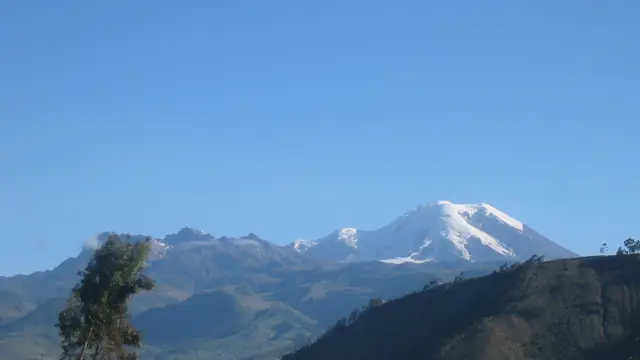 CarihuairazoTechnical summit tower
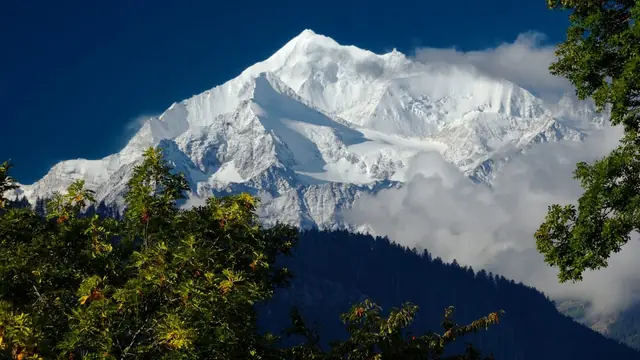 WeisshornAD East Ridge
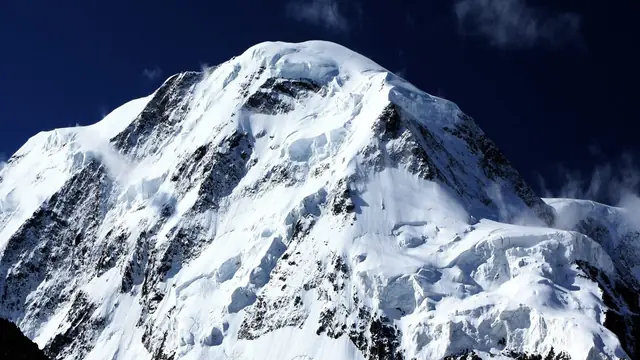 LyskammAD Long snow ridge
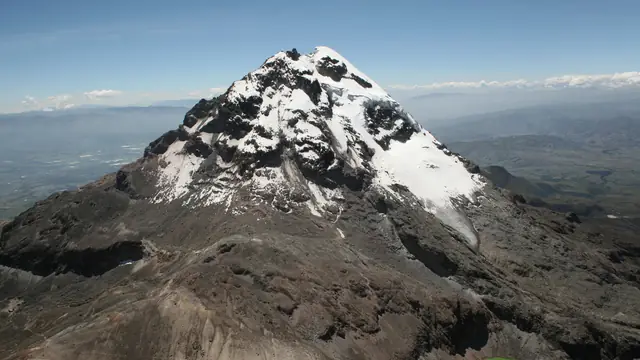 Iliniza SurPD to AD glaciated with ice sections
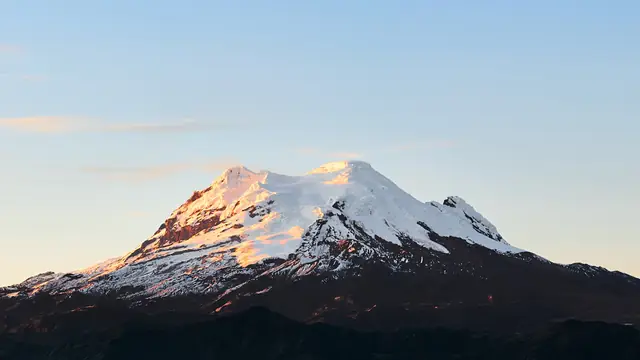 AntisanaPD+ to AD, heavily crevassed glacier
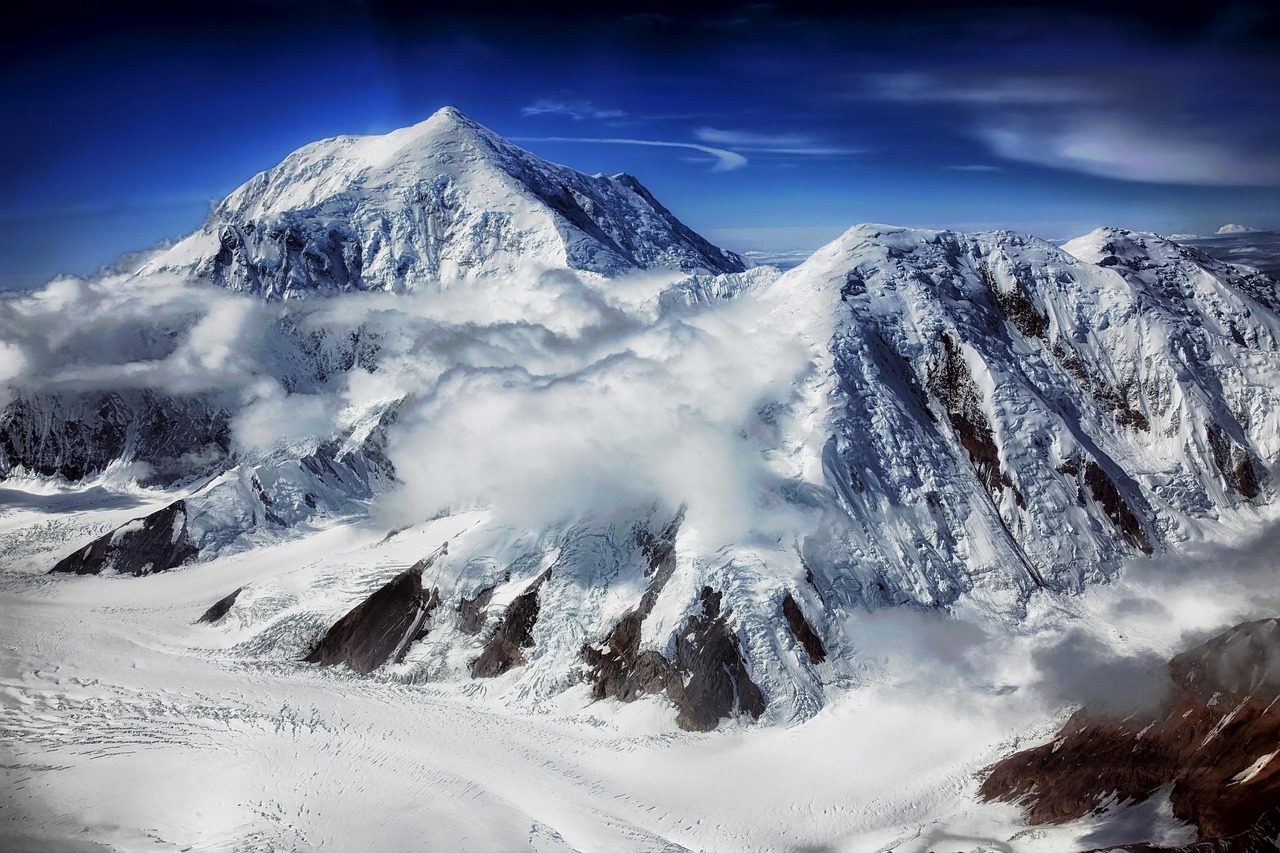
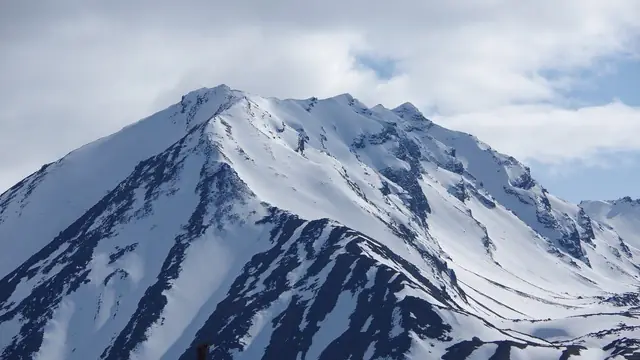 DenaliAlaska Grade 2, glaciated expedition
Photos: Carihuairazo: Martin Iturbide (CC BY-SA 3.0), via Wikimedia Commons; Weisshorn: Zacharie Grossen (CC BY-SA 4.0), via Wikimedia Commons; Lyskamm: Public domain, via Wikimedia Commons; Iliniza Sur: Tad Boniecki (public domain), via Wikimedia Commons; Antisana: camilogaleano.com (CC BY-SA 4.0), via Wikimedia Commons; Denali: tfrdic via Pixabay.
Tools and deeper reading
Take this further
- Summit Check · Test if you are ready for Mt Foraker today. Free, science-backed, a few minutes. Pick your tests, from readiness runway and weekly load to a summit-day fuel plan, and get one summary with your biggest gap.
- Altitude Acclimatisation Guide · The climb-high-sleep-low rule, the 300 to 500 m (984 to 1,640 ft) per-night ceiling, AMS warning signs, and the three real acclimatisation strategies, critical for the 5,304 m (17,400 ft) summit.
- Eccentric Descent Training · Why the summit-day descent plus the multi-day trek-out grinds quads, and the specific eccentric work that protects them.
- Heart Rate Zones for Mountaineering · The polarised approach (most training at low intensity), why Zone 2 dominates, and how to find your zones.
- The Science Behind TTM · The peer-reviewed research the adaptive algorithm is built on.
- Muscular Endurance for Mountaineering · The pillar guide on the quality that turns gym strength into legs that last a summit day. Pair with the free Muscular Endurance Calculator to score where you stand.
The takeaway
Preparing for Mt Foraker takes more than general fitness. It is a technical problem and a specificity problem combined. Foraker finds the gap, and the consequences of finding it on the Sultana Ridge are larger than on a busier peak.