Pick the tests you want and get one report with your biggest gap before summit day. Free, a few minutes, no signup.
Why the Schrankogel punishes underprepared climbers
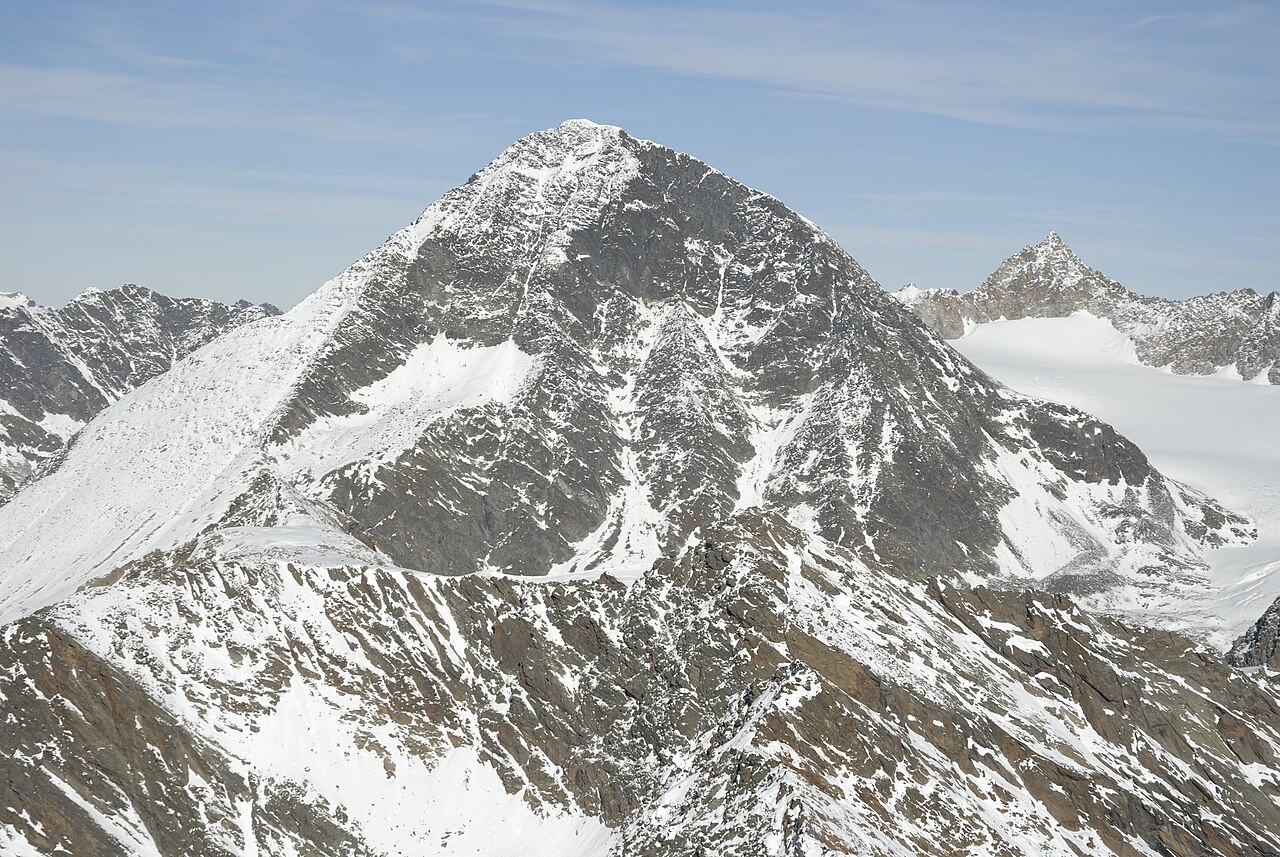
The Schrankogel sits in the Stubai Alps of Tyrol, Austria, at 3,497 m (11,473 ft). The normal route starts at the Amberger Hut (2,135 m / 7,005 ft) and climbs via the Hohes Egg on the south-south-west side, a non-glaciated F+ ridge with snowfields in early season. The Almenrausch tour guide currently recommends this line and advises against the east ridge when it is busy. It describes the Schrankogel as a demanding high-alpine tour that requires very good fitness, sure-footedness and alpine experience. It is not a hard day technically. It is a long one on rough ground at altitude.
Three things make the day hard. The first is length: 4 to 4.5 hours to the summit from the Amberger Hut, and 6.5 to 7 hours round trip on rough ground, so climbers without the endurance to move efficiently hour after hour can slow down in the back half of the day. The second is snow: snowfields in early season call for confident movement, and crampons and an ice axe depending on conditions. The third is the descent, which comes on tired legs, where sure-footedness matters most. Altitude and weather add to all three.
The fitness side of this is trainable.
Physical benchmarks to hit before the Schrankogel
Our read: on the numbers below, the Schrankogel asks for endurance for a long day on your feet, sustained climbing with a long descent on tired legs, time at altitude (the summit is at 3,497 m / 11,473 ft), and the skills listed further down this page, which fitness cannot replace.
What published sources on the Schrankogel ask of climbers (guide services, clubs, parks and a few others, each named), and what the route itself demands. Quotes are word for word from each source, and every line links to it.
To see where you stand against these, take Summit Check for the Schrankogel.
Altitude and terrain reality check
Training builds the engine. Altitude is its own thing. At 3,497 m (11,473 ft) there is noticeably less oxygen than at sea level, and the only honest way to adapt is to spend time up high. No algorithm replaces that. Practically: a night at the Amberger Hut (2,135 m / 7,005 ft) before the summit, and time on lower Alpine peaks in the weeks before, both help. The deeper guide on this is in our altitude acclimatisation guide.
How long does it take to train for the Schrankogel?
It depends mostly on where you start. Our Summit Check model puts the Schrankogel at about 12 weeks, our shortest block, if you already train 3 to 4 times a week with regular hill days, and about 13 weeks if you are starting from a low base.
How we get there: the model starts from the peak’s altitude (3,497 m / 11,473 ft) and grade (F+ Non-glaciated ridge), then lengthens or shortens the block for how you train now: weekly rhythm, your longest recent day, hill terrain, descent strength, back-to-back days, recovery, available time, altitude history and injuries. That is the same model behind the free Summit Check.
We could not find a guide service or alpine club that publishes a training lead time specifically for the Schrankogel.
For your own number, answer ten questions in Summit Check: it sizes your runway in weeks and the weekly load the Schrankogel asks for.
Whatever the length, a Train to Mountain plan runs backwards from your climb date in five phases:
- Aerobic base. Build the engine that keeps a long day efficient.
- Base plus strength. Add eccentric leg strength and progressive weighted carries.
- Muscular endurance. Long days with sustained climbing and a building pack.
- Peak simulation. One long day close to your summit-day length, 4 to 6 weeks before the trip.
- Taper. Volume drops in the final 1 to 2 weeks so you arrive fresh.
A weekly training schedule for the Schrankogel
An example week from the Train to Mountain method, about halfway through the block. Most of the week is easy aerobic work, with one hard session and one long day (polarised training; Seiler and Kjerland, 2006).
Our targets for the Schrankogel: by the biggest weeks of the block, a Train to Mountain plan for the Schrankogel works up to a long day of about 8 hours and about 1,400 m (4,593 ft) of climbing a week. These are the numbers our planning engine sets for this peak. The week below sits about two thirds of the way there, so the climbing in it adds up to about 900 m (2,953 ft).
- Mon · easy 45 to 60 min Zone 2
- Tue · intervals, 4 x 4 min hard (Zone 4 to 5)
- Wed · rest or 30 min mobility
- Thu · Zone 2 hike, 2 to 3 hours with about 300 m (984 ft) of climbing, carrying a daypack
- Fri · easy 45 min Zone 2 plus eccentric strength (step-downs, slow lunges)
- Sat · long mountain day, 5 hours and about 400 m (1,312 ft) of climbing, mostly Zone 2
- Sun · 2 to 3 hours easy Zone 2 on tired legs, with about 200 m (656 ft) of climbing
Zone 2 here means 85 to 89 percent of your lactate threshold heart rate (Friel); see heart rate zones for mountaineering. One rehearsal day of about 8 hours goes in 4 to 6 weeks before the trip. A Train to Mountain plan sets these numbers from your own training and recalculates them every week.
Technical skills you must bring to the Schrankogel
TTM trains the body. The Schrankogel's normal route is a non-glaciated F+ ridge, not a technical climb, but it asks for these skills. Bring them or climb with a certified guide.
Not needed on this route: Rock climbing, Via ferrata / fixed chains, Roped glacier travel, Crevasse rescue, Steep snow / ice, Fixed-line ascending, Abseil / rappel, Avalanche awareness, Expedition skills.
Route covered: Normal route via the Hohes Egg from the Amberger Hut. Typical skills in normal season; conditions change, so confirm with a certified guide.
- Scrambling: moving securely on exposed rock with your hands.
- Altitude judgement: knowing the signs of altitude illness and turning around calmly.
- Crampons (depending on conditions): walking, front-pointing and traversing on snow and ice, up and down.
- Ice axe use and self-arrest (depending on conditions): stopping a slide on steep snow, on both sides.
How TTM tunes the plan to the Schrankogel
How the plan is set for the Schrankogel
- Fitness target · Our engine sets a Mountain Fitness target of 65 for the Schrankogel, and the plan builds towards it by your summit date.
- Weekly climbing · About 1,400 m (4,593 ft) a week in the biggest weeks, reached step by step with planned recovery weeks.
- Long day · A long day of about 8 hours, rehearsed once 4 to 6 weeks before your trip.
- Weekly recalculation · The plan recalculates every week from the training you actually logged.
- Daily intensity · How hard each day goes follows your HRV readiness, so a poor night or a hard week is absorbed rather than ignored.
- Summit Readiness Score · Tracks five components (fitness, climbing volume, long day, descent readiness and consistency) as an outcome. It does not set your daily intensity.
Tell TTM your objective and your summit date, and the plan is built backwards from that date. The skills in the technical skills section above come from a guide or a course; the plan trains the body.
Climbing the Schrankogel: quick answers
How hard is it to climb the Schrankogel? Can a beginner do it?
The Schrankogel needs no roped climbing on this route in normal conditions. Grade: F+ Non-glaciated ridge. You need scrambling and altitude acclimatisation. Depending on conditions you may also need crampons and ice axe self-arrest. Summit day: 4 to 4.5 hours to the summit from the Amberger Hut, and 6.5 to 7 hours round trip. The summit is at 3,497 m (11,473 ft). If these skills are new to you, practise them first or go with a guide. The physical benchmarks above show what fitness to build. Source.
How long does it take to climb the Schrankogel?
Summit day: 4 to 4.5 hours to the summit from the Amberger Hut, and 6.5 to 7 hours round trip. Add the approach, hut or camp nights and any acclimatisation days, which depend on your itinerary. Source.
Do I need a guide to climb the Schrankogel?
A guide is not required, but on the Schrankogel you must handle scrambling yourself, along with navigation and weather judgement. If those are new to you, go with a guide.
When is the best time to climb the Schrankogel?
Plan your training backwards from your summit date: Summit Check sizes how many weeks you need. The main climbing season is June to September. Source. For what to wear on the day, see the mountaineering layering guide.
How dangerous is the Schrankogel?
On this route: A non-glaciated F+ ridge with snowfields in early season, 4 to 4.5 hours to the summit from the Amberger Hut. Almenrausch currently advises against the east ridge when it is busy. The risks you control are fitness, pace and acclimatisation: tired, slow parties spend longer exposed and make worse decisions. Turn around on time and climb in good weather.
Common questions about training for the Schrankogel
How long is the Schrankogel summit day from the Amberger Hut?
The Almenrausch tour guide gives 4 to 4.5 hours to the summit from the Amberger Hut, and 6.5 to 7 hours round trip, with 1,384 m (4,541 ft) of height gain from the Amberger Hut (2,135 m / 7,005 ft). The normal route climbs via the Hohes Egg on a non-glaciated F+ ridge. The length and the rough ground drive the timing more than any single hard move, so the training priority is a steady aerobic engine, comfort on rough terrain and eccentric descent capacity for the return.
How hard is the Schrankogel normal route?
The normal route is a non-glaciated F+ ridge with snowfields in early season, climbed via the Hohes Egg from the Amberger Hut. It is not technically extreme, but Almenrausch describes the Schrankogel as a demanding high-alpine tour that requires very good fitness, sure-footedness and alpine experience. Training has to prioritise a steady aerobic engine, descent strength and comfort moving on broken rock and snow.
What altitude work matters for the Schrankogel (3,497 m / 11,473 ft)?
At 3,497 m (11,473 ft) there is noticeably less oxygen than at sea level, and the only honest way to adapt is to spend time up high. A night at the Amberger Hut (2,135 m / 7,005 ft) before the summit and time on lower Alpine peaks in the weeks before both help. Sea-level training builds the engine; altitude is its own thing.
Does a Schrankogel training plan need to be personalised to me?
Yes: your starting fitness (where the build begins), your summit date (where the taper lands), how your weekly vertical builds, and where the rehearsal long day of about 8 hours falls (4 to 6 weeks out) all depend on you. A generic 12-week PDF cannot do this. Train to Mountain recalculates your plan every week from your training data and your summit date.
What strength work does Schrankogel training need?
Targeted, eccentric-heavy, minimal volume. The biggest strength priority is descent resilience: you come down 1,384 m (4,541 ft) on tired quads at the end of a 6.5 to 7 hour day. Weighted step-downs, slow-tempo split squats and controlled downhill repeats on real terrain. One specific strength session per week is enough. The aim is muscle resilience through the eccentric range (LaStayo et al., 2003).
Similar peaks to the Schrankogel
Peaks close to the Schrankogel in region, grade or height: to compare, or to build up to it.
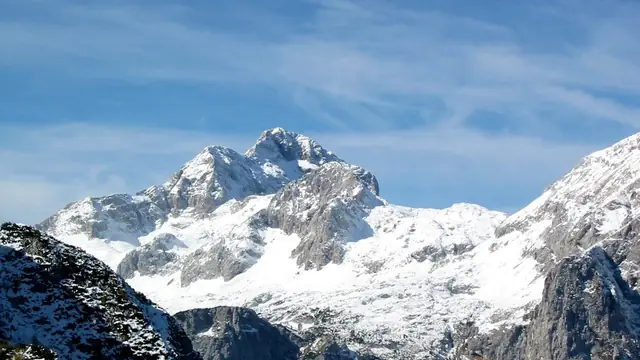 TriglavVia ferrata (cabled summit ridge)
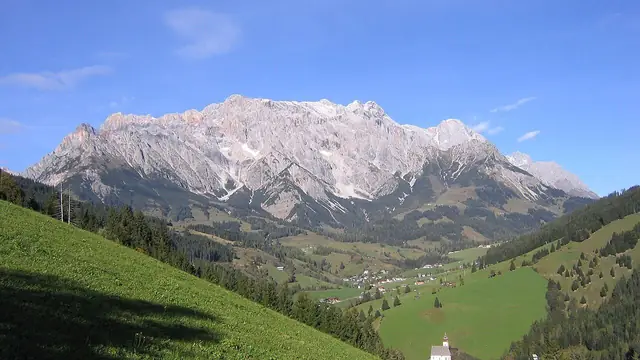 HochkönigF Plateau glacier crossing
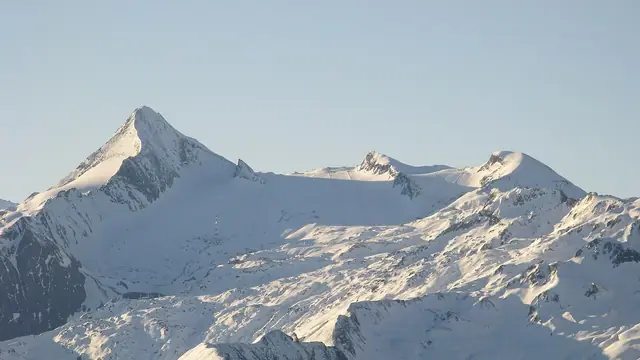 KitzsteinhornF Lift-served glacier
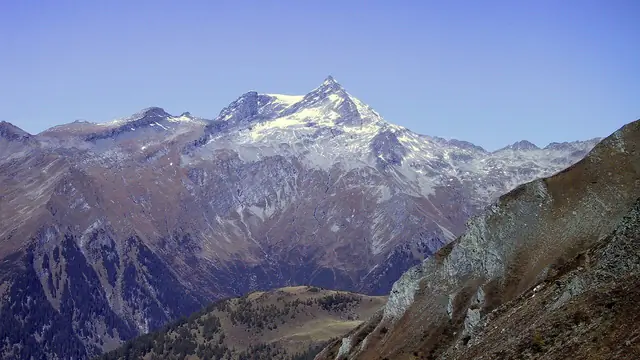 AnkogelPD- Rock with short glacier
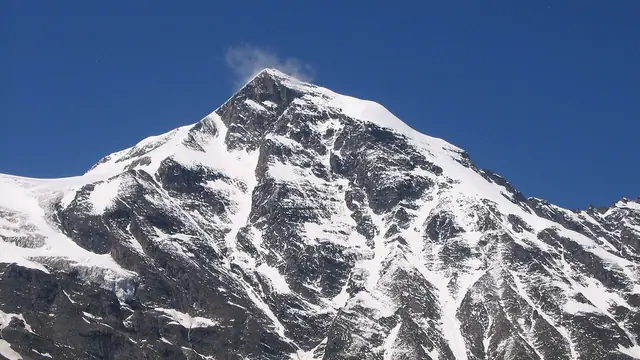 Grosses WiesbachhornPD-
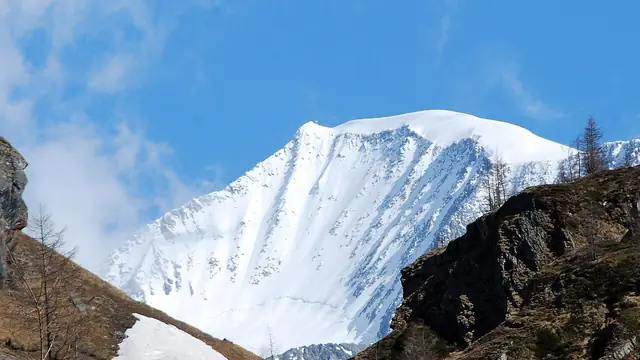 GrossvenedigerF Glacier walk
Photos: Triglav: Andrej Jakobčič (CC BY-SA 3.0), via Wikimedia Commons; Hochkönig: Aconcagua (CC BY-SA 3.0), via Wikimedia Commons; Kitzsteinhorn: Spiderfox (CC BY 3.0), via Wikimedia Commons; Ankogel: JJ55 (CC BY-SA 3.0), via Wikimedia Commons; Grosses Wiesbachhorn: Bermicourt (CC BY-SA 3.0), via Wikimedia Commons; Grossvenediger: Svíčková (CC BY-SA 3.0), via Wikimedia Commons.
Tools and deeper reading
Take this further
- Peak Progression Planner · See where the Schrankogel sits in a full progression and the graded ways to build up to it, from a fast line to a cautious foundation.
- Summit Check · Test whether you are ready for the Schrankogel today. Free, science-backed, a few minutes.
- Training for Mountaineering · How TTM builds personalised mountaineering training plans backwards from your summit date, recalculated every week.
- Train for the Zuckerhütl · A glaciated Stubai Alps summit and a natural step up.
- Train for the Wildspitze · A big glaciated day in the Ötztal Alps.
- Altitude Acclimatisation Guide · The four acclimatisation training protocols and how to fit them into your build.
- Muscular Endurance for Mountaineering · The pillar guide on the quality that turns gym strength into legs that last a summit day. Pair with the free Muscular Endurance Calculator to score where you stand.
The takeaway
Preparing for the Schrankogel takes more than general fitness. It is a specificity problem. Match your training to the mountain: the aerobic engine, the vertical, a long day on rough ground, and the descent. Training one or two of these well and ignoring the others leaves a gap.