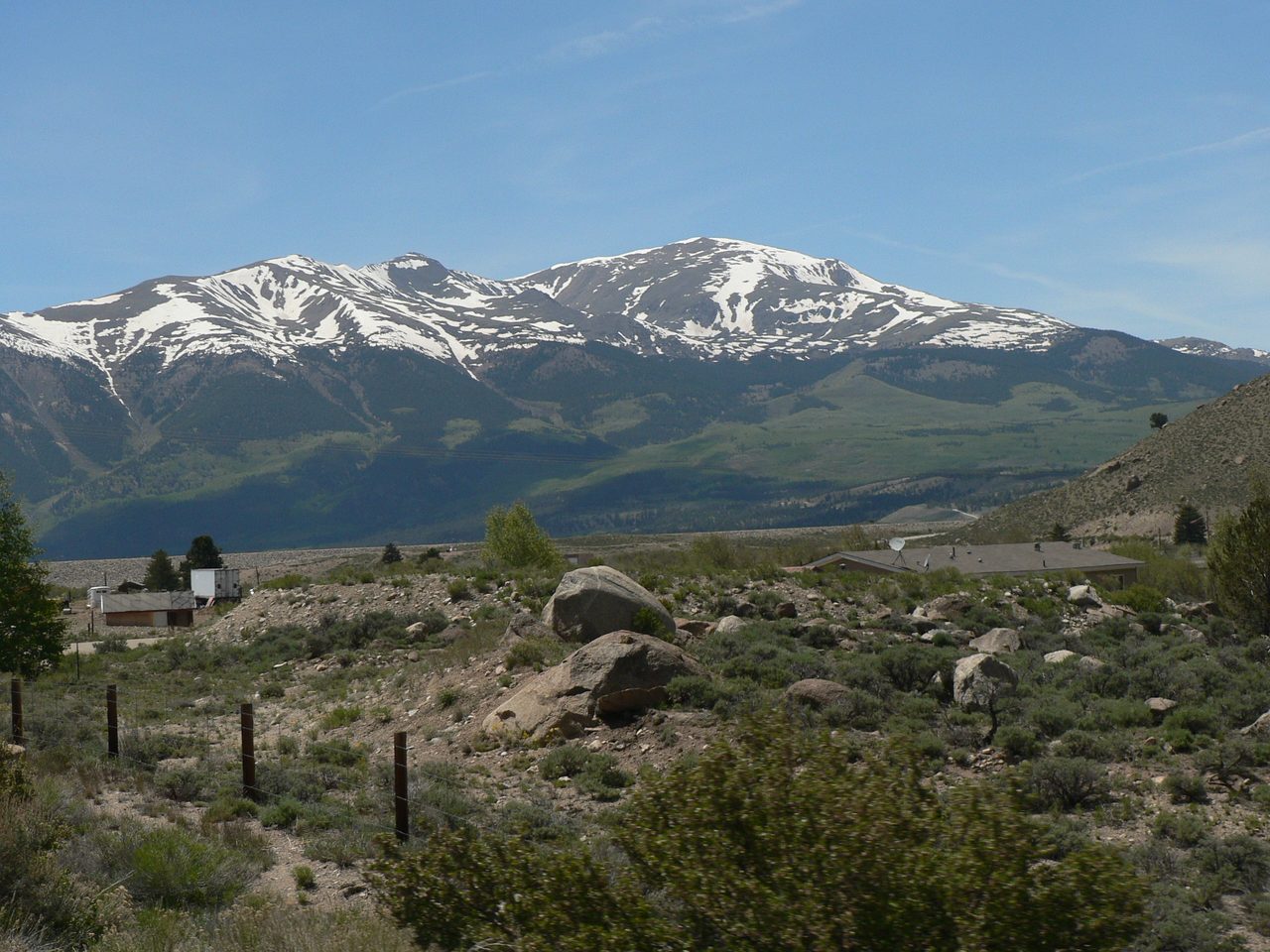
Why Mt Elbert punishes underprepared hikers
Mt Elbert is the highest peak in Colorado and the highest in the Rocky Mountains at 4,401m (14,440 ft). It is also the most popular Colorado 14er, which is part of the trap. Heavy summer foot traffic and a Class 1 walk-up trail give it a reputation as a casual day out. It is not. The standard Northeast Ridge from the North Mt Elbert trailhead is about 14 km (9 mi) round trip with roughly 1,400m (4,600 ft) of gain, and most fit hikers take 8 to 10 hours to complete it.
The failure pattern is consistent. Hikers underestimate the sustained climb, run out of aerobic capacity around 3,900m (12,800 ft), and either turn around or grind to the summit in a state they cannot safely descend from. Others fly in from sea level, drive straight to the trailhead, and discover that flatland fitness does not translate at 4,401m (14,440 ft). Others still make the summit, then crack on the long, rocky descent because their quads were never trained for it.
None of this is bad luck. The trail is non-technical, but the altitude, the vertical, and the distance make Mt Elbert a real training objective. Every failure mode is trainable.
Physical benchmarks to hit before Mt Elbert
Mt Elbert loads five physiological systems in different ways. A real preparation plan trains all five, not just the obvious one.
Altitude and terrain reality check
Training builds the engine. Altitude is its own thing. At 4,401m (14,440 ft) you have around 60 percent of sea-level oxygen, and the only honest way to adapt is to spend time up there. No algorithm replaces that. For Mt Elbert specifically: if you live near sea level, arrive in Colorado at least 2 to 3 days before your summit attempt. Sleep at 2,400 to 3,000m (8,000 to 10,000 ft) in Leadville or Twin Lakes, do an easy lower hike on day 1 to test how your body responds, then attempt Elbert. Hydrate aggressively and monitor for AMS symptoms throughout. The deeper guide is in altitude acclimatisation guide.
The 12-16 week Mt Elbert preparation timeline
The block runs backwards from your climb date. Five phases, each with a distinct target.
- Weeks 1-4 · Aerobic base. Build the deep engine that keeps a long day efficient.
- Weeks 5-8 · Base plus strength. Add eccentric leg strength and progressive weighted carries.
- Weeks 9-11 · Muscular endurance. Long days with vertical and a building pack.
- Weeks 12-13 · Peak simulation. A long mountain day near your summit-day length, 4-6 weeks out.
- Week 14 · Altitude and skills. Time high where you can, plus the mountain craft Mt Elbert needs.
- Weeks 15-16 · Taper. Volume drops; skills stay sharp; arrive fresh.
A weekly distribution that works
The polarised principle applies: most of the week at low intensity, one hard session, one long mountain or hill day (Seiler and Kjerland, 2006). A representative week, 8 weeks out from a Mt Elbert attempt:
- Mon · easy 60 min Z2
- Tue · threshold intervals, 4 x 4 min Z4
- Wed · rest or 30 min mobility
- Thu · long Z2 hike, 2 to 3 hours with 500 to 700m (1,650 to 2,300 ft) vertical, loaded pack
- Fri · easy 45 min Z2 + eccentric strength (step-downs, split squats)
- Sat · long mountain or hill day, 4 to 6 hours mixed Z2 with vertical
- Sun · 1.5 to 2.5h Z2 on tired legs (back-to-back loading)
Roughly 80 percent of weekly volume sits at Z1 to Z2, with one hard intensity session and one back-to-back load. Vertical accumulates progressively across the block. The single 7 to 8 hour rehearsal day lands 3 to 5 weeks before the trip, not in the final taper. The deeper rationale is in our heart rate zones for mountaineering guide.
Technical skills you must bring to Mt Elbert
TTM trains the body. Mt Elbert is non-technical, but a big mountain day still asks for real mountain sense.
- Navigation and pacing over a long day.
- Foul-weather and altitude judgement.
- A steady, efficient uphill rhythm at altitude.
- Descent control on tired legs.
How TTM tunes the plan to Mt Elbert
Five things the algorithm calibrates to your peak
- Fitness target · Mt Elbert is set at an MF threshold that the model associates with completing the route safely with margin at 4,401m (14,440 ft). Your plan is engineered to hit that number by your summit date.
- Vertical accumulation target · approximately 18,000m (60,000 ft) of climbing across the build, distributed progressively week by week with recovery weeks every fourth.
- Summit-day rehearsal · the Long Day Score is calibrated to Mt Elbert's 8 to 10 hour day. The plan schedules a real 7 to 8 hour single training day in the 3 to 5 week window before your trip, not earlier.
- Descent eccentric load · the Descent Readiness Score is calibrated to a 1,400m (4,600 ft) descent on a rocky maintained trail. Eccentric strength and downhill repeats are programmed in, not bolted on.
- Weekly recalibration · every Sunday the plan recalibrates from what you actually trained that week. Not daily, not in real time. The science of recovery and adaptation runs on a longer clock than a notification (Banister et al., 1975).
When you tell TTM your objective is Mt Elbert and your summit date, the plan is built backwards from that date with all five demands engineered in. You do not need to assemble the pieces yourself.
Train for Mt Elbert with a plan built backwards from your summit date
Mt Elbert is rarely a fitness problem in the abstract. It is a specificity problem. The hikers who summit cleanly are the ones whose training matched the mountain's actual demand profile across all five dimensions. The hikers who turn around usually trained one or two of them well and ignored the rest.
If you have a date on the calendar, the highest-leverage thing you can do today is start the plan. test your readiness for Mt Elbert and we will build it for you, tuned to Mt Elbert and recalibrated every Sunday from your actual data.
Common questions about training for Mt Elbert
What class is Mt Elbert?
Mt Elbert's standard routes (the Northeast and East Ridge trails) are Class 1 to Class 2: a steep but non-technical hike with no scrambling, rope or real exposure. What makes it demanding is not the class but the altitude, topping out at 4,401m (14,440 ft), and the sustained 1,400m (4,600 ft) climb and rocky descent.
How hard is Mt Elbert really?
Technically it is a Class 1 walk-up on a maintained trail, so the difficulty is not in route-finding or exposure. The difficulty is the combination: approximately 14 km (9 mi) round trip, roughly 1,400m (4,600 ft) of gain, and a summit at 4,401m (14,440 ft).
How long should I train before attempting Mt Elbert?
If you already have a steady aerobic base and regular long hikes, 8 to 10 weeks of targeted preparation is enough. If you are coming from a mostly sedentary baseline, plan 12 to 16 weeks.
Do I need to acclimatise for Mt Elbert if I live at sea level?
Yes. At 4,401m (14,440 ft) you have around 60 percent of sea-level oxygen.
Can I train for Mt Elbert without mountains nearby?
Yes, with one honest constraint: altitude exposure has to come from the trip itself, not training. The aerobic engine, vertical accumulation, descent eccentric load, and long-day duration can all be trained anywhere with hills, stairs, or a treadmill on incline.
How does TTM tune a plan to Mt Elbert specifically?
TTM builds the plan backwards from your summit date and calibrates it to Mt Elbert's specific demands: a fitness target tied to a roughly 9 hour day at altitude, around 18,000m (60,000 ft) of total vertical across the block, a single 7 to 8 hour rehearsal day placed 3 to 5 weeks out, eccentric descent strength programmed in, and a pre-trip altitude exposure window.
Tools and deeper reading
Take this further
- Peak Progression Planner · See where Mt Elbert sits in a full progression and the graded paths around it, from a fast line to a cautious foundation.
- Summit Readiness Simulator · Test whether you are ready for Mt Elbert today. Free, science-backed, about 90 seconds.
- Training for Mountaineering · How TTM builds personalised mountaineering training plans backwards from your summit date, recalibrated each Sunday.
- Train for South Sister · Oregon classic non-technical first volcano, real vertical for the legs.
- Train for Mt Whitney · The highest peak in the contiguous US, a long sustained altitude day.
- Altitude Acclimatisation Guide · The four acclimatisation training protocols and how to fit them into your build.
- Muscular Endurance for Mountaineering · The pillar guide on the quality that turns gym strength into legs that last a summit day. Pair with the free Muscular Endurance Calculator to score where you stand.
The takeaway
Mt Elbert rewards the climber who arrives with the aerobic depth for a long day, the eccentric strength to hold the descent, and the mountain sense the terrain asks for. Build those against a specific date, respect the acclimatisation and the weather, and the summit becomes an execution problem rather than a fitness gap.