What this plan is built for
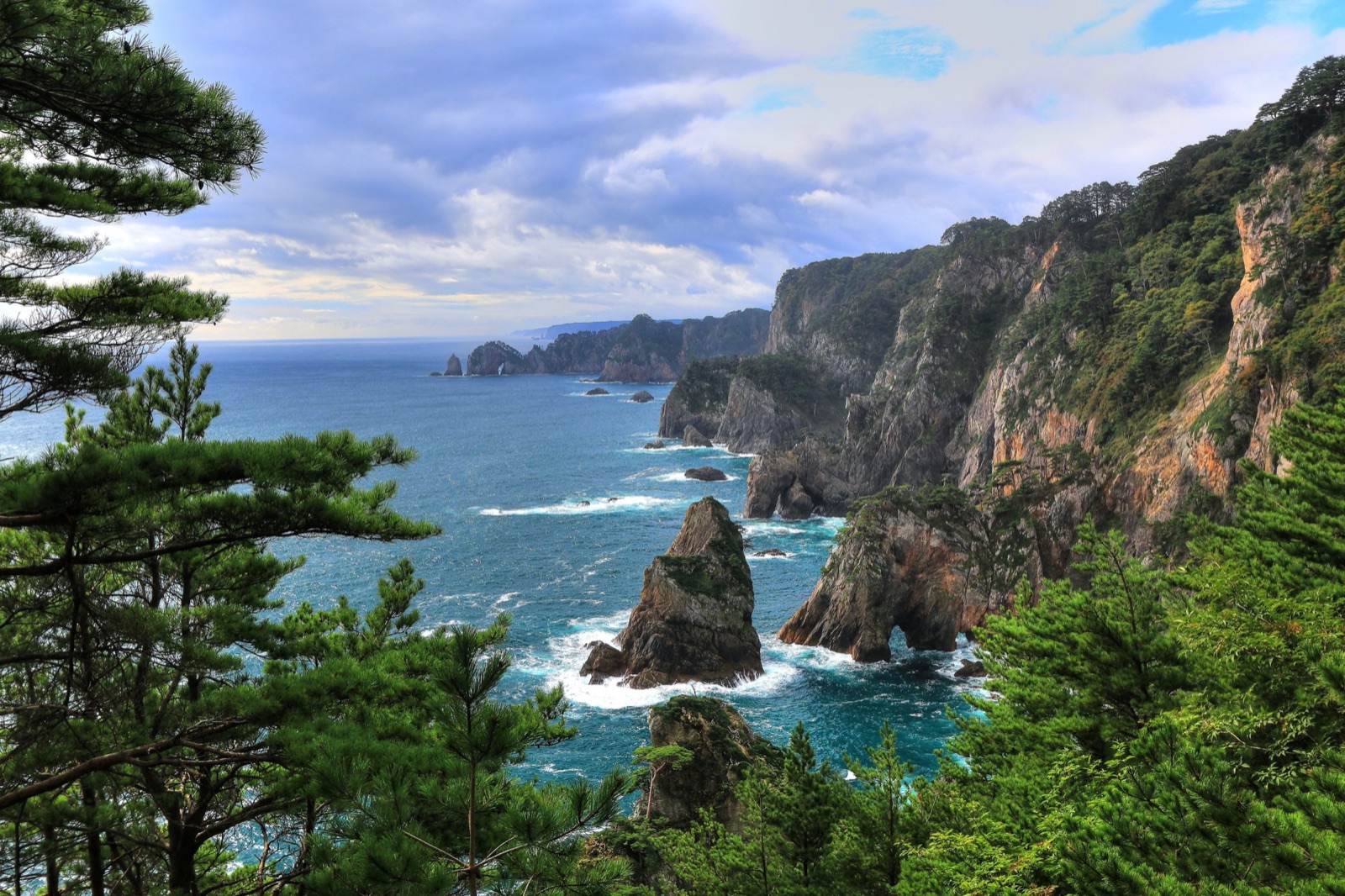
The Michinoku Coastal Trail asks for eight consecutive inn-to-inn days of 2.5 to 6 hours on uneven coastal paths and stairways with a daypack (luggage goes by courier), the longest day 14.3 km over a 484 m pass at the end of the week. The plan trains five things in parallel: the aerobic engine, vertical capacity, multi-day durability (the weekend pair), descent eccentric strength, and pack-carrying economy with your daypack with water, lunch and rain gear, loaded as you will carry it (main luggage travels by courier between the inns). Altitude is not the limiter here; accumulation, the daily ascent and the pack are. The stage-by-stage demand is on the Michinoku Coastal Trail trek page.
Before you start
- Base assumed: two or three sessions a week of any cardio for the last couple of months, and at least one day hike of 3 hours in the last year. From less, start the plan earlier and repeat the base phase.
- Hours: about 5.3 to 6.8 hours a week in the base phase, rising to about 12.4 in week 11, most of it on the weekend. With four or five hours a week, keep the Saturday walk and the Thursday vertical, drop the rest, and expect to need more weeks.
- Intensity: every walk and the Thursday session in Zone 2 (you can talk in sentences). The only hard session is Tuesday, from week 3. See how to find your zones.
- Terrain: stairs above all, down as well as up, since the trail drops to every cove on steep wooden and earth steps; rough, uneven coastal or woodland path for the long days; hills are optional, stairs are not.
- Pack: your daypack with water, lunch and rain gear, loaded as you will carry it (main luggage travels by courier between the inns), on every long day from week 5.
The 16 weeks
Saturday is the long walk, Sunday the back-to-back day on tired legs, Thursday the midweek vertical (stairs, incline or hills), Friday eccentric strength, Tuesday one hard interval session from week 3, Monday an easy hour. The Saturday ascent peaks at 600 m, about 90 percent of the Michinoku Coastal Trail's biggest day, and the rehearsal in week 12 is the trek's biggest day in one go: about 6 hours, 600 m up and 500 m down, a scaled rehearsal of a day that is 5 to 6 hours and 477 m down on the trek itself; a rehearsal does not need the full dose.
| Week | Phase | Tuesday | Thursday vertical | Saturday long day | Sunday | Strength | Hours | Focus |
|---|---|---|---|---|---|---|---|---|
| 1 | Base | Zone 2, 45 min | 50 min 200 m | 2 h 200 m | rest | general, 2 x 30 min | 5.6 h | Find your Zone 2 and keep every walk in it; intervals start in week 3 |
| 2 | Base | Zone 2, 45 min | 55 min 250 m | 2.5 h 250 m | rest | general, 2 x 30 min | 6.2 h | Progress the long day |
| 3 | Base | intervals, 6 x 3 min | 60 min 250 m | 3 h 300 m | rest | general, 2 x 30 min | 6.8 h | Progress the long day |
| 4 | Base | intervals, 4 x 3 min | 40 min 200 m | 2 h 200 m | rest | general, 2 x 30 min | 5.3 h | Easy week: everything shorter |
| 5 | Build | intervals, 6 x 3 min | 70 min 300 m | 3 h 350 m | 2 h | eccentric 40 min + general 30 min | 9.1 h | First weekend pair |
| 6 | Build | intervals, 6 x 3 min | 75 min 350 m | 3.5 h 400 m | 2 h | eccentric 40 min + general 30 min | 9.7 h | Progress the long day |
| 7 | Build | intervals, 6 x 3 min | 80 min 350 m | 4 h 500 m | 2.5 h | eccentric 40 min + general 30 min | 10.8 h | Progress the long day |
| 8 | Build | intervals, 4 x 3 min | 50 min 200 m | 3 h 300 m | 1 h | eccentric 40 min + general 30 min | 7.6 h | Easy week: keep the pair, everything shorter |
| 9 | Specific | intervals, 6 x 3 min | 90 min 400 m | 4.5 h 500 m | 2.5 h | eccentric 40 min + general 30 min | 11.4 h | Progress the long day |
| 10 | Specific | intervals, 6 x 3 min | 90 min 400 m | 4.5 h 550 m | 2.5 h | eccentric 40 min + general 30 min | 11.4 h | Hold the long day, add gain |
| 11 | Specific | intervals, 6 x 3 min | 90 min 400 m | 5 h 600 m | 3 h | eccentric 40 min + general 30 min | 12.4 h | Biggest regular Saturday of the plan |
| 12 | Rehearsal | intervals, 4 x 3 min | 45 min 200 m | 6 h 600 m | 1.5 h | mobility only | 10.2 h | Rehearsal day: a 5 to 6 hour walk of about 14.3 km on uneven ground with a pass-sized ascent of about 500 m in the middle and plenty of steps, the shape of day 7 |
| 13 | Rehearsal | intervals, 4 x 3 min | 55 min 250 m | 3.5 h 350 m | 1 h | eccentric 40 min + general 30 min | 8.2 h | Recover: short pair, easy midweek |
| 14 | Last big weekend | intervals, 6 x 3 min | 90 min 400 m | 5 h 600 m | 3 h | eccentric 40 min + general 30 min | 12.4 h | Last full pair, then taper |
| 15 | Taper | intervals, 4 x 3 min | 30 min 150 m | 3 h 300 m | 1 h | eccentric, 25 min | 6.5 h | Volume halves, one short sharp session stays |
| 16 | Taper | Zone 2, 30 min | rest | 2 h 200 m | rest | no | 3.5 h | Fresh: short easy sessions only, pack checked |
Hours are time on your feet; gain is the vertical you go up in the session, and on the Sunday walk the descent matters as much as the ascent. Weeks 4, 8 and 13 are easy weeks on purpose, across the whole week: fitness is built in the recovery, not in the load (Banister et al., 1975). Tuesday from week 3: 6 x 3 minutes at Zone 4 with 2 minutes easy between (4 x 3 in the easy weeks), or hill repeats, 35 to 45 minutes in total. Monday: 60 minutes easy. Wednesday: rest or mobility.
The six phases
- Weeks 1 to 4, base. An easy hour on Monday, a Tuesday session (Zone 2 at first, intervals from week 3), a Thursday vertical session of 50 to 60 minutes (40 in the easy week), two short general strength sessions, and a Saturday walk growing from 2 to 3 hours. Week 4 is easy.
- Weeks 5 to 8, build. Add one eccentric strength session a week and make the weekend a pair: Saturday long, Sunday on tired legs. Week 8 is easy.
- Weeks 9 to 11, specific. Saturday grows to 5 hours and 600 m of gain, the Sunday walk stays long, midweek vertical peaks.
- Weeks 12 to 13, rehearsal. One 6 hour day with about 600 m up and 500 m down: a 5 to 6 hour walk of about 14.3 km on uneven ground with a pass-sized ascent of about 500 m in the middle and plenty of steps, the shape of day 7. The rest of week 12 is light, and week 13 recovers.
- Week 14, last big weekend. One more full pair, then the taper begins.
- Weeks 15 to 16, taper. Volume drops by about 48 percent in week 15 and 72 percent in week 16 against week 14, one short sharp session stays, legs arrive fresh.
The rehearsal week
Week 12 holds one day that mirrors the biggest day of the trek: a 5 to 6 hour walk of about 14.3 km on uneven ground with a pass-sized ascent of about 500 m in the middle and plenty of steps, the shape of day 7. It is not for fitness; it is for pacing, feet, fuelling and your head in the second half. The table places it four weeks before you go; with the real pack and the real food, and start before dawn if the trek's day does. The trek's biggest descent is 508 m in a day, so find as much descent as your terrain allows. The Sunday after it is a short easy walk, not a second long one, and the rest of that week is light.
Adapting the plan
- Coming from running or cycling: your engine is ahead; your legs are not. Keep the Saturday hours as written but start the eccentric strength in week 2, and do every long walk with the pack from week 3.
- Only weekends: keep the pair, move Thursday's vertical into Saturday's first hour, drop Tuesday. The plan still works; it just builds durability more slowly.
- A cold, a trip, a missed week: repeat the week you missed rather than skipping ahead. Two missed weeks in the specific phase mean a shorter rehearsal day, not a cancelled one.
- Knees that complain on descents: halve the Sunday distance for two weeks and double the eccentric session; legs that cannot brake are a common reason people struggle on the Michinoku Coastal Trail's descents.
Trek Check tells you which phase you are already past.
Common questions
Is 16 weeks the right length for the Michinoku Coastal Trail?
The trek pages assume 12 to 16 weeks from a base of two or three sessions a week; this page is the 16-week version. If you already hike long days regularly, start at week 5 and you have the 12-week version. If you are starting from little, start earlier and repeat the base phase.
What if I only have four or five hours a week?
This plan does not fit in four hours at its peak. Keep the Saturday walk and the Thursday vertical, drop the Tuesday intervals and the Monday hour first, shorten the Sunday walk to an hour, and expect to need more weeks. The weekend pair is what builds consecutive-day durability; it is the last thing to cut.
I have no hills. Can I still follow it?
Yes. Stairs above all, down as well as up, since the trail drops to every cove on steep wooden and earth steps; rough, uneven coastal or woodland path for the long days; hills are optional, stairs are not. Count the vertical, not the kilometres.
What pack do I train with?
Your daypack with water, lunch and rain gear, loaded as you will carry it (main luggage travels by courier between the inns), on every long day from week 5.
How is the personalised plan different from this page?
The app builds the same phases backwards from your departure date, sizes every session to your starting fitness and the hours you actually have, and rebuilds the next week every Sunday from what your watch recorded. This page is the fixed version; the app version bends when life does.
Can I train for the Michinoku Coastal Trail on a treadmill or StairMaster only?
For the engine and the vertical, yes: stairs above all, down as well as up, since the trail drops to every cove on steep wooden and earth steps; rough, uneven coastal or woodland path for the long days; hills are optional, stairs are not. Convert what the machine shows into metres of gain with the StairMaster calculator or the treadmill incline calculator and match the Thursday and Saturday gain in the table. What a machine cannot give you is rough ground, weather and the descent, so take the Sunday walk outside whenever you can, walk down as well as up when you do, and keep the Friday eccentric session; that is what makes the second week walkable.
Do I need to train for the Michinoku Coastal Trail at all?
Yes. The Michinoku Coastal Trail is 8 days in a row with about 4.1 hours and 422 m of ascent on a typical day and 5 to 6 hours on the longest, so the question is not whether you can walk one of those days but whether you can walk the last one. The plan trains that: consecutive long days, the daily vertical, descents and the pack. Starting from two or three sessions a week, 16 weeks is comfortable and 12 is the minimum; from nothing, start earlier and repeat the base phase.
Is there a printable or PDF version of this plan?
The table prints from your browser (print to PDF gives you the file), and the 16 rows plus the phase notes are the whole plan. There is no separate download because the fixed plan is only the starting point: the app version rebuilds the next week every Sunday from what your watch recorded, which a PDF cannot do.
Related training plans
Training for something similar?
- Laugavegur Trail training plan · Iceland, 4 days, 54 km, high point 1,100 m. Trek page.
- Quilotoa Loop training plan · Ecuador, 3 days, 35 km, high point 3,880 m. Trek page.
- Torres del Paine W Trek training plan · Chile, 5 days, 79 km, high point 871 m. Trek page.
Tools and deeper reading
- Michinoku Coastal Trail: what the trek actually demands · The stage profile, day by day, and the five physical systems the trek loads.
- Eccentric Training for Trekkers · The specific eccentric work for the Friday session, and why the descent arrives tired.
- Strength Training for Hikers · The leg and hip strength that keeps a week of walking injury-free.
- Heart Rate Zones for Trekking · Finding Zone 2, and why the plan lives there.
- Altitude Acclimatisation for Trekkers · Why the Michinoku Coastal Trail is not limited by altitude, and what changes above 3,000 m.
- The Science Behind TTM · Banister's model, polarised distribution, eccentric load.
- All trek guides · The other nineteen 16-week plans and the physiology guides.