Your body adapts to the altitude where you sleep. The Wilderness Medical Society guideline: above 3,000 m, raise your sleeping altitude by no more than 500 m a night and take a rest day every three to four days (Luks et al., 2019). Breathing adapts within days; red blood cells take 10 to 21 days (Mazzeo, 2008), so on a one or two week trek you rely mostly on the faster changes and on the itinerary's pace. Training does not acclimatise you. It makes every walking hour cheaper, which leaves more reserve for the altitude.
Pick the tests you want and get one report with your biggest gap before day one. Free, a few minutes, no signup.
Why altitude is the one thing a trek plan cannot train
A trekker who walks a brisk hour at home walks slowly at 4,500 m, and that is not a fitness problem. The air holds less oxygen, and an aerobic system built around sea-level air has less to work with. Until your body adapts, every step costs more than it should (Bartsch & Saltin, 2008).
Acclimatisation is the set of changes that happen when you spend time at altitude: faster breathing, more red blood cells, better oxygen delivery, denser capillaries in working muscle. It does not make you a sea-level walker again. It narrows the gap. On a trek, it is built into the itinerary: how high you sleep each night, the acclimatisation days, and the pace your guide sets.
What happens to your body at altitude
Three systems shift, on three timelines:
- Hours to days: breathing rate rises, resting heart rate goes up, plasma volume drops. The body compensating for low oxygen on the fly.
- Days to weeks: erythropoietin (EPO) rises and stimulates red blood cell production, so the blood carries more oxygen. This takes 10 to 21 days to mature meaningfully (Mazzeo, 2008).
- Weeks to months: capillary density and mitochondrial efficiency in working muscle improve. These deep adaptations take real time.
For a trek, that means the first timeline does most of the work and the second only begins. Everest Base Camp, at eleven days, is the longest of the twelve that go above 3,000 m; Kilimanjaro on the Machame route is seven. Neither is long enough to finish the red-cell adaptation, which is why the sleeping-altitude profile matters so much.
Sleeping altitude on twenty famous treks
The body adapts to where you sleep, not to where you walk. This is each trek's sleeping profile, from its standard itinerary:
| Trek | High point | Highest night | Nights 3,000 m+ | Nights 4,000 m+ | Biggest rise | Rest days |
|---|---|---|---|---|---|---|
| Kilimanjaro | 5,895 m | 4,673 m | 6 | 1 | +840 m, day 2 | 0 |
| Everest Base Camp | 5,545 m | 5,125 m | 9 | 5 | +830 m, day 2 | 2 |
| Inca Trail | 4,215 m | 3,600 m | 1 | 0 | +650 m, day 2 | 0 |
| Tour du Mont Blanc | 2,532 m | 2,195 m | 0 | 0 | none above 3,000 m | 0 |
| Annapurna Circuit | 5,416 m | 4,450 m | 7 | 2 | +630 m, day 2 | 1 |
| Walker's Haute Route | 2,987 m | 2,825 m | 0 | 0 | none above 3,000 m | 0 |
| Alta Via 1 | 2,752 m | 2,752 m | 0 | 0 | none above 3,000 m | 0 |
| Tour of Monte Rosa | 3,317 m | 3,317 m | 1 | 0 | none above 3,000 m | 0 |
| GR20 | 2,600 m | 1,991 m | 0 | 0 | none above 3,000 m | 0 |
| Laugavegur Trail | 1,100 m | 1,100 m | 0 | 0 | none above 3,000 m | 0 |
| Toubkal Circuit | 4,167 m | 3,207 m | 1 | 0 | +912 m, day 5 | 0 |
| Huayhuash Circuit | 5,000 m | 4,500 m | 8 | 7 | +1,000 m, day 7 | 0 |
| Santa Cruz Trek | 4,750 m | 4,250 m | 3 | 1 | +400 m, day 2 | 0 |
| Salkantay Trek | 4,630 m | 3,900 m | 1 | 0 | none above 3,000 m | 0 |
| Condor Trek | 4,407 m | 4,206 m | 3 | 2 | +448 m, day 2 | 0 |
| Quilotoa Loop | 3,880 m | 3,178 m | 1 | 0 | +245 m, day 2 | 0 |
| Inca Trail to Ingapirca | 4,414 m | 3,986 m | 2 | 0 | +36 m, day 2 | 0 |
| Torres del Paine W Trek | 871 m | 141 m | 0 | 0 | none above 3,000 m | 0 |
| Torres del Paine O Circuit | 1,200 m | 550 m | 0 | 0 | none above 3,000 m | 0 |
| Michinoku Coastal Trail | 484 m | 150 m | 0 | 0 | none above 3,000 m | 0 |
Standard itineraries from the canonical trek database (checked 2026-10-18). "Biggest rise" is the largest gain in sleeping altitude between two nights on the trek, to a night above 3,000 m; the night before the start is not counted. Nights at 3,000 m+ include a camp at exactly 3,000 m (Kilimanjaro's first night). "Rest days" are the itinerary's acclimatisation days. The Annapurna Circuit ascent total is confirmed by one source only and is still under review; the per-stage figures used here are checked.
Six of them in more detail:
Read the rise column with care. The guideline says no more than 500 m a night above 3,000 m, and most standard itineraries go faster than that on one or two nights: Kilimanjaro on day 2 and day 5 (+840 m and +678 m), Everest Base Camp on day 2 and day 5 (+830 m and +550 m), the Inca Trail on day 2 (+650 m), the Annapurna Circuit on day 2 and day 6 (+630 m and +510 m), the Toubkal Circuit on day 5 (+912 m) and the Huayhuash Circuit on day 7 (+1,000 m). That is not a reason to rewrite your itinerary yourself. It is the reason the go-high, sleep-low days, the slow pace and the daily symptom checks exist, and why longer itineraries are worth choosing where there is a choice: an extra night is extra acclimatisation. Ask your operator how their itinerary handles it.
How each itinerary acclimatises you
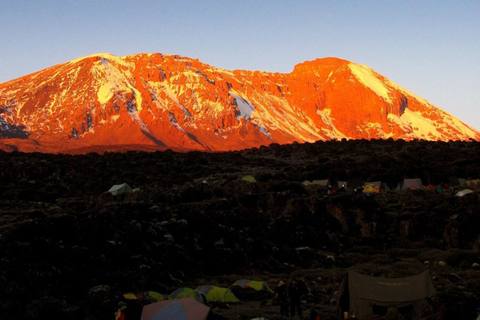
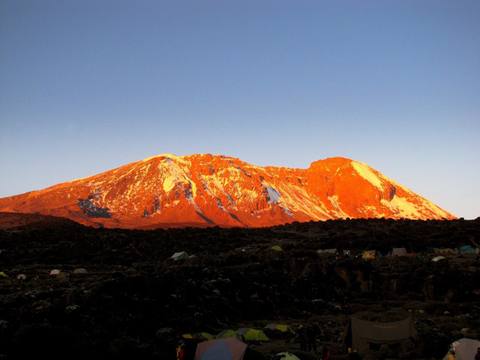
- Kilimanjaro (Machame, seven days). Day 3 walks to Lava Tower at 4,630 m and drops to sleep at Barranco Camp, 3,976 m: the classic go high, sleep low day. Day 5 sleeps at Barafu Camp, 4,673 m, the only night above 4,000 m, before summit night to 5,895 m.
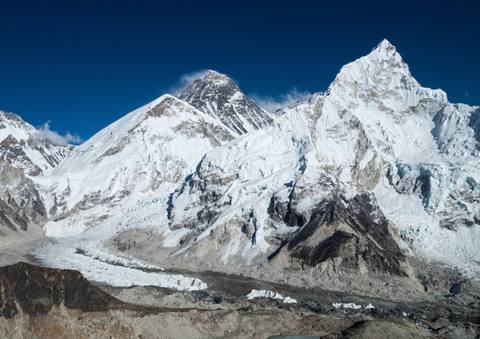
- Everest Base Camp (eleven days). Two acclimatisation days: day 3 at Namche Bazaar (3,440 m) with a hike to 3,880 m, and day 6 at Dingboche (4,410 m) with a hike to 5,083 m on Nangkartshang. Five nights at or above 4,000 m, the highest at Gorak Shep, 5,125 m.
- The Annapurna Circuit (eight days). One acclimatisation day in Manang (3,540 m), then two nights above 4,000 m, Yak Kharka (4,050 m) and Thorong Phedi (4,450 m), before Thorong La at 5,416 m.
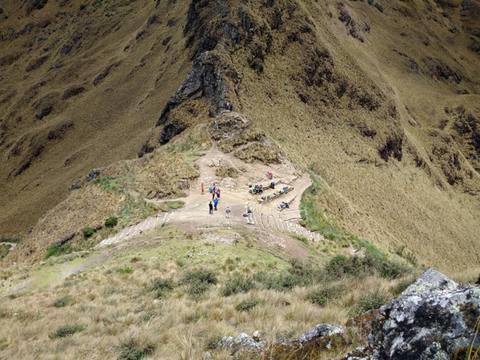
- The Inca Trail (four days). One night above 3,000 m, at Pacaymayo (3,600 m), after Dead Woman's Pass at 4,215 m on day 2. Time in the Andes before the start helps; ask your operator how many days they plan before day 1.
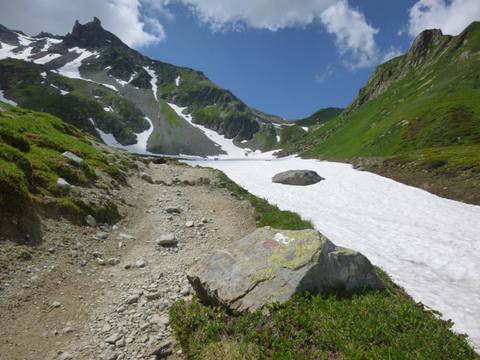
- The Tour du Mont Blanc (eleven stages). Never sleeps above 2,195 m and tops out at 2,532 m on the Grand Col Ferret, around the altitude where altitude sickness can begin in sensitive people. Altitude is not its limiter; the 10,300 m of ascent is.
- The Walker's Haute Route (fourteen stages). Higher than the Tour du Mont Blanc but still below the line: the high point is 2,987 m on the Col de Prafleuri, the highest night 2,825 m at the Cabane de Moiry, and no night is above 3,000 m. Expect a higher heart rate on the cols and a cold hut night or two, not altitude sickness; the 14,004 m of ascent is the limiter.
Three ways to acclimatise
1. Real altitude exposure
The gold standard: nights at progressively higher altitude. On a trek, that is the itinerary itself, plus any days you spend at altitude before the start. Its only limit is that it cannot begin before the trip does.
2. Simulated altitude (hypoxic tents and chambers)
Sleeping in an altitude tent at home for several weeks before a trip stimulates EPO and some red blood cell adaptation without leaving sea level. It helps the blood side, less so breathing, and does nothing for muscle-level changes (Hackett & Roach, 2001).
3. Intermittent hypoxic exposure
Short hypoxic sessions during the day, often combined with training. The research is mixed: some studies show benefit at altitude, others find marginal effects. Treat it as a supplement, not the plan.
Real altitude is the gold standard. Simulated altitude is a supplement. On a trek, the itinerary is your acclimatisation plan.
The go high, sleep low rule
The most important practical rule. The body adapts to the altitude where you sleep, so a day that walks higher than the night's camp builds acclimatisation without the cost of sleeping high. Kilimanjaro's Lava Tower day and the Everest Base Camp acclimatisation hikes are exactly this.
The Wilderness Medical Society guideline (Luks et al., 2019): above 3,000 m, do not raise your sleeping altitude by more than 500 m a night, and build in a rest day every three to four days. The rule of thumb many operators quote, 300 to 500 m a night with a rest day for every 1,000 m gained, is a little stricter on rest days. Both point the same way: slow down above 3,000 m. Slower is safer.
Altitude sickness prevention that works on a trek
Most altitude sickness is preventable. They follow the Wilderness Medical Society guideline (Luks et al., 2019). Read them as prevention rules, not treatment advice: if symptoms get worse, going down is the only reliable answer.
- Respect the sleeping-altitude rule through your itinerary choice. Not gaining sleeping altitude too fast is the single most effective prevention. Choose the longer version of a route where there is one.
- Spot early symptoms and stop going up. Headache, poor sleep, loss of appetite, nausea and unusual fatigue at altitude are the warning signs of acute mountain sickness (AMS). Tell your guide early. Do not sleep higher until they resolve; go down if they get worse.
- Know the emergencies. Confusion, loss of coordination, or breathlessness at rest are signs of the serious forms of altitude illness. They mean going down now, with help.
- Drink steadily. Dry air and faster breathing cost water. Extra water does not prevent altitude sickness, but dehydration makes every hour harder and its headache is easy to confuse with AMS.
- Take the rest days as rest. An acclimatisation day is a day at the same sleeping altitude with a short walk higher, not a hard day.
- Do not confuse fitness with altitude tolerance. Fitness does not protect against altitude sickness. Fit trekkers sometimes get hit hardest because they walk faster than the itinerary intends.
- Ask a doctor about acetazolamide (Diamox). Taken as prevention, it reduces AMS incidence in clinical studies (Luks et al., 2019). It needs a prescription; talk to a doctor before any trek above 3,500 m, especially with a history of altitude sickness.
- Avoid alcohol and sleeping pills in the first 48 hours at altitude. Both depress breathing, which is the body's first altitude defence.
What training does for altitude
Training cannot acclimatise you, and it still matters. The bigger your aerobic engine, the lower the effort of each walking hour, and the more reserve you keep for the one thing you cannot train. Arrive rested, too: a hard week right before you fly leaves fatigue that is easy to mistake for altitude symptoms, which is why our 16-week plans end with a two-week taper. The plans for Kilimanjaro, Everest Base Camp, Inca Trail, Tour du Mont Blanc, Annapurna Circuit, Walker's Haute Route, Alta Via 1, Tour of Monte Rosa, GR20, Laugavegur Trail, Toubkal Circuit, Huayhuash Circuit, Santa Cruz Trek, Salkantay Trek, Condor Trek, Quilotoa Loop, Inca Trail to Ingapirca, Torres del Paine W Trek, Torres del Paine O Circuit and Michinoku Coastal Trail are built around each trek's stages and its altitude profile.
Altitude acclimatisation FAQ
What is altitude sickness?
Altitude sickness, or acute mountain sickness (AMS), is the body's response to low oxygen at altitude. Symptoms typically include persistent headache, poor sleep, loss of appetite, nausea and unusual fatigue. It can develop above 2,500 m (8,200 ft) and becomes common above 3,500 m (11,500 ft) if ascent is too fast.
At what altitude does altitude sickness start on a trek?
It can begin around 2,500 m (8,200 ft) in sensitive people, but most cases occur above 3,000 m (9,840 ft), and above 3,500 m (11,500 ft) the risk rises sharply if sleeping altitude is gained too fast. The driver is the rate of ascent more than the absolute altitude.
How long does it take to acclimatise to high altitude?
Breathing adapts within hours to days. Red blood cell mass takes 10 to 21 days to increase meaningfully (Mazzeo, 2008). Capillary and mitochondrial changes take weeks to months. On a one or two week trek you rely mostly on the fast changes and on the itinerary's pace.
What is the go high, sleep low rule?
The body adapts to the altitude where you sleep, not where you walk. A day that walks higher than the night's camp builds acclimatisation without the cost of sleeping high. Above 3,000 m, the Wilderness Medical Society guideline is to raise sleeping altitude by no more than 500 m a night, with a rest day every three to four days (Luks et al., 2019).
Does an altitude tent help before a trek?
Sleeping in a hypoxic tent for several weeks before a trip stimulates EPO and some red blood cell adaptation without leaving sea level. It helps the blood side, less so breathing, and does nothing for muscle-level changes (Hackett & Roach, 2001). Treat it as a supplement to a sensible itinerary, not a replacement.
Does Diamox prevent altitude sickness?
Acetazolamide (Diamox) taken as prevention reduces AMS incidence in clinical studies (Luks et al., 2019). It is not a substitute for a sensible ascent rate and it needs a prescription. Talk to a doctor before any trek above 3,500 m (11,500 ft).
Can being fit prevent altitude sickness?
No. Sea-level fitness does not protect against altitude sickness, and fit trekkers sometimes get hit hardest because they walk faster than the itinerary intends. Fitness makes each walking hour cheaper once you are there; it does not speed up acclimatisation.
Which of the big treks spends the most nights at altitude?
Everest Base Camp: nine nights at or above 3,000 m and five at or above 4,000 m, the highest at Gorak Shep, 5,125 m, with two acclimatisation days built in. The Tour du Mont Blanc is the opposite: it never sleeps above 2,195 m.
Keep reading
Take this further
- All trek guides · Twenty 16-week training plans built from each trek's stage profile, and the physiology behind them.
- Eccentric Training for Trekkers · Why trek descents hurt more than the ascents, and the short sessions that fix it.
- Heart Rate Zones for Trekking · Why Zone 2 carries a trek plan, and how to find your zones.
- The Science Behind TTM · Banister's fitness-fatigue model, polarised training and periodisation, applied to consecutive days.
The takeaway
Acclimatisation is a physiological process, not a willpower contest. On a trek it is decided mostly by the itinerary: how fast you gain sleeping altitude, where the acclimatisation days fall, and the pace your guide sets. Your part is to choose the itinerary well, walk slowly from day one, report symptoms early, and arrive with enough fitness that the walking is easy and the altitude is the only hard thing.