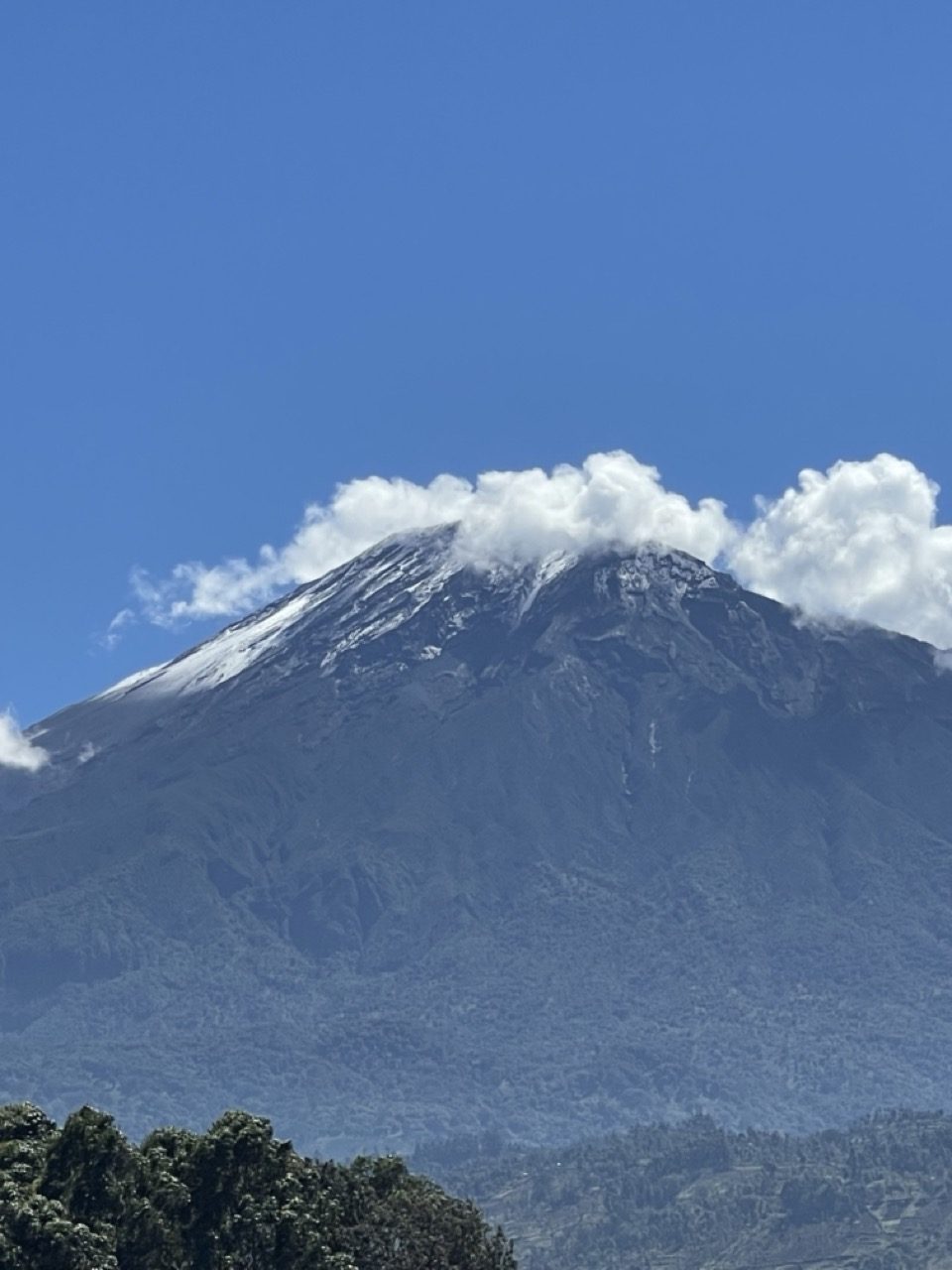
Why Meru is a real climb, not just Kili prep
Meru is often treated as a stepping stone to Kilimanjaro, and it is a superb one - but it stands on its own. The trek climbs steadily over several days to the Saddle Hut at around 3,570 m, and the summit push is a big, committing effort: a midnight start and a long walk-and-scramble along an airy crater rim, over Rhino Point and the false summits, to Socialist Peak at 4,562 m.
Two things make it demanding. The summit ridge is genuinely exposed in places - not technical, but airy enough that composure matters, in the cold and dark. And the altitude is real: the summit gives you around 57 percent of sea-level oxygen, reached on a long push from the Saddle Hut. Arriving fit lets you enjoy the sunrise over Kili rather than grind through the morning.
Physical benchmarks to hit before Mount Meru
Meru is a multi-day trek with a long, exposed, high summit push. A good plan trains multi-day endurance, comfort at altitude, and a big pre-dawn effort.
Altitude and terrain reality check
Altitude is a genuine factor, which is exactly why Meru works so well before Kilimanjaro. The summit at 4,562 m gives you around 57 percent of sea-level oxygen, and the long push from the Saddle Hut (3,570 m) is where it is felt. The multi-day approach stages the gain sensibly, and arriving fit makes the difference.
The route climbs through Arusha National Park - an armed ranger accompanies you because of wildlife - to huts at Miriakamba and Saddle. The summit push is a long walk-and-scramble along the crater rim to Socialist Peak for sunrise over Kilimanjaro. The dry seasons, roughly June to February, give the most reliable conditions.
The 12-16 week Mount Meru preparation timeline
The block runs backwards from your climb date. Each phase has a distinct target.
- Weeks 1-4 · Aerobic base. 4-6 hours per week at Zone 1-2, building trekking volume.
- Weeks 5-8 · Base plus strength and load. Add a strength session and daypack hikes; introduce back-to-back weekend days.
- Weeks 9-11 · Multi-day endurance. Consecutive long days with 800-1,200 m of gain. Volume 6-9 hours per week.
- Weeks 12-13 · Peak simulation. A long day (1,000-1,300 m gain) with exposed ground and a back-to-back weekend, a few weeks out.
- Week 14 · Altitude and consolidation. Time at altitude if possible; otherwise trust the trek's staged acclimatisation.
- Weeks 15-16 · Taper. Volume drops 30-40 percent. Arrive rested.
How TTM tunes the plan to Mount Meru
What the algorithm calibrates to your peak
- Fitness target · Meru is set to the Mountain Fitness threshold for a multi-day trek with a long, exposed, high summit push.
- Endurance and back-to-back load · the plan emphasises repeated long days to match the approach.
- Summit-day rehearsal · a long single effort with exposed ground is scheduled before the trip.
- Descent load · eccentric strength is programmed for the long descent.
- Altitude flag · the plan notes acclimatisation governs the summit push, and that Meru is superb Kilimanjaro preparation.
A weekly distribution that works
The polarised principle applies: most volume easy, a little hard, one long day. A representative week, 12 weeks out from a Mount Meru attempt:
- Mon · easy 60 min Z2
- Tue · threshold or VO2max intervals, 4 x 4 min Z4-Z5
- Wed · rest or 30 min mobility
- Thu · Z2 hike with weighted pack, 2-3 hours, 700-1000m (2,300-3,300 ft) of vertical
- Fri · easy 45 min Z2 + eccentric strength (step-downs, weighted lunges)
- Sat · long mountain day building toward 9 hours, mixed Z2 with vertical and progressive pack weight
- Sun · 2-3 h Z2 on tired legs (back-to-back loading, lighter pack)
Roughly 85 percent of weekly volume sits at Z1-Z2, with one hard intensity session and one back-to-back load. The single long rehearsal day lands 4-6 weeks before the trip, not in the taper. The deeper rationale is in our heart rate zones for mountaineering guide.
Technical skills you must bring to Mount Meru
TTM trains the body. Meru is non-technical - a trek with an exposed crater-rim scramble - but the altitude, the long summit day and the airy ridge are real. A guide (and armed ranger) is standard.
- Exposed-ridge walking. Confident movement on narrow, airy ground in cold and low light.
- Altitude self-care. Pacing, hydration and fuelling above 4,000 m.
- Cold-weather trekking. Layering for a long, cold, pre-dawn summit push.
- Turn-around judgement. Reading weather and altitude and descending if needed.
None of this is technical climbing, but the exposure and altitude are real. TTM's plan gets you physically ready; the guide, staged approach and sensible pacing handle the rest - and leave you well acclimatised for Kilimanjaro.
How TTM tunes the plan to Mount Meru
What the algorithm calibrates to your peak
- Fitness target · Calibrated to Mount Meru’s 11-hour summit day, so the plan is engineered to hit that number by your trip date.
- Vertical accumulation target · Built around Mount Meru’s summit-day ascent, distributed progressively with a recovery week every fourth.
- Summit-day rehearsal · The Long Day Score schedules a real 9-hour training day in the 6-week window before your trip.
- Descent eccentric load · The Descent Readiness Score accounts for 1000m (3,281 ft) of descent on tired legs; eccentric work is programmed in, not bolted on.
- Pack weight progression · Pack weight builds across the block, scaling to what Mount Meru asks on the day.
When you tell TTM your objective is Mount Meru and your trip date, the plan is built backwards from that date with the fitness-side demands engineered in. TTM trains the layer it can train, and is honest about where it stops.
Common questions about training for Mount Meru
How hard is Mount Meru?
Non-technical but a serious trek: several days to the Saddle Hut, then a long, exposed pre-dawn summit push along the crater rim to 4,562 m. The difficulty is the altitude, the length of the summit day and the airy ridge.
Do I need climbing skills?
No. Meru is a trek with an exposed scramble along the rim. You need trekking fitness, comfort on airy ground, and good altitude habits. A guide and armed ranger accompany you.
How fit do I need to be?
Fit enough for a multi-day trek and a long, high, exposed summit push on tired legs. A solid Zone 2 base and back-to-back long days are key.
Is Meru good preparation for Kilimanjaro?
Yes - it is the classic Kili warm-up. The multi-day trekking and acclimatisation to over 4,500 m set you up well, while being a magnificent climb in its own right.
Is altitude a challenge?
Yes. At 4,562 m you have around 57 percent of sea-level oxygen, felt most on the long summit push. The staged approach and arriving fit make it manageable.
When is the best season?
The dry seasons, roughly June to February, give the most reliable conditions and the sunrise views of Kilimanjaro.
Tools and deeper reading
Take this further
- Summit Readiness Simulator · Test if you are ready for Mount Meru today. Free, 60 seconds.
- Altitude Acclimatisation Guide · Climb-high-sleep-low, the per-night ceiling, and AMS warning signs.
- Eccentric Descent Training · The specific work that stops the late-day quad breakdown on descent.
- Heart Rate Zones for Mountaineering · The polarised 85/15 distribution and why Z2 dominates.
- The Science Behind TTM · The peer-reviewed research the adaptive algorithm is built on.
The takeaway
Meru is that rare thing: a superb objective in its own right that is also the perfect Kilimanjaro warm-up. It asks for multi-day endurance, composure on an exposed rim, and respect for real altitude. Train those, arrive fit, and you will watch the sun rise over Kili from a hard-won summit - and be readier for Kili itself.