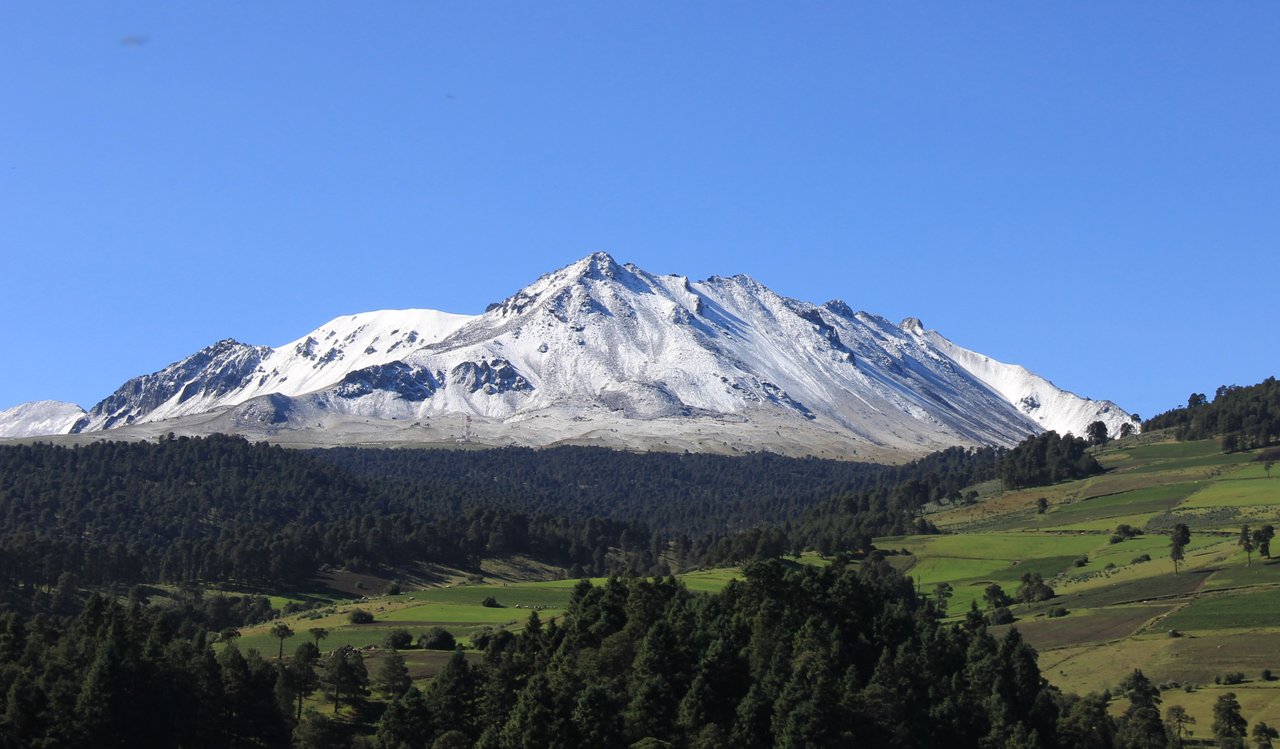
Why a short day is still a serious one
Physically, the climb from the crater lakes (around 4,200 m) to the highest summit, Pico del Fraile at 4,680 m, is short - a couple of hours of walking and Class 2-3 scrambling. On paper it is easy. What makes it serious is that the entire outing happens above 4,200 m, higher than the summit of most Alpine 4,000ers.
At that altitude you have around 57 percent of sea-level oxygen, and there is no gentle warm-up - you step out of the car and start climbing high. For anyone not acclimatised, even a short scramble feels hard, and altitude sickness is a real risk. That is exactly why it works so well before Orizaba: a big dose of altitude with minimal technical difficulty, in one accessible day.
Physical benchmarks to hit before Nevado de Toluca
Nevado de Toluca is a short, high scramble that is all about altitude. A good plan builds the aerobic base and altitude readiness that make a near-4,700 m day feel comfortable.
Altitude and terrain reality check
This peak is almost entirely about altitude. The whole outing sits above 4,200 m, and the 4,680 m summit gives you around 57 percent of sea-level oxygen - higher than most Alpine 4,000ers, with none of the approach to ease you in. That is its value and its challenge: a concentrated dose of altitude in a short, accessible day.
A road climbs to the crater basin near the lakes (around 4,200 m); from there it is a walk and a Class 2-3 scramble to Pico del Fraile, the highest point on the rim. Because it is so accessible and so high, it is a favourite acclimatisation climb before Pico de Orizaba. The dry season, roughly November to March, gives the most settled weather, though it is cold and can hold snow at any time.
The 8-12 week Nevado de Toluca preparation timeline
The block runs backwards from your climb date. Each phase has a distinct target.
- Weeks 1-3 · Aerobic base. 3-5 hours per week at Zone 1-2, building the engine that makes altitude efficient.
- Weeks 4-6 · Base plus strength. Add a strength session and eccentric step-downs; include rough, rocky hill days.
- Weeks 7-9 · Hill and scramble specificity. Long rough days with 700-1,000 m of gain and time on scrambly ground. Volume 5-7 hours per week.
- Weeks 10-11 · Altitude and consolidation. If possible, a prior trip above 4,000 m; treat Nevado itself as an acclimatisation day if it precedes Orizaba.
- Week 12 · Taper. Volume drops 30-40 percent. Arrive fresh and, ideally, pre-acclimatised.
A weekly distribution that works
The polarised principle applies: most volume easy, a little hard, one long day. A representative week, 12 weeks out from a Nevado de Toluca attempt:
- Mon · easy 60 min Z2
- Tue · threshold or VO2max intervals, 4 x 4 min Z4-Z5
- Wed · rest or 30 min mobility
- Thu · Z2 hike with weighted pack, 2-3 hours, 700-1000m (2,300-3,300 ft) of vertical
- Fri · easy 45 min Z2 + eccentric strength (step-downs, weighted lunges)
- Sat · long mountain day building toward 3 hours, mixed Z2 with vertical and progressive pack weight
- Sun · 2-3 h Z2 on tired legs (back-to-back loading, lighter pack)
Roughly 85 percent of weekly volume sits at Z1-Z2, with one hard intensity session and one back-to-back load. The single long rehearsal day lands 4-6 weeks before the trip, not in the taper.
Technical skills you must bring to Nevado de Toluca
TTM trains the body. Nevado de Toluca is Class 2-3 scrambling - modest technically, but at serious altitude. Bring these, or go with a local guide, especially if using it to acclimatise for Orizaba.
- Scrambling on rock. Confident up-and-down movement on Class 2-3 ground with some exposure.
- Altitude self-care. Pacing, hydration and recognising AMS on a day spent entirely above 4,200 m.
- Cold-weather movement. Layering for a cold, windy, high, sometimes snowy summit.
- Winter-skills awareness. Recognising when snow calls for an axe and crampons.
The scramble is modest; the altitude is not. Use Nevado de Toluca as a high, accessible acclimatisation day, respect the thin air, and let TTM's plan build the aerobic base that makes a near-4,700 m outing feel manageable.
How TTM tunes the plan to Nevado de Toluca
What the algorithm calibrates to your peak
- Fitness target · Nevado de Toluca is set to the Mountain Fitness threshold for a short, high scramble where altitude is the main load.
- Altitude emphasis · the plan prioritises the aerobic base and altitude readiness a near-4,700 m day demands, over sheer volume.
- Scramble comfort · confidence on Class 2-3 rock is built in for the crater-rim finish.
- Progression flag · the plan can position Nevado de Toluca as the acclimatisation step before Pico de Orizaba.
- Cold-weather flag · the plan notes the cold, windy, high summit and the need for tested layering.
Common questions about training for Nevado de Toluca
How hard is Nevado de Toluca?
Technically easy - a short walk and Class 2-3 scramble from the crater lakes to Pico del Fraile at 4,680 m. What makes it serious is that the whole day is above 4,200 m, higher than most Alpine 4,000ers, with no warm-up.
Do I need climbing skills?
Only modest scrambling - Class 2-3 on the crater rim. No ropework in dry conditions. Snow can call for an axe and crampons. Many use a local guide, especially as Orizaba prep.
Why is it a good Orizaba warm-up?
It delivers a big dose of altitude - a full day near 4,700 m - with minimal technical difficulty, in one accessible outing. Ideal acclimatisation before the higher, glaciated Pico de Orizaba.
How fit do I need to be?
The climb is short, so the real requirement is a good aerobic base and altitude readiness. Being fit makes movement at 4,200-4,680 m efficient rather than exhausting.
Is altitude a challenge?
It is the whole challenge. At 4,680 m you have around 57 percent of sea-level oxygen, and you start high with no approach. Prior altitude exposure and a sensible pace are essential.
When is the best season?
The dry season, roughly November to March, gives the most settled weather, though it is cold and can hold snow at altitude any time.
Tools and deeper reading
Take this further
- Summit Readiness Simulator · Test if you are ready for Nevado de Toluca today. Free, 60 seconds.
- Altitude Acclimatisation Guide · Climb-high-sleep-low and AMS warning signs.
- Eccentric Descent Training · The work that stops the late-day quad breakdown.
- Heart Rate Zones for Mountaineering · The polarised 85/15 distribution.
- The Science Behind TTM · The peer-reviewed research behind the algorithm.
The takeaway
Nevado de Toluca proves that altitude alone can make a short, easy climb serious. The scramble is nothing; the near-4,700 m thin air is everything. Build the aerobic base and arrive with some altitude in your legs, and it becomes a superb high day - and the ideal launchpad for Pico de Orizaba.