You can train for a trek at home with stairs, a sturdy step, a backpack and long walks. Climb stairs with a pack for the uphill, do weighted step-ups, practise slow step-downs for the descent, build leg endurance with split squats and calf raises, and take one long walk a week in your trekking boots, adding back-to-back days as the trek gets close.
What your trek will actually ask of you
Treks are not won on the flat. They are decided on the big climbing days and, more often than people expect, the big descending days. A few examples from the treks we plan for:
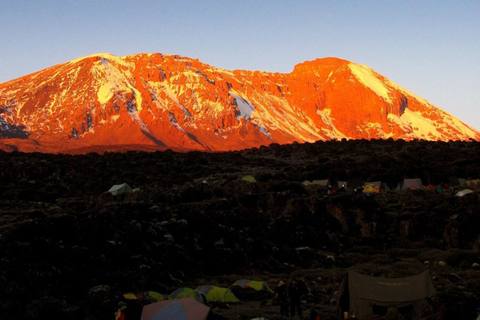
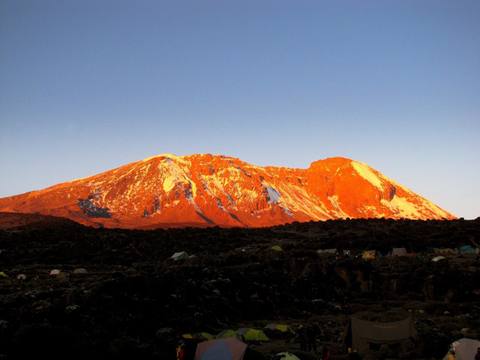
- Kilimanjaro (Machame): summit day climbs about 1,222 m (4,010 ft) and then descends about 2,827 m (9,275 ft), in 10 to 14 hours.
- Everest Base Camp: the walk to Namche Bazaar climbs about 1,125 m (3,690 ft); the walk out from Namche to Lukla descends about 1,485 m (4,870 ft).
- Inca Trail: the day over Dead Woman's Pass climbs 1,127 to 1,215 m (3,700 to 3,990 ft) in 6 to 8 hours, and the next day drops about 1,350 m (4,430 ft).
- Tour du Mont Blanc: about 10,300 m (33,790 ft) of climbing and the same again of descent over 11 stages and 170 km (106 mi).
So home training has three jobs: build the legs for long climbs, build the legs for long descents, and build the stamina to do it again the next day. You can do all three without a single hill.
The home kit: stairs, a step, a pack
- Stairs. A stairwell, a multi-storey car park or a set of outdoor steps. This is your hill.
- A sturdy step. A box, a solid bench or the bottom stair, for step-ups and step-downs.
- A backpack. Load it with water bottles or books. Start light and build towards the weight you will carry on the trek: on porter-supported treks such as Kilimanjaro that is usually a daypack, on hut-to-hut treks such as the Tour du Mont Blanc it is everything you carry.
- Your boots. Do your long walks in the boots you will trek in, so both your feet and the boots are ready.
Five sessions that cover a trek
1. Stair climbs with a pack. Steady climbing in Zone 2, the easy-but-working effort you can hold for hours. Walk up, then walk down under control, and repeat. Start with 20 to 30 minutes of continuous up and down and build towards an hour. If you use a heart rate watch, the heart rate zones for trekking guide sets your zones.
2. Weighted step-ups. The most direct home version of walking uphill. Drive through the front heel, stand fully, step down slowly. Use a step about knee height or lower, start with 3 sets of 10 per leg with a light pack, and add weight before you add height.
3. Slow step-downs. The descent is braking work for the front of your thighs, called eccentric work, and it is what leaves legs sore on day three. Step down from a box or stair slowly and with control. The eccentric training guide for trekkers builds this up week by week.
4. Leg strength and endurance. Split squats, wall sits and calf raises in higher-rep sets build the endurance that decides the last hours of a long day. Two or three sets of 15 to 20 reps per exercise, once or twice a week, is plenty.
5. One long walk a week. Time on your feet with your pack and boots, on whatever ground you have: parks, towpaths, city streets. Build it from a couple of hours towards the length of your longest trek days. Later in the plan, walk two long days back to back, because a trek is a string of consecutive days, not one.
A sample home week
- Mon: rest.
- Tue: stair climbs with a pack, 40 to 60 minutes.
- Wed: strength: step-ups, step-downs, split squats, calf raises.
- Thu: easy walk or rest.
- Fri: stair climbs or step-ups with a pack.
- Sat: long walk with your pack and boots.
- Sun: easy walk, or a second long walk in the last weeks.
Start where you are, not where this week is. If stairs are new to you, begin with a few flights and build up. Keep most of your training at an easy, conversational effort, and let the volume grow gradually over the weeks.
What home training cannot do
Home training builds fitness. It does not build altitude acclimatisation, and it does not replace experience on rough, uneven trails. For high treks such as Kilimanjaro, Everest Base Camp or the Inca Trail, fitness is what lets you walk the acclimatisation days slowly and comfortably; the itinerary's pace and rest days do the acclimatising. The altitude acclimatisation guide explains how the two fit together. If you can get to a hill or rough trail even a few times before you go, do it, and take your trekking poles to practise with them.
Your trek, built from your living room
Train to Mountain builds a trek plan around the stages you will actually walk, from what you have at home: stairs, a step, a pack and the streets around you. It sizes the climbing and descending to your trek's biggest days, builds in back-to-back days, and rebuilds the plan every Sunday from what your watch recorded. Start with the free Trek Check, or pick your trek.
The takeaway
You can train for a trek at home for almost nothing. Climb stairs with a pack, do step-ups for the uphill and slow step-downs for the downhill, build leg endurance, and walk long once a week in your boots, then twice in a row as the trek gets close. Hills help, but they are not required.
Common questions
Can you train for a trek at home?
Yes. Stairs, a sturdy step, a backpack and long walks on whatever ground you have cover most of what a multi-day trek asks of your legs and lungs. What home training cannot give you is altitude, so for high treks it builds the fitness and your itinerary's acclimatisation days do the rest.
What is the best hiking workout at home with no hills?
Stair climbing with a backpack. It trains the climb and, just as important, the descent, which is where trekkers' legs usually give out. Add weighted step-ups on a sturdy box for the uphill, slow step-downs for the descent, and one long walk a week to build time on your feet.
How do I train for hiking downhill at home?
Walk down stairs as well as up, slowly and under control, and add slow step-downs from a box or bottom stair. Downhill walking is eccentric work for the quads, and training it before the trek reduces the soreness that builds over consecutive days.
How many days a week should I train for a trek?
Three to five sessions a week works for most people: one or two stair or step sessions, one strength session, one long walk, and easy walking on other days. The right mix depends on your starting fitness, your trek and how many weeks you have.
Do I need a gym to train for trekking?
No. A stairwell, a sturdy step or bench, a backpack loaded with water bottles or books, and your own street are enough. A gym adds a StairMaster or incline treadmill, which helps in bad weather but is not required.