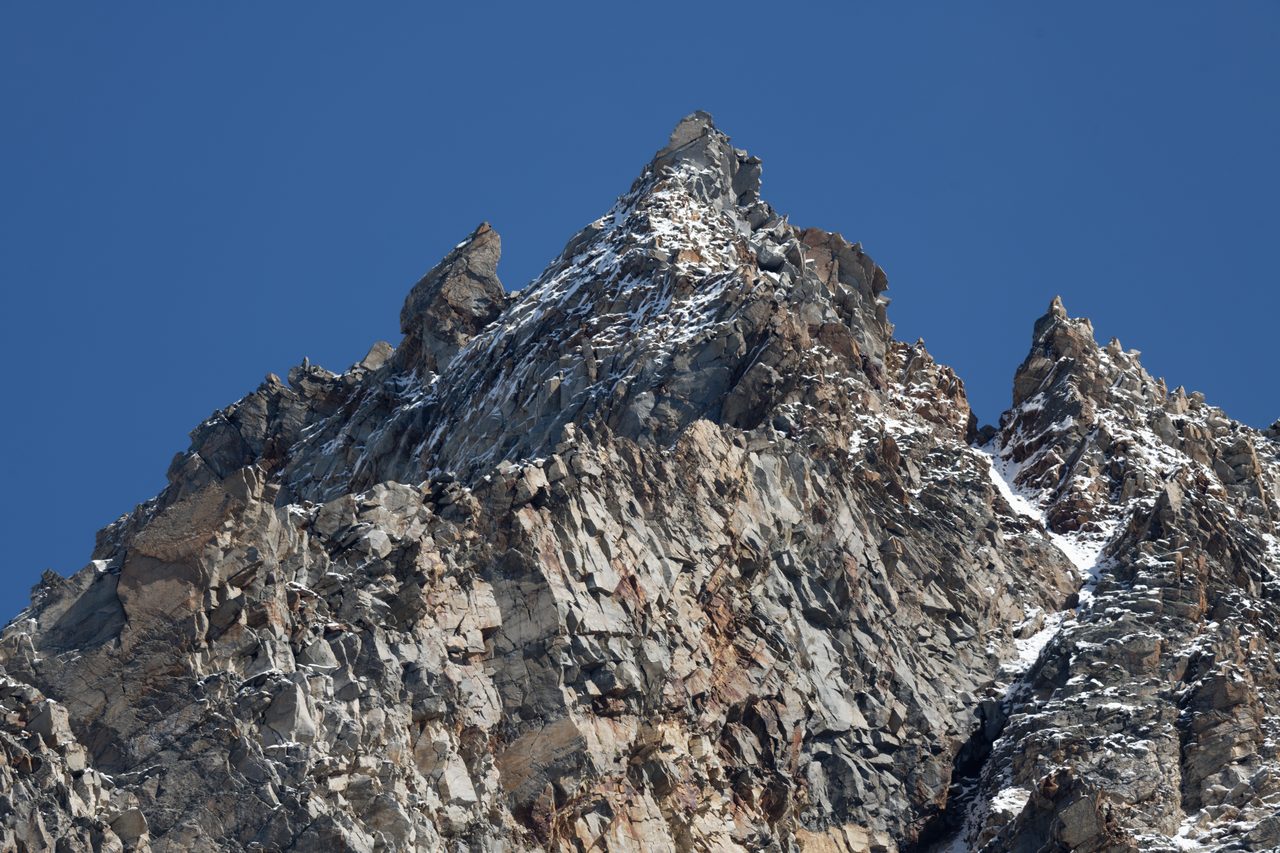
Graded F+, it is technically one of the easier 4,000 m (13,123 ft) peaks, but summit day is still up to 10 hours of glacier climbing, descent and walk out from 4,061 m (13,323 ft), so it demands a real aerobic base, long-day endurance, and basic glacier and crampon skills.
Pick the tests you want and get one report with your biggest gap before summit day. Free, a few minutes, no signup.
Why Gran Paradiso rewards proper preparation
The technical demand on Gran Paradiso is low (F+ in alpine grading, on an easy glacier), and the trip is usually a refuge night followed by the summit day, from either the Chabod or the Vittorio Emanuele II refuge. None of that makes it free.
Three things decide the day. The first is leg endurance: about 1,300 metres (4,265 ft) of climbing from the hut, then the descent and the walk out, in a day of up to 10 hours. 360 Expeditions asks that you can move steadily for 10 to 12 hours at altitudes between 2,700 m and 4,000 m (8,858 and 13,123 ft). The second is altitude inexperience: at 4,061 m (13,323 ft) the air holds about 60 percent of the oxygen pressure at sea level, and athletes who have never been that high can feel it. The third is glacier shyness: even though the route is gentle, climbers who have never walked in a rope team or used crampons for hours can move too slowly to complete the day in good time.
All three can be prepared for. None of them require Mont Blanc fitness.
Physical benchmarks to hit before Gran Paradiso
Our read: on the numbers below, Gran Paradiso asks for endurance for a long day on your feet, sustained climbing with a long descent on tired legs, time at altitude (the summit is at 4,061 m / 13,323 ft), and the skills listed further down this page, which fitness cannot replace.
What published sources on Gran Paradiso ask of climbers (guide services, clubs, parks and a few others, each named), and what the route itself demands. Quotes are word for word from each source, and every line links to it.
To see where you stand against these, take Summit Check for Gran Paradiso.
Altitude and terrain reality check
Training builds the engine. Altitude is its own thing: at 4,061 m (13,323 ft) the air holds about 60 percent of the oxygen pressure at sea level. The standard itinerary spends a night at one of the refuges (Chabod or Vittorio Emanuele II), which gives a useful intermediate exposure before summit day. If you live at sea level and have not been to altitude in the year before the trip, consider a day-hike or overnight on a 3,000 m+ (9,843 ft+) peak in the weeks before. Even a single high day reduces the surprise factor. Beyond that, save serious altitude work for higher objectives. The deeper guide on this is in our altitude acclimatisation guide.
How long does it take to train for Gran Paradiso?
It depends mostly on where you start. Our Summit Check model puts Gran Paradiso at about 12 weeks, our shortest block, if you already train 3 to 4 times a week with regular hill days, and about 16 weeks if you are starting from a low base.
How we get there: the model starts from the peak’s altitude (4,061 m / 13,323 ft) and grade (F+ Glacier walk), then lengthens or shortens the block for how you train now: weekly rhythm, your longest recent day, hill terrain, descent strength, back-to-back days, recovery, available time, altitude history and injuries. For routes with technical ground it also weighs your comfort on that ground. That is the same model behind the free Summit Check.
What published sources say about lead time for Gran Paradiso:
- PeaksHunter Mountain Guides via Explore-Share: “a good workout in the months leading up to the trip is recommended so that you can experience the adventure to the fullest” (source)
For your own number, answer ten questions in Summit Check: it sizes your runway in weeks and the weekly load Gran Paradiso asks for.
Whatever the length, a Train to Mountain plan runs backwards from your climb date in five phases:
- Aerobic base. Build the engine that keeps a long day efficient.
- Base plus strength. Add eccentric leg strength and progressive weighted carries.
- Muscular endurance. Long days with sustained climbing and a building pack.
- Peak simulation. One long day close to your summit-day length, 4 to 6 weeks before the trip.
- Taper. Volume drops in the final 1 to 2 weeks so you arrive fresh.
A weekly training schedule for Gran Paradiso
An example week from the Train to Mountain method, about halfway through the block. Most of the week is easy aerobic work, with one hard session and one long day (polarised training; Seiler and Kjerland, 2006).
Our targets for Gran Paradiso: by the biggest weeks of the block, a Train to Mountain plan for Gran Paradiso works up to a long day of about 8 hours and about 1,400 m (4,593 ft) of climbing a week. These are the numbers our planning engine sets for this peak. The week below sits about two thirds of the way there, so the climbing in it adds up to about 900 m (2,953 ft).
- Mon · easy 45 to 60 min Zone 2
- Tue · intervals, 4 x 4 min hard (Zone 4 to 5)
- Wed · rest or 30 min mobility
- Thu · Zone 2 hike, 2 to 3 hours with about 300 m (984 ft) of climbing, carrying a daypack
- Fri · easy 45 min Zone 2 plus eccentric strength (step-downs, slow lunges)
- Sat · long mountain day, 5 hours and about 400 m (1,312 ft) of climbing, mostly Zone 2
- Sun · 2 to 3 hours easy Zone 2 on tired legs, with about 200 m (656 ft) of climbing
Zone 2 here means 85 to 89 percent of your lactate threshold heart rate (Friel); see heart rate zones for mountaineering. One rehearsal day of about 8 hours goes in 4 to 6 weeks before the trip. A Train to Mountain plan sets these numbers from your own training and recalculates them every week.
Technical skills you must bring to Gran Paradiso
TTM trains the body. Gran Paradiso's glaciated route demands mountain craft: bring these or climb with a certified guide.
Not needed on this route: Rock climbing, Via ferrata / fixed chains, Steep snow / ice, Fixed-line ascending, Abseil / rappel, Avalanche awareness, Expedition skills.
Route covered: Normal route from the Rifugio Vittorio Emanuele II or the Rifugio Chabod. Typical skills in normal season; conditions change, so confirm with a certified guide.
- Crampons: walking, front-pointing and traversing on snow and ice, up and down.
- Ice axe use and self-arrest: stopping a slide on steep snow, on both sides.
- Roped glacier travel: moving as a rope team on a glacier.
- Crevasse rescue: building an anchor and hauling a partner out.
- Altitude judgement: knowing the signs of altitude illness and turning around calmly.
- Scrambling (depending on conditions): moving securely on exposed rock with your hands.
How TTM tunes the plan to Gran Paradiso
How the plan is set for Gran Paradiso
- Fitness target · Our engine sets a Mountain Fitness target of 65 for Gran Paradiso, and the plan builds towards it by your summit date.
- Weekly climbing · About 1,400 m (4,593 ft) a week in the biggest weeks, reached step by step with planned recovery weeks.
- Long day · A long day of about 8 hours, rehearsed once 4 to 6 weeks before your trip.
- Weekly recalculation · The plan recalculates every week from the training you actually logged.
- Daily intensity · How hard each day goes follows your HRV readiness, so a poor night or a hard week is absorbed rather than ignored.
- Summit Readiness Score · Tracks five components (fitness, climbing volume, long day, descent readiness and consistency) as an outcome. It does not set your daily intensity.
Tell TTM your objective and your summit date, and the plan is built backwards from that date. The skills in the technical skills section above come from a guide or a course; the plan trains the body.
Climbing Gran Paradiso: quick answers
How hard is it to climb Gran Paradiso? Can a beginner do it?
Gran Paradiso is a glacier route. Grade: F+ Glacier walk. You need crampons, ice axe self-arrest, roped glacier travel, crevasse rescue and altitude acclimatisation. Depending on conditions you may also need scrambling. Summit day: up to 10 hours, including the descent and the walk out to the valley. The summit is at 4,061 m (13,323 ft). If these skills are new to you, learn them on a course or climb with a guide first. The physical benchmarks above show what fitness to build. Source.
How long does it take to climb Gran Paradiso?
Summit day: up to 10 hours, including the descent and the walk out to the valley. Add the approach, hut or camp nights and any acclimatisation days, which depend on your itinerary. Source.
Do I need a guide to climb Gran Paradiso?
Not necessarily. Experienced parties climb Gran Paradiso independently, but if any of the required skills above are new to you, a guide or a skills course first is the safer choice.
When is the best time to climb Gran Paradiso?
Plan your training backwards from your summit date: Summit Check sizes how many weeks you need. The main climbing season is June to September. Source. For what to wear on the day, see the mountaineering layering guide.
How dangerous is Gran Paradiso?
On this route: Easy glacier; the final few metres to the Madonnina are an exposed rock step. The risks you control are fitness, pace and acclimatisation: tired, slow parties spend longer exposed and make worse decisions. Turn around on time and climb in good weather, and go with a guide if the skills are new.
Common questions about training for Gran Paradiso
How do I build endurance for Gran Paradiso's summit day of up to 10 hours?
Gran Paradiso summit day is up to 10 hours of walking: after a refuge night, you climb about 1,300 m (4,265 ft) to the summit, descend and continue down to the valley. 360 Expeditions asks that you can move steadily for 10 to 12 hours at altitudes between 2,700 m and 4,000 m (8,858 and 13,123 ft). Build the engine with mostly low-intensity work (polarised; Seiler and Kjerland, 2006) and long hill days with a pack of 10 kg (22 lb) or more, as Adventure Consultants suggests, and do one rehearsal day of about 8 hours, the long-day benchmark TTM sets for Gran Paradiso, 4 to 6 weeks out.
What altitude work matters for Gran Paradiso (4,061 m / 13,323 ft)?
At 4,061 m (13,323 ft) altitude matters: the air holds about 60 percent of the oxygen pressure at sea level. The night at the Chabod or Vittorio Emanuele II refuge gives a modest acclimatisation rehearsal. If you live at sea level and have no time at altitude in the year before the trip, consider a day hike or overnight on a 3,000 m+ (9,843 ft+) peak in the weeks before to reduce surprises.
Does a Gran Paradiso plan need to be personalised to me?
Yes, in four ways: your starting fitness (the gap from where you are to where you need to be), your trip date (the taper lands in the final 1 to 2 weeks), weekly vertical built towards TTM's Gran Paradiso target of 1,400 m (4,593 ft), and one rehearsal day of about 8 hours placed 4 to 6 weeks out. A generic first-4,000er PDF does not adapt to the weeks you missed because of life. A plan that knows your data and recalculates every week can re-shape the build.
Can I train for Gran Paradiso with a full-time job?
Yes. Most of the training is easy aerobic work that fits early mornings or evenings. A representative week: easy Zone 2 on Monday, one interval session on Tuesday, an easy session with eccentric strength on Friday, a long hill day with a light pack on Saturday and easy Zone 2 on tired legs on Sunday. What matters most is protected Saturday volume and one rehearsal day of about 8 hours on a long weekend 4 to 6 weeks out.
What does comprehensive Gran Paradiso prep actually cover?
Three layers, lighter than on higher peaks. (1) Fitness: an aerobic engine for up to 10 hours of moving, leg endurance for about 1,300 m (4,265 ft) of climbing and the descent in one day, and one rehearsal day of about 8 hours. (2) Basic glacier skills: walking in a rope team, crampons, ice axe and self-arrest, crevasse rescue, plus the exposed rock step in the final few metres to the Madonnina. Many first-timers learn these from a guide or on a short skills course. (3) Altitude tolerance: real at 4,061 m (13,323 ft), so spend some time high first. TTM trains layer one.
What strength work does Gran Paradiso training need?
Modest and leg-focused. The biggest priority is descent resilience: about 1,300 m (4,265 ft) back down from the summit and then the walk out, much of it on snow in crampons. Weighted step-downs, slow-tempo split squats and controlled downhill repeats on real terrain build the muscle resilience that protects your knees on the way down. One strength session per week is enough. Gran Paradiso does not need heavy bilateral barbell work or general gym strength.
Can I prepare for Gran Paradiso from sea level without alpine terrain?
Yes. The technical demand is low (F+), and the aerobic engine, leg endurance, descent eccentric strength and back-to-back hiking tolerance can all be built anywhere with hills, stairs or a treadmill on incline. For vertical, stairs with a daypack work well. Close the glacier-skills gap with a skills session before the climb, with a guide or on a short course. Sea level builds the fitness floor; the refuge night handles the first step of altitude.
How is Gran Paradiso different from Mont Blanc?
Gran Paradiso is easier than Mont Blanc on most dimensions. The summit is 745 m (2,444 ft) lower. Climbing from the hut is about 1,300 m (4,265 ft) on Gran Paradiso against about 971 m (3,186 ft) on Mont Blanc from the Goûter hut, but Gran Paradiso's up to 10 hours includes the walk out to the valley, while Mont Blanc's 7 to 10 hours from the Goûter hut covers only the summit day. The technical demand is lower (F+ against PD-). Gran Paradiso is a strong altitude and fitness test before committing to Mont Blanc.
Similar peaks to Gran Paradiso
Peaks close to Gran Paradiso in region, grade or height: to compare, or to build up to it.
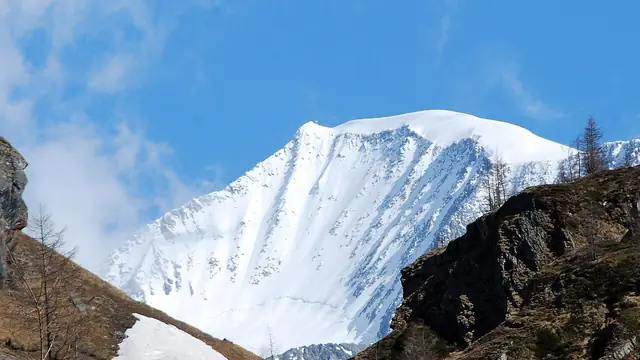 GrossvenedigerF Glacier walk
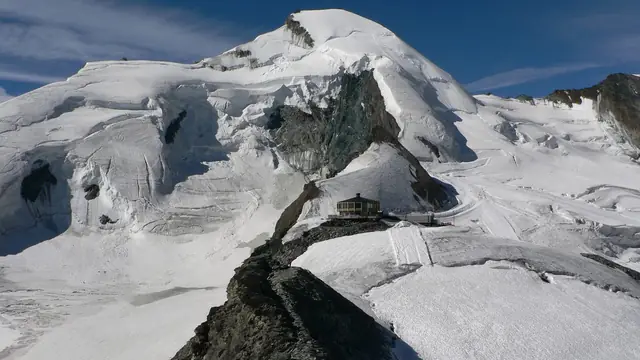 AllalinhornF glacier walk-up via Feejoch
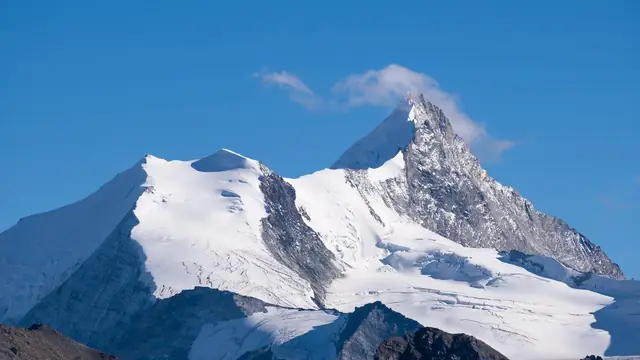 BishornF glacier walk-up
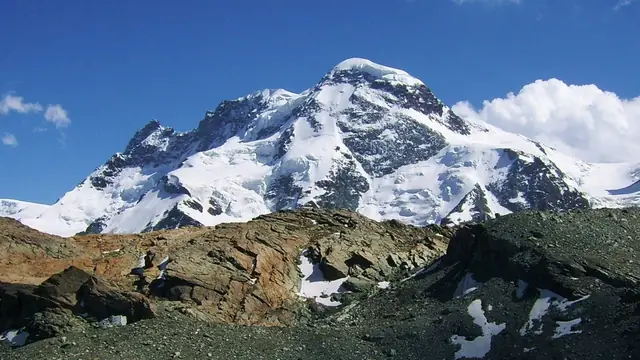 BreithornF Glacier walk-up
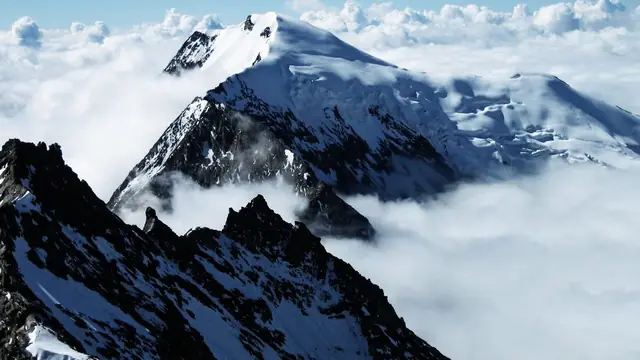 WeissmiesPD+ (WS+) glacier route
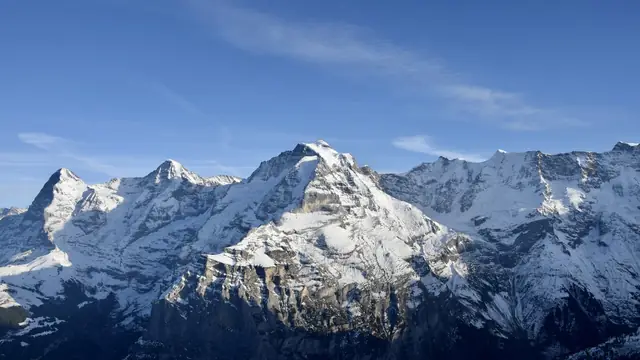 JungfrauPD+ Snow climb
Photos: Grossvenediger: Svíčková (CC BY-SA 3.0), via Wikimedia Commons; Allalinhorn: Michal Jurosz (CC BY-SA 3.0), via Wikimedia Commons; Bishorn: Christian David (CC BY-SA 4.0), via Wikimedia Commons; Breithorn: Laurent-34 (CC BY-SA 3.0), via Wikimedia Commons; Weissmies: Public domain, via Wikimedia Commons; Jungfrau: Ank kumar (CC BY-SA 4.0), via Wikimedia Commons.
Tools and deeper reading
Take this further
- Training for Your First 4,000 m (13,123 ft) Peak · How to plan a first glacier 4,000er, and what a long summit day asks of you.
- Summit Check · Test if you are ready for Gran Paradiso today. Free, science-backed, a few minutes. Pick your tests, from readiness runway and weekly load to a summit-day fuel plan, and get one summary with your biggest gap.
- Altitude Acclimatisation Guide · The climb-high-sleep-low rule, the 300 to 500 m (984 to 1,640 ft) per-night ceiling, AMS warning signs, and the three real acclimatisation strategies.
- Eccentric Descent Training · Why descent destroys quads even on a friendly 4,000 m (13,123 ft) peak, and the specific eccentric work that prevents the late-day breakdown.
- Heart Rate Zones for Mountaineering · The polarised distribution, why Z2 dominates, and the common mistakes that turn long mountain days into junk-zone tempo.
- The Science Behind TTM · The peer-reviewed research the adaptive algorithm is built on.
- Muscular Endurance for Mountaineering · The pillar guide on the quality that turns gym strength into legs that last a summit day. Pair with the free Muscular Endurance Calculator to score where you stand.
The takeaway
Gran Paradiso is rewarding precisely because it gives a first 4,000 m (13,123 ft) climber an honest, fair test. Train the engine, the long day and the descent honestly and arrive comfortable on a rope team. Treat "friendly" as a synonym for "free" and you show up undertrained. Friendly is not free.