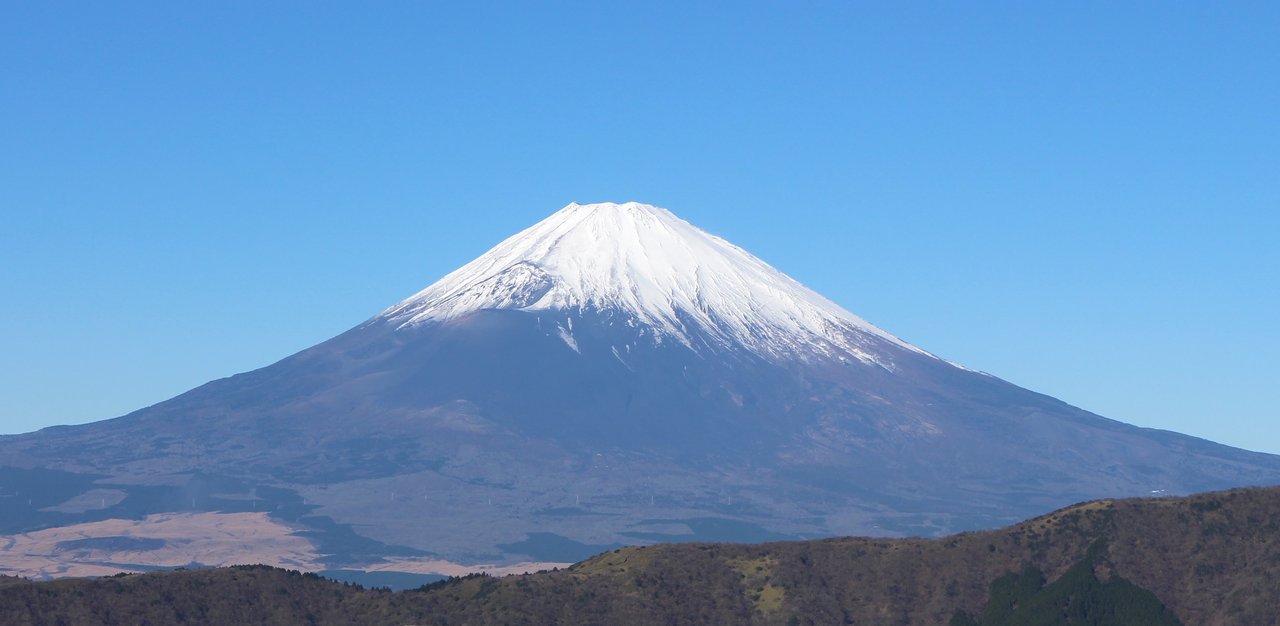
Why so many fit people struggle on Fuji
Most climbers start from a Fifth Station around 2,300 m and grind roughly 1,470 m up switchbacks and volcanic rubble to the summit. It is not steep in a scrambling sense, but it is long and unrelenting, and the upper mountain is at real altitude - the summit sits at around 63 percent of sea-level oxygen.
Two things catch people out. The altitude gain is fast if you push straight up in a day, and altitude sickness is genuinely common on Fuji - headaches, nausea and worse - regardless of fitness. And the descent, down long zig-zags of loose volcanic gravel, is surprisingly punishing on the knees and quads. The typical fix, an overnight in a mountain hut to summit for the 'goraiko' sunrise, helps the altitude but adds a broken night's sleep. None of it is technical - all of it rewards being genuinely fit and sensibly paced.
Physical benchmarks to hit before Mount Fuji
Fuji is a long uphill at real altitude with a hard descent. A good plan trains the sustained climb, comfort at altitude, and the legs for the way down.
Altitude and terrain reality check
Altitude is Fuji's quiet difficulty. At 3,776 m you have around 63 percent of sea-level oxygen, and because the climb gains altitude quickly from the Fifth Station, altitude sickness is common - it is one of the most frequent reasons people fail to summit or feel wretched at the top. Fitness helps but does not immunise you; pacing, hydration and, ideally, an overnight hut stay to break up the ascent are the real defences.
The route is an entirely non-technical walking trail - switchbacks and volcanic rubble - with several established paths (the Yoshida trail being the most popular). The official climbing season is short, roughly early July to early September, when the huts and facilities are open and the trail is snow-free. Outside that window Fuji becomes a serious winter mountaineering objective and is not a trek at all.
The 8-12 week Mount Fuji preparation timeline
The block runs backwards from your climb date. Each phase has a distinct target.
- Weeks 1-3 · Aerobic base. 3-5 hours per week at Zone 1-2, building climbing volume.
- Weeks 4-6 · Base plus strength. Add a strength session and eccentric step-downs; grow the long day to 3-4 hours with real vertical.
- Weeks 7-9 · Sustained climb and descent. Long up-and-down days with 900-1,300 m of gain, emphasising controlled descent. Volume 5-8 hours per week.
- Weeks 10-11 · Peak simulation. A big up-and-down day (1,200-1,500 m each way), a few weeks out.
- Week 12 · Taper. Volume drops 30-40 percent. Arrive fresh and ready to pace the altitude.
A weekly distribution that works
The polarised principle applies: most volume easy, a little hard, one long day. A representative week, 12 weeks out from a Mount Fuji attempt:
- Mon · easy 60 min Z2
- Tue · threshold or VO2max intervals, 4 x 4 min Z4-Z5
- Wed · rest or 30 min mobility
- Thu · Z2 hike with weighted pack, 2-3 hours, 700-1000m (2,300-3,300 ft) of vertical
- Fri · easy 45 min Z2 + eccentric strength (step-downs, weighted lunges)
- Sat · long mountain day building toward 6 hours, mixed Z2 with vertical and progressive pack weight
- Sun · 2-3 h Z2 on tired legs (back-to-back loading, lighter pack)
Roughly 85 percent of weekly volume sits at Z1-Z2, with one hard intensity session and one back-to-back load. The single long rehearsal day lands 4-6 weeks before the trip, not in the taper.
Technical skills you must bring to Mount Fuji
TTM trains the body, and Fuji asks nothing technical - it is a non-technical walking trail in season. What it demands is a strong sustained-climb engine, comfort at altitude, and legs that can take the descent.
- Sustained-climb fitness. The ability to grind uphill for hours at a comfortable effort.
- Descent technique. Controlled downhill on loose volcanic gravel to protect the knees.
- Altitude self-care. Pacing, hydration and recognising altitude sickness on a fast climb to 3,776 m.
- Cold-weather comfort. Even in summer, the summit is cold and windy, especially for a pre-dawn sunrise.
There is no technical difficulty in season - Fuji is a fitness-and-altitude objective. Climb in the official window, pace the altitude, and let TTM's plan give you the engine and the legs to enjoy the sunrise rather than endure it.
How TTM tunes the plan to Mount Fuji
What the algorithm calibrates to your peak
- Fitness target · Fuji is set to the Mountain Fitness threshold for a long uphill at real altitude with a hard descent - your plan is built to reach it by departure.
- Vertical target · calibrated to a ~1,470 m ascent and matching descent, built progressively.
- Descent load · eccentric strength is programmed for the long loose-gravel descent.
- Long-day rehearsal · a real big up-and-down day is scheduled before the trip.
- Altitude flag · the plan flags Fuji's common altitude sickness and the value of pacing and an overnight hut stay.
Common questions about training for Mount Fuji
How hard is Mount Fuji?
Non-technical but a real effort: a sustained walking climb of roughly 1,470 m from the Fifth Station to 3,776 m, at an altitude high enough that altitude sickness is common, followed by a long, jarring descent. The difficulty is the sustained uphill, the altitude and the descent - not the terrain.
Do I need any climbing skills?
No, in the official summer season it is an entirely non-technical trail. Outside that season it becomes a serious winter mountaineering climb requiring alpine skills - a completely different objective.
Why do fit people get altitude sickness on Fuji?
Because the climb gains altitude fast to nearly 3,800 m, and altitude sickness does not care about fitness. It is one of the most common reasons people struggle on Fuji. Pacing, hydration and an overnight hut stay to acclimatise are the defences.
How fit do I need to be?
Fit enough for a long sustained uphill of ~1,470 m and the matching descent, ideally with an overnight hut stay. A solid Zone 2 base and eccentric leg strength for the descent are the key preparation.
Should I climb it in a day or stay in a hut?
An overnight in a mountain hut breaks up the altitude gain and sets you up for the 'goraiko' sunrise, at the cost of a short, crowded night's sleep. It is the more altitude-friendly choice for most climbers.
When is the season?
Roughly early July to early September, when the trail is snow-free and the huts are open. Climbing outside that window is a winter mountaineering undertaking and is strongly discouraged for trekkers.
Tools and deeper reading
Take this further
- Summit Readiness Simulator · Test if you are ready for Mount Fuji today. Free, 60 seconds.
- Altitude Acclimatisation Guide · Climb-high-sleep-low and AMS warning signs.
- Eccentric Descent Training · The work that stops the late-day quad breakdown.
- Heart Rate Zones for Mountaineering · The polarised 85/15 distribution.
- The Science Behind TTM · The peer-reviewed research behind the algorithm.
The takeaway
Fuji is the classic case of a mountain that is simple but not easy: a walking trail that still asks for a strong engine, respect for the altitude, and legs that can take the descent. Train the sustained climb, pace the thin air, and prepare for the way down, and Japan's highest point delivers a sunrise you will never forget rather than a day you would rather.